



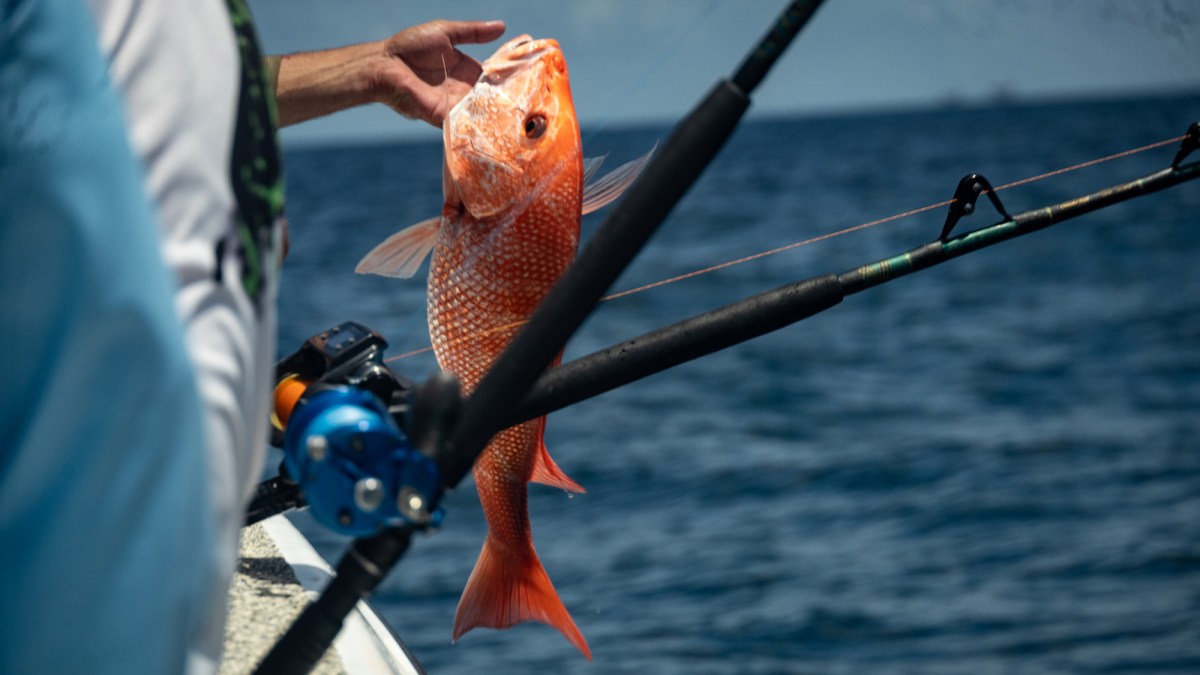

Saltwater anglers along the South Atlantic coast are looking toward what could be the best — and will certainly be the longest — red snapper season in many years. This is thanks to a recent decision by federal fisheries managers and the Trump administration to grant Exempted Fishing Permits to state fish-and-game agencies in Florida, Georgia, South Carolina, and North Carolina. Sport fishermen in these states will have up to two months to fish offshore for red snapper in 2026, a huge increase from the one- or two-day seasons they’ve had in recent years.
“WE JUST DELIVERED A HUGE WIN for our Great Fishermen and Anglers in FLORIDA, GEORGIA, SOUTH CAROLINA, and NORTH CAROLINA!” Trump wrote in a Truth Social post last week. “We have just officially approved ALL STATE PERMITS for the 2026 Red Snapper recreational season.”
The National Marine Fisheries Service (also known as NOAA Fisheries) approved the EFP’s on May 1. The special permits allow the four states to bypass federal regulations in 2026, thereby giving state agencies more control over the snapper fishing that takes place in federal waters off their coastlines.
Red snapper are highly sought after by anglers because they’re one of the best-tasting fish in the ocean. These aggressive fish tend to concentrate around reefs, wrecks, and other deep-water structures, which makes for some fun and fast-paced catching when you can find them.
But this popular offshore fishery has been severely curtailed by the Feds over the past 15 or 20 years due to concerns around overharvest and population declines. In some years — most recently in 2016 — NOAA has shut down the recreational red snapper season entirely in the South Atlantic.
All of this has been a major sticking point for anglers, outfitters, and conservation groups in the region. Local fishermen have long complained of federal overreach and accused NOAA Fisheries of going too far with its restrictions. Their main request has been to return red snapper management to the state level, which is exactly what this new change does.
“For years, our Great Fishermen have been punished with VERY short Federal fishing seasons despite RECORD HIGH fish populations and the States begging to oversee these permits,” Trump wrote in his post. “We love and respect our Fishermen and, unlike the Democrats, will only do good for them. To all those who fish ‘Red Snapper’ — TRUMP and NOAA are delivering for you.”
Here is an overview of the 2026 red snapper seasons that have already been established under the EFP’s granted to the four South Atlantic states:
- Florida will have a 39-day season from May 22 -June 20, Oct. 2-4, Oct. 9-11, and Oct. 16-18. Bag limit is 1 red snapper per angler per day within a 10-fish snapper-grouper aggregate. There are no minimum size limits
- Georgia will have a 2-month season beginning July 1 and ending Aug. 31. Bag limit is 1 red snapper per person per day, and there are no minimum size limits.
- South Carolina will have a 2-month season beginning July 1 and ending Aug. 31. Bag limit is 1 red snapper per person per day, with a minimum size limit of 20 inches.
- North Carolina will have a 2-month season beginning July 1 and ending Aug. 31. Bag limit is 1 red snapper per person per day, or 4 red snapper per vessel per day. There are no minimum size limits.
As part of this shift, state fisheries managers will also be required to monitor red snapper take through mandatory harvest reports. This will hopefully allow for more accurate, real-time data on snapper populations, since the data collected by NOAA Fisheries has been another point of contention among local sport fishermen.
Read Next: Interior Department Plans to Open All Its Public Land to Hunting and Fishing — Unless Specifically Closed by Site Managers
“This is a major step forward for Georgia anglers. For years, access to red snapper has been extremely limited,” Georgia DNR Coastal Resources Division Director Doug Haymans said in a press release on May 1. “This opportunity comes with responsibility. If anglers want longer, more reliable seasons we need better data — and that comes directly from them.”
The Georgia DNR went on to explain in its press release that if Georgia can show that it’s collecting better data than NOAA after this season, the EFP could be extended for an additional two years. The same agreement will apply to the other three states, which collaborated with Georgia on their own EFP applications.
Read the full article here
