



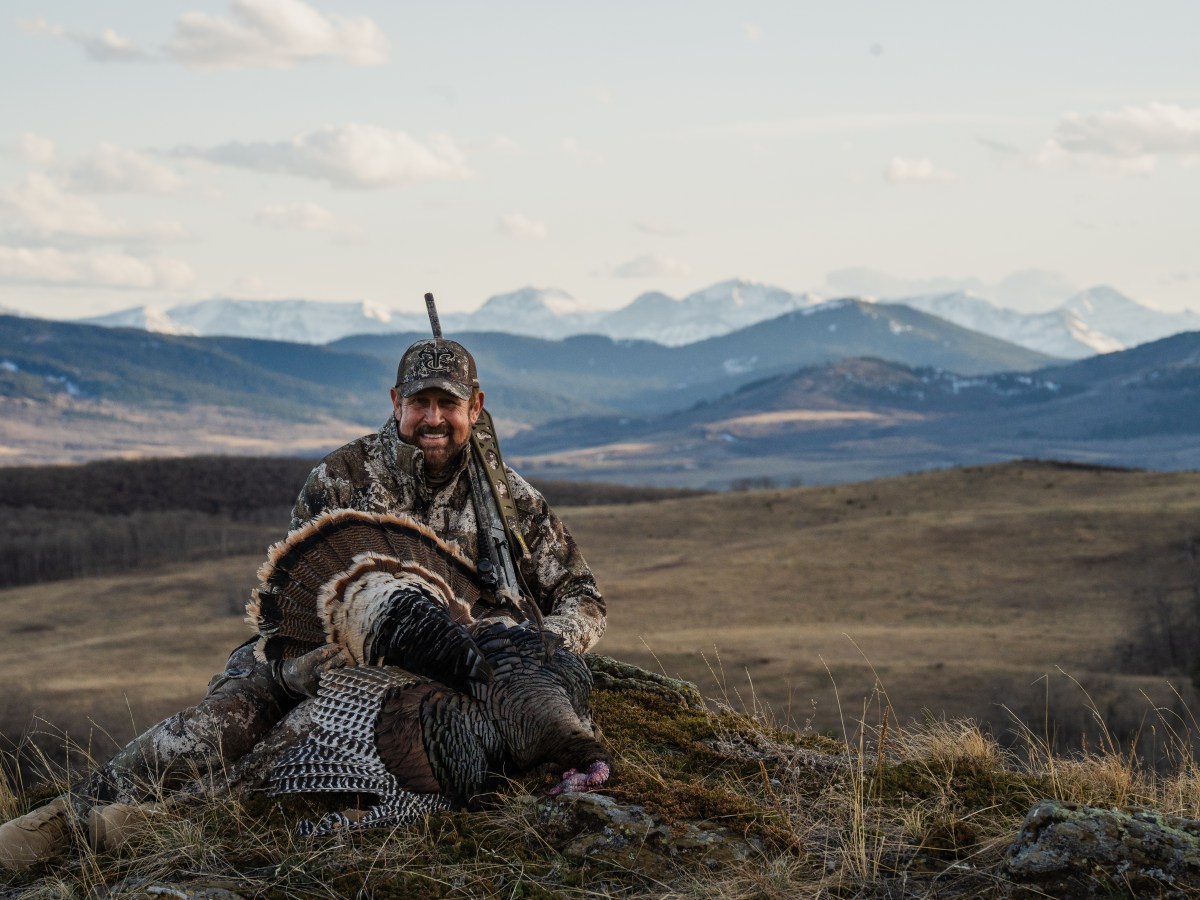

Rob Keck was fascinated by turkeys before he ever hunted them. As a kid growing up in Pennsylvania in the 1960s, Keck saw plenty of hunters tag deer and bag pheasants, but only a few elite hunters were lucky enough to kill a wild turkey back then. So it was with trembling hands that Keck leveled his shotgun and killed his first turkey, a fall longbeard that came charging in to his Louis Stevenson box call. He was only 13 years old, but that hunt sent him on a lifelong journey chasing gobblers.
Keck went on to become a champion caller and eventually the CEO of the National Wild Turkey Federation. He was also the first person to tag a wild turkey in all 49 states. When Keck started out, he had no intention of taking a bird in every state. He simply hunted with friends and grew a larger network of hunters and conservationists. He thought of the hunts as a way to learn about the different subspecies of turkeys and the habitats in which they thrived.
“You know, as the head of the Wild Turkey Federation, I thought I’ve got to be knowledgeable about turkeys and habitats in every state in the country,” Keck says. “And so I just thought it was part of the background that I wanted to have.”
As the wild turkey expanded its range during Keck’s 30-year tenure at NWTF, he expanded his hunting range to the very fringes of turkey habitat.
Then, during the spring of 2025, Keck, now 75, hunted turkeys in territories where some biologists thought they’d never exist. He became the first sportsman to complete the Canadian Wild Turkey Super Slam, which is taking at least one wild turkey in the five provinces that offer non-resident hunting opportunities: Ontario, Quebec, British Columbia, New Brunswick, and Alberta.
In order to hunt in Alberta, Keck had to bid on (and win) the Minister’s license, which is the only tag that’s currently available to nonresidents. In Quebec, he was required to hunt with an outfitter, which was a good thing since his hunting application was entirely in French. Keck says those challenges were well worth it.
“As I look at U.S. turkey hunters, some of them have taken a grand slam, then a royal slam, then a world slam, and then chasing 49. Now they’re looking for new places to go,” Keck says.
The New Frontier
The wild turkey restoration effort in Canada has been so effective that gobblers have expanded north beyond their known historic ranges. Population estimates have boomed in recent years:
- Ontario: More than 100,000 Eastern turkeys
- Quebec: More than 100,000 Eastern turkeys
- British Columbia: 15,000 to 20,000 Merriam’s turkeys
- New Brunswick: 3,000 to 5,000 Eastern turkeys
- Alberta: More than 1,000 Merriam’s turkeys
- Manitoba: More than 10,000 Eastern and Merriam’s turkeys (resident-only hunting season)
These Canadian birds represent the northern edge of restoration efforts that happened here in the states decades ago.
“I have a guide buddy who called me last week, he said, ‘Rob, I am 500 miles north of the U.S. border. I’m snowshoeing in three feet of snow, and there are turkeys up here’” Keck says. “And so the adaptability of these birds has just been amazing.”
Interestingly, Keck is directly responsible, at least in part, for the turkey boom in British Columbia. He and other NWTF members once tried to convince the province to release turkeys there decades ago. But because turkeys were not native species, at least according to the B.C. biologists, they weren’t interested in introducing them. So Keck and his crew did turkey releases at the border, in Washington state.
“We released some turkeys on the Washington state border with British Columbia, and I knew what would happen,” Keck says. “They expanded rapidly up into British Columbia.”
Veteran hunters in the U.S. will remember what it’s like hunting turkeys in areas where a new population is booming. Gobbles roll like thunder at sunrise, with toms strutting on seemingly every ridgetop and field edge. Longbeards, without hesitation, respond aggressively to calling and decoys.
“I remember once they hit their peak in north Missouri [probably in the 80s] … I can remember standing on a ridge not knowing which way to go because there were so many gobbles. You couldn’t count them,” Keck says. “I mean you sat down and called and there would be times that you would get a half dozen to come in. At one time there were 14 adult gobblers that came to my call and it was just bizarre. I’d never seen anything like that.”
Parts of Canada are experiencing this kind of boom now. While hunting in British Columbia, Keck and his buddy went into a cafe for breakfast. A local asked about what they were hunting (since they were wearing camo in the springtime) and when he found out they were after turkeys, he insisted they come visit his property.
“Went out on [his property] and we saw these three strutters and a bunch of hens and said, ‘well it seems like we’re in the right place,’” Keck says. “So we left there, [got our gear] and I mean we weren’t set up for five minutes … I hit the call. A turkey gobbled and here comes this one gobbler running in. And that was British Columbia.”
While this gobbler rush won’t last forever, it does offer the traveling turkey hunter the opportunity for a unique adventure in the North Country.
“The backdrop in Alberta with those Canadian Rockies, it was so spectacular to have those snow capped mountains in the background. I think, that just adds to the beauty of the hunt. And people are looking for those kinds of experiences.”
Read the full article here
