



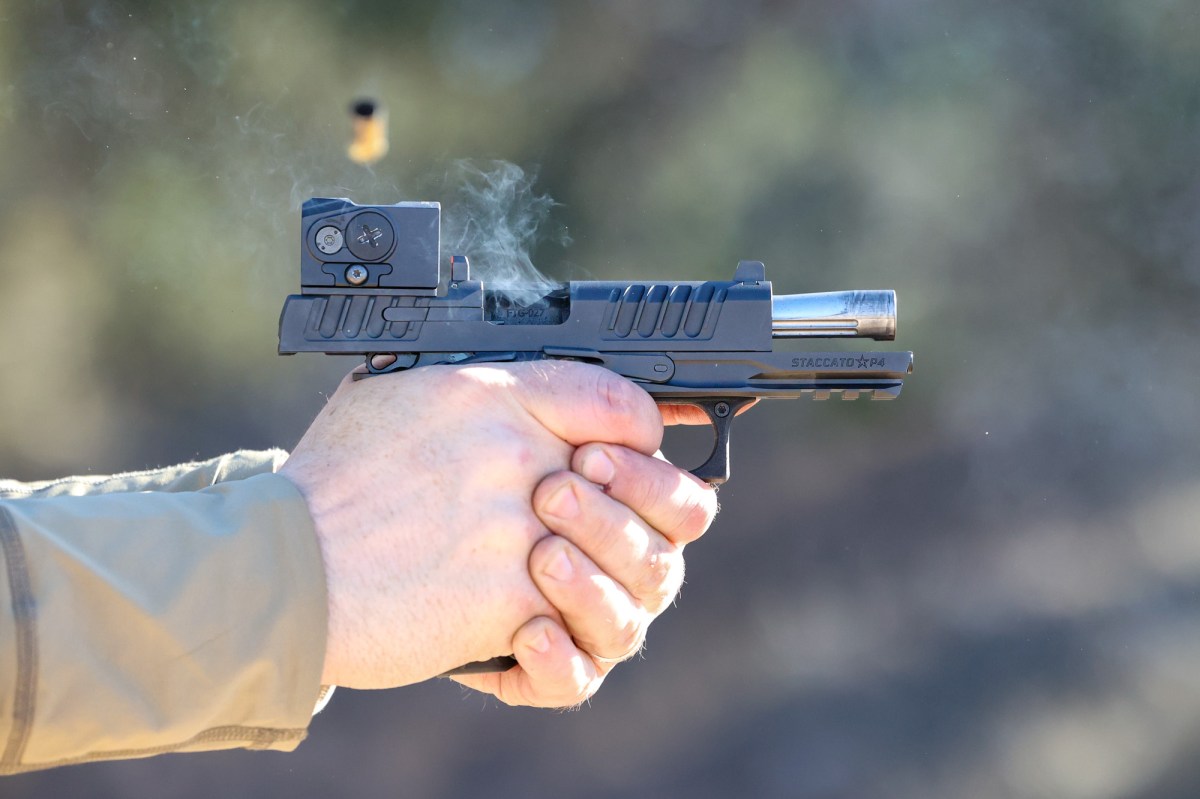

The OL gun team takes shooting very seriously — especially when it comes to picking the best concealed carry guns. Over the years, we’ve tested and carried dozens of pistols and revolvers, and sent many thousands of rounds downrange doing so. These are our top picks for defensive handguns that are ideal for concealed carry.
Top Picks
More Great Compacts
More Great Sub-Compacts
Revolvers
Concealed Carry Guns: Our Top Picks
Staccato HD C3.6
See It
Pros
- Great ergonomics
- Smooth recoil cycle
- Excellent trigger
- Compatible with Glock-pattern magazines
- Low-sitting optic cut
Key Features
- Caliber: 9mm
- Capacity: 15+1
- Barrel length: 3.6 inches
- Weight: 1 pound, 8 ounces (without magazine)
- Optic compatibility: Multi
- Price $2,567
Last year, Staccato introduced its HD lineup — the latest evolution of their 2011 pistols. This new variation has key updates like an improved optic mounting system, which features co-witness iron sights with the rear sight located forward of the optic cut. The most notable feature is that these pistols are designed to work with Glock-pattern magazines rather than traditional 2011 or compact 2011 magazines. The 3.6-inch model is replacing the Staccato CS, which has been one of our favorite carry guns since it came out three years ago.
After shooting the HD models, we can comfortably say that switching to a Glock-pattern magazine doesn’t compromise the excellent fit and ergonomics of these pistols and, like previous models, they are smooth, fast, and accurate as hell. If you’re interested in a highly-refined carry gun, this should be near the top of your list.
Glock G45 Gen 6
See It
Pros
- Improved ergonomics
- Better optic mounting system than MOS
- Ambidextrous slide stop lever
- Integrated Gas Pedal style thumb pad
Cons
- G45 is on the large end for concealed-carry
Key Features
- Caliber: 9mm
- Capacity: 17+1
- Barrel length: 4.02 inches
- Weight: 1 pound, 5 ounces (weighed without magazine)
- Optic compatibility: Uses optic-specific adapter plates.
- Price $620
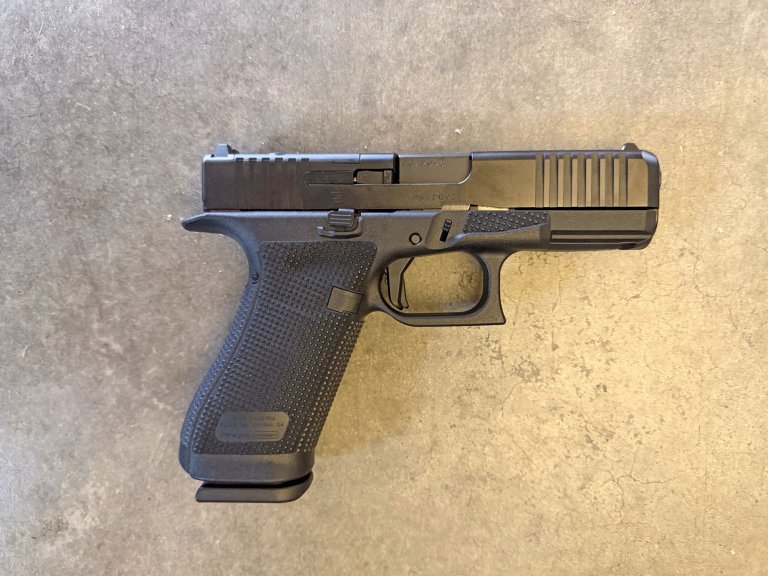
Glock, whose pistols carry a reputation for exceptional reliability and utility, shook things up in 2025 by introducing their new Gen 6. The sixth generation includes some major updates to the pistol’s often critiqued ergonomics. An entire sub-industry of Glock clones featuring optimized features has been going strong for years, and now Glock is finally incorporating some of the form factor changes. These included an improved grip contour, undercut trigger guard, a thumb shelf for the support hand to assist in recoil management, and excellent texturing.
The Gen 6, like the Gen 5, includes forward and rear cocking serrations and is optic ready. It does, however, feature an optic mounting system that’s different from the existing MOS models. Notably, it uses thin, semi-compressible shims between the red dot and the slide, which allows for a tight fit and helps prevent screws from loosening. We’ve got the G45 model, which features a G19-length barrel and full-sized grip. The Gen 6 is also available in G19, which some shooters will prefer for concealed carry. Our shooting editor John B. Snow got an early first look at the Gen 6, and you can learn more from this video:

We Shot the New Glock Gen 6: Full Review
CZ Shadow 2 Carry
See It
Pros
- Good ergonomics
- Great grip texture
- Large, positive controls
- Accurate
Cons
- Double/single-action can take getting used to
Key Features
- Caliber: 9mm
- Capacity: 15+1
- Barrel length: 4 inches
- Weight: 1 pound, 12.5 ounces (weighed with empty magazine and optic)
- Optic compatibility: RMSc footprint
- Price $1,400
In 2025, CZ launched their carry-specific model of the Shadow 2 — part of the CZ 75 lineage. It’s a compact pistol with a 4-inch barrel and 15-round magazines. It’s got an aluminum frame that’s nicely beveled for snag-free use, but features excellent front and rear strap texturing. That, in tandem with it’s aggressive grip scales provides a sure handhold on the gun. The low bore axis of the Shadow 2 Carry makes it a smooth-recoiling pistol, and it’s compatible with RMSc optics and cross-slot rail-mounted lights. The most notable feature is that, unlike other models, which feature a manual safety, the Shadow 2 Carry has only a de-cocker and operates in double/single-action mode. That means that it can be carried safely while de-cocked, and the first trigger pull is double-action, cocking the hammer and firing. Subsequent shots are single action.
You can find out a lot more about this slick and practical pistol in this full review.
Wilson Combat WCP365 2.0

See More
Get the Grip Module
Pros
- Great ergonomics
- Ultra refined P365
- Ramjet compensator nearly eliminates muzzle flip
- Tuned straight-shoe trigger
Cons
- Compensator shockwave is substantial
Key Features
- Caliber: 9mm
- Capacity: 10+1, 12+1, 15+1, or 17+1 with associated Sig P365 magazines
- Barrel length: 3.1 inches
- Weight: 1 pounds, 5 ounces (weighed with empty magazine)
- Optic compatibility: RMRcc optic footprint
- Price $1,868
The Sig Sauer P365 has been a catalyst for a lot of competition in the concealed carry handgun market and, being such a great platform, has seen a host of aftermarket upgrades. Custom slide work, aftermarket grip modules, barrels, and compensators are all things that shooters have used to customize the P365 to their liking. Wilson Combat collaborated with Sig to put their own spin on this solid self-defense pistol with the WCP365 series. I’ve been testing the model with an RMRcc optic cut, compact grip, and Radian Afterburner barrel with the Ramjet compensator. This little gun is peak P365 performance, and its aggressive beveling and cocking serrations make it easy to manipulate and shoot accurately.
The WCP365 comes with Wilson Combat’s own grip module that features the standard-style P365 light rail on the dust cover. It’s got a black rear and fiber-optic front sight that can be co-witnessed with some optics. The upgrades have made this popular carry gun superb. The compensator nearly eliminates muzzle flip — especially when using +p ammunition with a lighter bullet — but it is extremely loud. It’s not the best for high-volume exposure. Wilson Combat offers other variants that have different barrel lengths, grip module sizes, and you can forego the compensator if you like.
H&K CC9
See It
Pros
- Wonderful ergonomics
- Very controllable
- Accurate
- Great Value
Key Features
- Caliber 9mm
- Capacity 10+1 / 12+1
- Barrel Length 3.32 inches
- Weight 21.6 ounces (with empty magazine)
- Optic Compatibility RMSc or 407K footprint
- Price $699
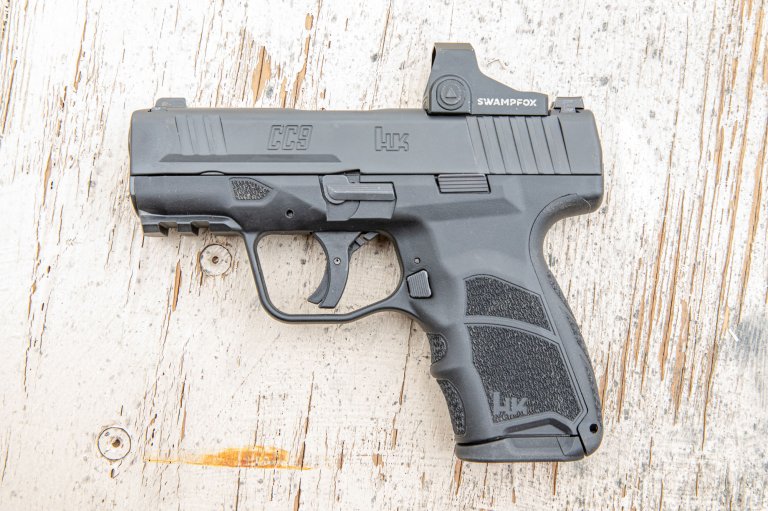
In early 2025, H&K launched their all-new CC9. It’s a pistol that’s designed specifically to meet the demands of American shooters looking for an EDC pistol. The CC9 is a wonderfully executed micro-compact 9mm that ships with both 10- and 12-round magazines. It’s not dramatic or flashy, and that’s what we like about it. We recently tested the CC9 at our annual gun test at Gunsite Academy, and everyone on the test team commented on the pistol’s good ergonomics and subtle feature set.
The CC9’s frame has a grippy stipple-type texture in all the right places, and there aren’t any snaggy corners or surfaces anywhere on the gun. The slide is nicely rounded but offers good purchase with it’s front and rear slide serrations. It comes fitted with low-profile dovetail-fit night sights, and is cut for and RMSc- or 407k-pattern red dot optic. Fitted with a low-profile red dot, it’s still conveniently concealable and quick to get on target. It handles well both two- and one-handed, and is lefty friendly with low-profile slide stop levers and magazine catch buttons.
Most micro-compact 9mm pistols are snappy or flippy under recoil due to their small size and short, light slides. We found the CC9 to be quite easy to control, placing rounds on target quickly and accurately. We were even able to score regular hits on vital-sized steel plates from 50 yards. Even skeptical members of the test team were convinced that they might just need a new CC9 for themselves.
More Compact Concealed Carry Guns: Reviews & Recommendations
Walther PDP Compact Steel Frame 4-inch
See It
Pros
- Top-notch ergonomics
- Optic compatible
- Good accuracy
- Very smooth recoil
Key Features
- Caliber: 9mm
- Capacity: 15+1
- Barrel length: 4 inches
- Weight: 2 pounds, 7 ounces (weighed with empty magazine)
- Optic compatibility: Uses optic-specific adapter plates.
- Price $1,679
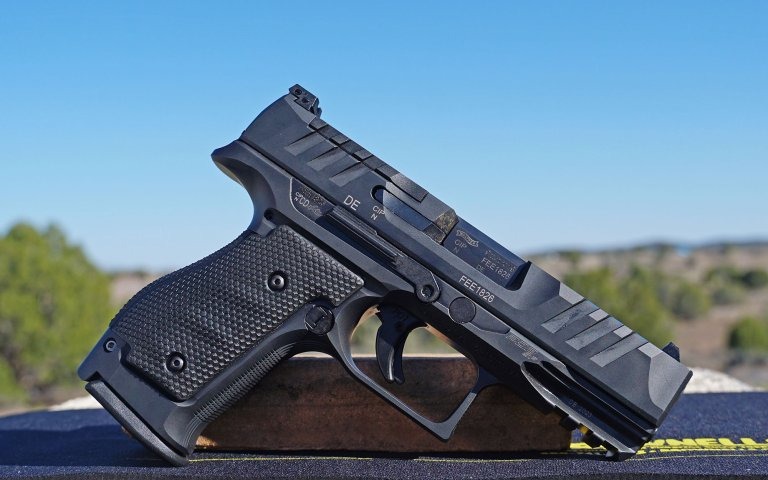
The Walther PDP Compact Steel Frame pistol is one that took us a bit by surprise. There aren’t any particularly eye-catching features on this pistol and despite its good ergonomics, it does feel a bit chunky for a concealed carry gun. Add to that the weight of the steel frame and I was somewhat skeptical. Those misgivings melted away as soon as the shooting started, though.
This PDP is one of the latest in Walther’s successful striker-fired lineup that includes the polymer-framed PDP-F series and the full-sized PDP Match SF — both of which I have shot extensively in the past year. This new steel frame compact model aims to capture the tangible recoil-mitigating characteristics of the match gun, but in a carry-friendly package. Though heavy and thick it is, the pistol sports wrap-around grip panels with excellent hexagonal texturing and superb ergonomics for large-handed shooters.
This compact pistol carries over many of the features we already like about the PDP including the long ambidextrous slide stop levers that are easy to reach with the thumb, a reversible magazine catch button, and nicely executed scalloping and serrations on the slide. It’s got a 3-slot accessory rail machined into the dust cover and is compatible with a variety of optics using Walther’s adapter plates.
Ruger RXM

See It
Pros
- Very affordable
- Solid ergonomics
- Optic ready
- Compatible with many aftermarket Glock parts
Cons
- Limited optic compatibility
Key Features
- Caliber 9mm
- Capacity 15+1
- Barrel Length 4 inches
- Weight 23.2 ounces
- Optic Compatibility RMR, Delta Point Pro
- Price $457
In the highly competitive Glock clone market, the RXM, a collaboration between Ruger and Magpull, caught a lot of people by surprise. It’s a clone of Glock’s legendary G19 Gen 3, but several hundred dollars cheaper. It’s available for $400, or sometimes less.
Externally, the RXM incorporates some changes that many shooters have paid extra to attain. It’s got a nicely contoured slide with attractive and functional slanted forward and rear slide serrations, and is cut for an optic. Rather than Glock’s MOS plate system, the RXM is adaptable to a few footprints including Delta Point Pro, RMR, and RMSc, with the help of pins that can be installed to adapt to particular optics. This allows a low mount and co-witnessed iron sights.
Magpul’s contribution to the collaboration is the interchangeable grip module. Unlike Glocks or other Glock clones, this module houses a removable fire control group or chassis. The grips are crafted with great ergonomics and a grippy stipple texture. Essentially, these are similar to what many shooters have been transforming their OEM Glocks into for years. What’s even better is that the removable chassis design is still compatible with aftermarket Gen 3 Glock trigger parts, allowing for further upgrades.
On the range, this gun performed as well as any pistol we’ve seen at this price point, and several members of our annual gun test team preferred it over a stock Glock. It’s accurate, handles well, and has a pleasingly soft recoil impulse. We don’t think that there’s currently a better value for a concealed carry gun than the RXM.
Springfield Armory Hellcat Pro OSP
See It
Pros
- Excellent grip and grip texture
- Good sights
- Optic ready
- Flush magazine with good capacity
Key Features
- Caliber: 9mm
- Capacity: 15+1
- Barrel Length: 3.7 inches
- Weight: 20.7 ounces
- Optic Compatibility Fits most micro red dots
- Price: $586
Like many of its peers, the Springfield Hellcat Pro seeks to strike a perfect balance between concealability and magazine capacity. In that regard, it does a good job. It is a hair smaller than a Glock 19 and a hair larger than the Micro-9s but has a 15+1 capacity with flush-mounted magazines. It is also trimmer than a G19 and has low-profile controls for snag-free carry.
Like other Springfield pistols, it is spec-ed out with a solid list of features. It has a reversible magazine catch, a loaded-chamber indicator on the top of the slide, it comes with two quality magazines, has a tough Melonite finish, a generously-sized accessory rail, and cocking serrations on the front and rear of the slide.
The Hellcat Pro OSP is a heavy-hitter in the sub-compact market, and it’s a reliable, solid choice among the best concealed carry guns. Although the muzzle flip isn’t bad, the Hellcat pistols tend to have slightly snappier recoil than other similar-sized guns, but they still aren’t bad to shoot. They are one of the best at packing a lot of ammunition into a slim, small package.
Springfield Armory 1911 DS Prodigy Compact
See It
Pros
- Affordable for a 2011-style pistol
- Compact enough for concealed carry
- Compatible with a variety of red dot sights
- Accurate and easy to shoot
Cons
- Grip is beefy
- Not as refined as some other 2011-style pistols
Key Features
- Caliber: 9mm
- Capacity: 15+1
- Barrel length: 3.5 inches
- Weight: 28.9 ounces
- Optic Compatibility AOS optic plate system
- Price: $1,530
Springfield’s new 1911 DS Prodigy Compact is a shortened version of their popular 2011-style Prodigy pistol. It’s a double-stack 1911 with a polymer grip module and looks nearly identical to the full-size version but there are some key differences. First, it uses a shorter 3.5-inch bull barrel, and a shorter grip. Along with a slightly bobbed beavertail, these trimmings have sized the Prodigy down to be comparable to a Glock G19 and other standard compact guns.
The shorter grip module maintains its width and depth, and uses 15-round Duramag magazines that are bottlenecked just like the standard 2011 mag. In fact, like other Prodigy pistols, this one is compatible with other brands of 2011 magazines like Staccato, and works with the larger 17- and 20-round mags as well. Like larger models, it uses the Agency Optics System adapter plates and is compatible with a wide variety of red dot pistol optics.
I tested the Prodigy compact and, like the four other Prodigy pistols i’ve shot hard, it proved to be accurate, reliable, and easy to shoot. You can read an in-depth review of the Prodigy Compact here, but I’ll give you the takeaways. First, you’re still getting a very accurate pistol with a soft recoil impulse. It’s a hell of a lot of fun to shoot. Second, the compact size makes this Prodigy much more versatile than the original. It’s great for concealed carry, could be used in competition, or even as a general-use bedside home defense gun. Finally, it’s less refined that more expensive brands like Staccato, but it’s a really good entry point if you’re interested in 2011-style pistols for concealed carry.
Best Sub-Compact Concealed Carry Guns
Sig Sauer P365 XMacro Tacops

See It
Pros
- Great ergonomics
- Best-in-class capacity
- Low recoil impulse
- Modular fire control unit
Key Features
- Caliber: 9mm
- Capacity: 17+1
- Barrel Length: 3.7 inches
- Weight: 23 ounces
- Optic Compatibility Direct mount, Shield RMSc
- Price: $800
Sig Sauer has been busy over the past few years, producing an array of variations of their front-running models. The Sig Sauer P365 XMacro Tacops is the second iteration of the P365 XMacro, which is an up-sized version of the micro-compact P365 that features a compensator-cut slide. If the XMacro Tacops seems a little redundant, it is, but it is one of the best compact concealed carry guns right now. It’s ultra slim, with unmatched capacity in its class.
The biggest difference between the Tacops and standard XMacro is a slight simplification. The Tacops is the same overall size, but has a longer barrel because it lacks the integral slide compensator. The XMacro Tacops also features a small magwell that’s effective, but unobtrusive. Compared to the smaller standard P365, the XMacro Tacops has a larger grip and longer slide. The 17-round magazines are the same, and they fit in the P365, they’re just longer. The XMacro Tacops has a similar footprint to the Glock G19 and Staccato CS, but it’s a little more comfortable to carry inside the waistband because it’s thinner.
I’ve expended about 1,800 rounds between two of these pistols, and aside from a couple failures to feed in the first 100-round break-in period, they’ve run great. The P365 XMacro Tacops is an incredibly soft-shooting pistol, and points intuitively. The trigger isn’t too heavy, but it doesn’t have a firm wall. At our 2023 gun test, we did some slow-mo video analysis of rapid fire strings between the Tacops and ported XMacro, and found that the more affordable Tacops showed only slightly more muzzle flip. I couldn’t tell the difference while shooting them. You can read a full review of the Sig P365 XMacro Tacops here.
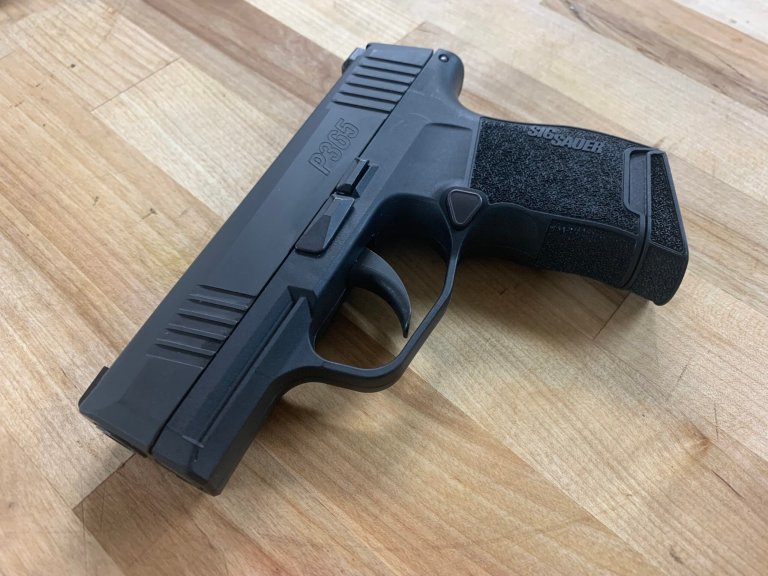
Sig Sauer P365
See It
Pros
- Ultra concealable
- Great grip texture
- Points naturally
- Lots of aftermarket upgrades available
Cons
- Triggers can be soft and mushy
Key Features
- Caliber: 9mm
- Capacity: 10+1
- Barrel Length: 3.1 inches
- Weight: 22 ounces
- Beveled slide for concealed carry
- Modular fire control unit and grip design
- Price: $499
The ember that seemingly lit the blazing hot micro 9mm pistol market is the Sig P365. There have been many other micro-compact 9mm pistols, but the Sig P365 was one of the first to maximize capacity of the tiny platforms. The Standard P365 holds 10 rounds in its small double-stack magazine, while keeping its ultra-discreet size.
Many other tiny nines have hit the market in recent years, but the P365 is well thought out and still holding its own. The standard black nitron model comes with three-dot Xray tritium night sights and two magazines. Both mags hold 10 rounds of 9mm, but one has a slightly extended baseplate to give the pinky finger some real estate to grip. The ergonomics and grip shape of the P365 are excellent, and the pistol points well. Recoil is a little snappy, but in line with what most micro 9mm pistols feel like.
There are many P365 models, but the standard is still one of the best concealed carry guns on the market. The strength of the P365 is not just in its performance, but its modularity. The fire control units (FCU’s) of every 9mm P365 are compatible, and you can get upgraded FCU’s, grips, and other parts. You can even swap some parts, such as carrying the P365 XL/P365 XMacro Tacops slide assembly installed on your standard P365 for a longer sight radius and softer recoil while keeping the short grip. You can read a full review of the Sig Sauer P365 here.
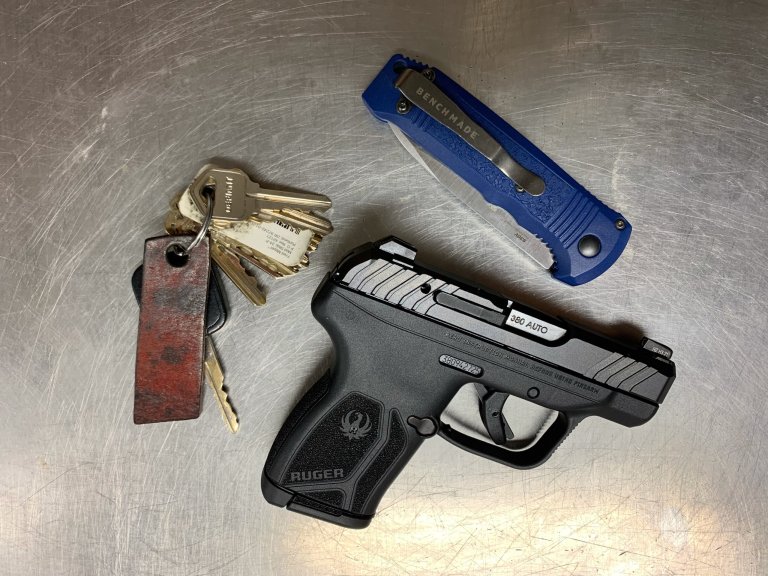
Ruger LCP Max
See It
Pros
- Tiny footprint
- Good cocking serrations
- Excellent capacity for its size
- Very affordable
Cons
- Not very accurate at longer distances
Key Features
- Caliber: .380 ACP
- Capacity: 10+1, 12+1
- Barrel Length: 2.8 inches
- Weight: 10.6 ounces
- Cocking ears on slide
- Tritium front sight
- Price: $329
Although small, the .380 ACP cartridge is still popular among the best guns for concealed carry. Ruger saw great success with their single-stack LCP pistol, but recognized room for improvement. As the micro-compact pistol market has surged, and manufacturers have boosted the capacity of these tiny guns, Ruger followed suit.
With the slightly extended magazine, the LCP Max holds 13 rounds of ammunition, and is only slightly thicker than the original single-stack design. It’s easy to shoot, reliable, and small enough to stick in a pocket. With the high-performance projectiles we have today, a high-capacity .380 pocket pistol is still a formidable defensive concealed carry gun.
Read Next: 30 Super Carry vs 9mm: Which is the Better Self-Defense Cartridge?
The Ruger LCP Max is reasonably accurate out to 15 yards or so, but it’s most effective at very close range. The slide cycles fast, and the recoil feels a bit snappy, but there isn’t much muzzle flip and the pistol is very easy to control. You can read a full review of the Ruger LCP Max here.
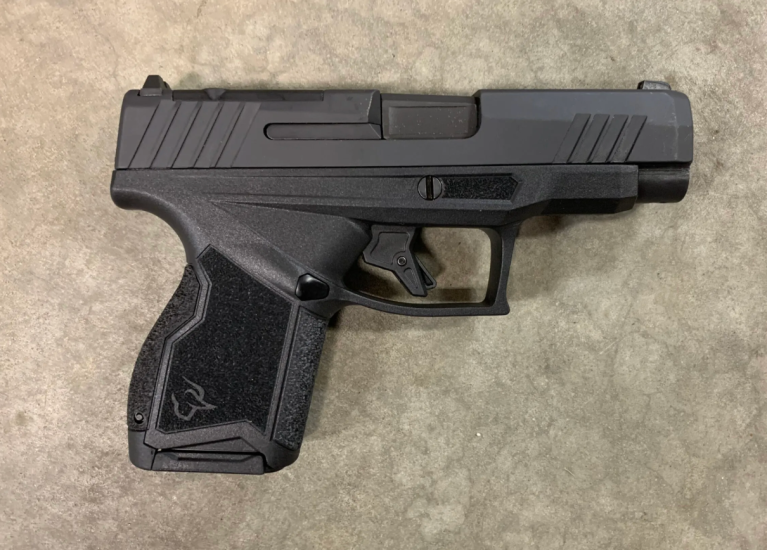
Taurus GX4 XL T.O.R.O.
See It
Pros
- Very concealable
- Versatile optic-mounting system
- Soft shooting
- budget friendly
Cons
- Can have reliability issues during break-in period
Key Features
- Caliber: 9mm
- Capacity: 11+1, 13+1
- Barrel Length: 3.71 inches
- Weight: 20 ounces
- Optic Compatibility T.O.R.O. modular optic mounting
- Price: $298
Taurus is known for affordable pistols, and their GX4 and GX4XL have turned out to be excellent values in the market of concealed carry guns. The GX4XL is a sub-compact 9mm with a slightly longer barrel (3.7 in.) than its predecessor, the GX4 (3.06 in.). It comes with an 11- and 13-round magazine, and the T.O.R.O. model comes optics-ready with an RMS pattern and removable rear pillars.
The GX4 and GX4XL are built in a similar fashion as the Sig P365 Line. Rather than slide rails molded into the frame, the trigger assembly and slide rails are in a removable stainless steel chassis that sits in the grip module. Like the P365, this allows modularity between models, and the GX4XL is similar to the P365 XL in size. With the longer slide and recoil system, the GX4XL is surprisingly soft shooting. It has a good trigger that isn’t light, but it is crisp.
In putting more than 1,000 rounds through two different GX4XL T.O.R.O. pistols, I noted that one of them had some reliability issues at first. When chambering, the slide would stop about ¼-inch out of battery. After about 250 rounds fired, the gun broke in and I didn’t encounter any more function issues. The second pistol never malfunctioned. These pistols can be found for between $350 and $400. Considering the feature set, shootability, and price, this is a great value among the best concealed carry guns. You can read the full review of the GX4XL T.O.R.O. here.
Glock G43X
See It
Pros
- Very reliable
- Improved grip
- Increased capacity from G43
- Easy to shoot well
Cons
- Not best in class capacity
Key Features
- Caliber: 9mm
- Capacity: 10+1
- Barrel Length: 3.41 inches
- Weight: 23.1 ounces
- Optic Compatibility Glock MOS optic plates
- Price: $448
The G43X is the pistol that keeps Glock’s sub-compact line in the running with other pistols like the P365. The Glock G43 has long been one of the best concealed carry guns, but the single-stack format has fallen out-of-favor with many shooters.
Adding capacity to the Glock 43, the 43X incorporates a 3.41-inch barrel, and slim frame with front and rear cocking serrations. It uses a 10-round magazine, a significant boost over the standard G43’s 6 rounds. You won’t find a lot of frills, but if you’re a fan of Glocks, you know what you’re getting—a reliable pistol that’s ultra-comfortable to carry and shoot.
The MOS version of the G43X is optics ready, and you can find G43X and optic packages at an affordable price. The newer G48 has generated lots of interest too—it’s slimmer and has the same capacity. However, several shooters I’ve talked to weren’t pleased with the feel of the G48 when shooting and still prefer the G43X.
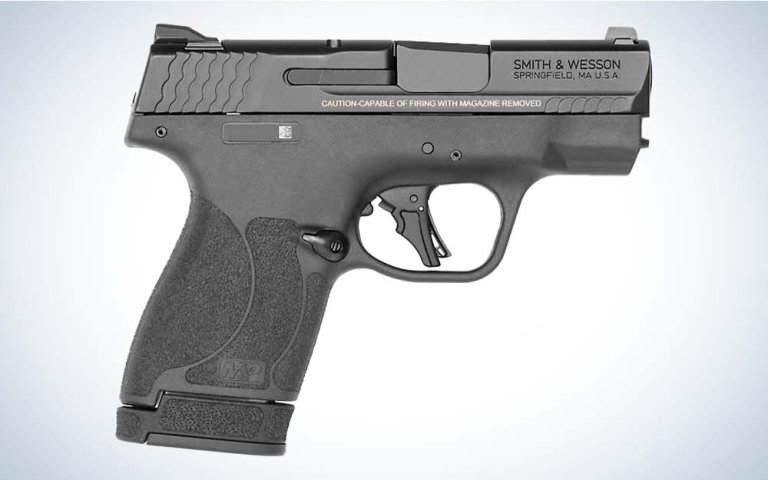
Smith & Wesson Shield Plus
See It
Pros
- Excellent grip
- Good sights
- Snag-free profile
- Flush and extended magazines
Key Features
- Caliber: 9mm
- Capacity: 10+1, 13+1
- Barrel Length: 3.1 inches
- Weight: 20 ounces
- Optic Compatibility Yes
- Price: $399
The M&P Shield Plus from Smith & Wesson is an updated version of the Shield and Shield 2.0, with increased capacity. Although it doesn’t include a light rail, the grip texture, handling, and ergonomics of the Shield Plus are excellent. For folks who are fond of the Smith & Wesson M&P line and shoot them well, this is one of the best carry guns out there.
In the rapidly developing field of micro-compact pistols, capacity is important, and the 9mm Shield Plus comes with flush and extended magazines with 10+1 and 13+1 capacity respectively.
The M&P Shield Plus really shines in its early adoption of the new .30 Super Carry cartridge from Federal. The smaller-diameter cartridge produces similar ballistic performance as the 9mm but with increased capacity. The .30 Super Carry Shield Plus will hold an impressive 13+1 and 16+1 rounds in its flush and extended magazines, while delivering 9mm performance.
Beretta PX4 Storm Compact Carry 2
See It
Pros
- Good ergonomics
- soft recoil impulse
- Good capacity
- rounded corners
Cons
- Thick and chunky
- DA/SA operation can take some getting used to
Key Features
- Cartridge: 9mm
- Capacity: 15+1
- Barrel length: 3.2 inches
- Weight: 1 pound, 11 ounces (weighed with empty magazine)
- Optic compatibility: Not optic compatible
- Trigger: Double/single-action 7 pounds, 9 ounces (measured)
- MSRP: $802
Beretta’s PX4 Storm has been a popular carry gun, and the new PX4 Storm Concealed Carry 2 is further optimized for the task at hand. Like the regular PX4, it features a rotating barrel design, but the CC2 version has a heavier barrel that adds mass and mitigates recoil. Notably, it also has an improved decocker and bobbed, snag-free hammer and improved double-action trigger pull.
The whole test team found the PX4 to be a soft, manageable shooter, and some really liked it. We had mixed feelings though. Some of us plainly thought it would be smaller than it is, and it certainly does have a thick, chunky feel to it. That thickness does help the shooter get more purchase on the gun, but considering the abundant number of manageable pistols that are more compact with equal or greater capacity, we had a hard time falling in love with this one.
The double-action/single-action operation isn’t what most shooters will choose, but if you’re already a Beretta 92 fan or comfortable with those pistols, you will probably like the PX4 Storm.
Best Revolvers for Concealed Carry
Colt Python 3-inch
See It
Pros
- Excellent fit and quality
- Smooth double- and single-action trigger pulls
- Improved frame strength from older pythons
- Adjustable sights
Cons
- Full-sized grip isn’t the easiest to conceal
Key Features
- Caliber: .357 Magnum
- Capacity: 6
- Barrel Length: 3 inches
- Weight: 38 ounces
- Price: $1,472
There are some folks who subscribe to the theory that real guns are wheel guns, and they’d trust their life to nothing but a revolver. There are some great revolvers to choose from, but one of my favorites has been the Colt Python 3-inch model. In recent years, Colt has breathed new life into its classic Python line, and the 3-inch model is one of their most recent. The short .357 Mag revolver might be a little stubby, but it’s all Python. For a revolver fan that wants to carry under a jacket, it’s one of the best concealed carry guns you can choose.
Everything about the Colt Python 3-inch is Python, just with a shorter barrel. It features the same quality wood grips, same frame and cylinder, and the contemporary Pythons have a bit of reinforcement added to the frame under the rear sight. They hold six rounds and use a transfer bar firing system so that you can safely carry it with a round under the lowered hammer.
The Cold Python 3-inch is as much about nostalgia as performance, and it performs very well. Operation is butter-smooth, and the full-size grip makes full-power defensive loads quite manageable. This revolver isn’t the most concealable, but for OWB carry under a jacket, or even IWB under a loose shirt, you don’t find too many options better—or cooler—than the Python. You can read a full review of the Colt Python 3-inch here.
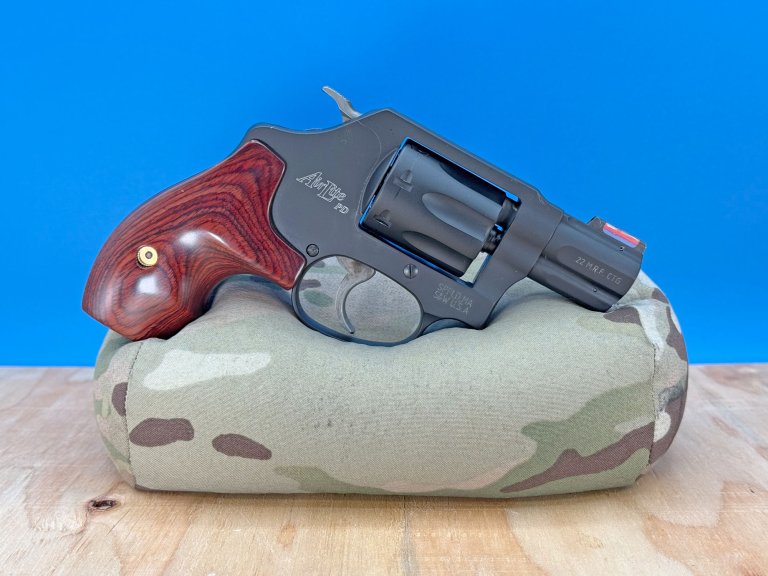
Smith & Wesson 351 PD
See It
Pros
- Light and compact
- Easy to shoot
- Good ammo capacity
- Versatile
Cons
- Not as potent as larger J-Frame cartridges
Key Features
- Caliber: .22 WMR
- Capacity: 7
- Barrel length: 1.88 inches
- Weight: 11.4 ounces
- Sights Fiber-optic front sight
- Price: $810
The Smith & Wesson 351 PD is an AirLite series J-frame revolver that’s chambered in .22 Magnum. It’s light even when loaded, and boasts an impressive 7 round capacity. Other J-frames chambered in .38 Special and .357 Magnum are certainly more potent, but they are also much more difficult to shoot with speed and precision — even at close range. The .22 Mag. chambered 351 PD offers the same concealable size and feel, but it’s much easier, and more fun, to shoot.
This is a great option for a practice gun for someone who carries a larger cartridge in a J-frame regularly, and is well-suited for anyone who might struggle to control the sharp, flippy recoil of a .38 or .357. Though .22 Magnum might not be the most potent self-defense cartridge, it’s performance has been elevated by defense-specific loads like Federal’s Punch and Speer Gold Dot.
More than just a dedicated EDC revolver, the 351 PD would be quite useful as a carry gun for a trapper or backwoods hunter. It’s not especially accurate, but would be useful for small game under 15 yards, and is generally a fun and affordable revolver to shoot. You’re guaranteed to shoot it much more than the same platform chambered in .357 Mag., and for a tool you might have to use in the most stressful of situations, that counts for a lot. You can read our full review of the Smith & Wesson 351 PD here.
Ruger LCR .22LR
See It
Pros
- Convenient and compact
- Good ergonomics
- Cheap to shoot
- Great trainer
Cons
- Not the finest aesthetics
Key Features
- Caliber: .22 LR
- Capacity: 8
- Barrel Length: 1.87 inches
- Weight: 14.4 ounces
- Sights Low-profile sights
- Price: $627
Everyone has different needs and preferences when it comes to a carry gun, and some folks find that a compact .22 LR revolver suits them fine. The Ruger LCR .22 holds 8 rounds of ammo, and features a comfortable Hogue grip. The revolver is easily concealed, and can be constantly on-duty for pests or threats. The .22 is arguably underpowered for general self-defense applications, but the gun you have on you is better than the one you don’t. One way to resolve that issue is to go with .22 LR ammo that is purpose-build for self defense.
This revolver isn’t as handsome as many others on the market, but it’s fun to shoot, easy to maintain, and can be carried as an EDC option, or used as a trainer for larger-caliber revolvers. OL Shooting Editor John B. Snow tested the Ruger LCR hard and you can read his full review here.
How We Test and Choose the Best Concealed Carry Guns
There are many great concealed carry guns to choose from, and lots that aren’t so great. Rest assured that any guns in this or other buyer’s guides have been hands-on tested by our staff. I shoot about 20,000 rounds through handguns annually, and each gun — whether tested by me or another staff or test team member — gets both accuracy and reliability testing. We fire a minimum of several hundred rounds through each pistol, running drills, drawing from holsters, and, in this case, carrying concealed. We test for accuracy by firing from a standing position at 15 yards, supported on a sandbag-topped tripod as described in this story on how to shoot a pistol accurately.
Read Next: The Best Concealed Carry Holsters of 2025
How to Choose the Best Concealed Carry Gun
Each concealed carry gun has its own advantages and disadvantages. When deciding what will work best for you, it helps to consider the following:
- Carry position and where you prefer to carry your gun
- Your clothing style and how well it conceals a gun
- How well the concealed carry gun fits your hand
- Your budget
Picking a concealed carry gun is a personal matter, and everyone will have different preferences based on their individual needs. However, there are excellent starting points, and our team has been able to thoroughly test and vet every gun on this list. Whether the feature set, size, or budget is most important to you, you’ll likely find a concealed carry gun on this list that will fit your needs. Most importantly, get some qualified training before you start carrying.
Read Next: Best 9mm Ammo
Final Thoughts on the Best Concealed Carry Guns
Choosing which gun to carry every day is an important decision, and the best concealed carry gun will be different for many people. There’s lots of things to consider when picking one, but a fortunate certainty is that you have a lot of options to choose from. Pick something that you can shoot well, and that you’ll carry every day. An EDC pistol won’t do you any good sitting in the gun safe at home.
Read the full article here
