



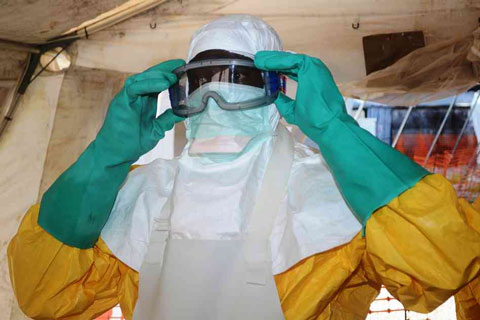

Not nearly as many people are checking into hospitals in the Democratic Republic of Congo for symptoms of the rapidly spreading Ebola virus. “There is a high concern overall, but the main concern is that people are hiding,” said Faith Koskei, the head of Monitoring, Evaluation, Accountability, and Learning (MEAL) at Save the Children.
WHO Chief Swears Ebola Outbreak “Can Be Stopped”
Koskei said that people in the areas affected by the recent outbreak are afraid that they will be isolated and quarantined if they report their symptoms to health officials. “If I suspect that I have Ebola, I may not go to the hospital for fear of being isolated. This is also compounded by family members or community members hiding this person and not reporting [symptoms].”
“It is intense when you see people dying and people around you are infected,” Koskei added.
Ebola, unlike a cold or the flu, spreads through contact with bodily fluids. Without treatment, some infections could be fatal. Someone with Ebola disease may start getting sick around 2 to 21 days after initial contact.
Accoridng to the United States Centers for Disease Control and Prevention (CDC) website, people with Ebola disease may experience “dry” symptoms early in the course of illness. These symptoms may include fever, aches, pains, and fatigue. As the person becomes sicker, the illness typically progresses to “wet” symptoms and may include diarrhea, vomiting, and unexplained bleeding.
Uganda Closes Borders To DRC As Suspected Ebola Cases Are Now Over 1000
Patients who end up dying from Ebola, which is a hemorrhagic disease, usually develop more severe symptoms early in the illness. Patients who survive may have a fever for several days and begin improving about 6 days after symptoms started.
“We need protective gear, we need testing equipment, we need all the things that are needed to stop the spread of Ebola. We know what to do. We’re behind the curve, and time is of the essence,” explained Greg Ramm, DRC Country Director for Save the Children.
According to a report by WUSA9, a Washington D.C.-based CBS News affiliate, the State Department says it has committed more than $162 million to help the response effort, with money supporting treatment and quarantine clinics.
Containment of this outbreak has proven difficult as health officials scramble for any possible way to advance tracking and tracing methods.
Read the full article here
