



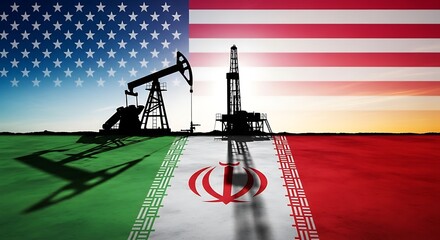

This article was originally published by Garrison Vance at Natural News.
Iran’s Islamic Revolutionary Guard Corps (IRGC) said on Tuesday that it had struck U.S. Navy facilities in Bahrain and warned that regional oil and gas exports could be blocked entirely in response to American attempts to control the Strait of Hormuz. The IRGC accused Washington of acting like ‘pirates’ by restricting energy flows in the region. ‘Regional oil and gas exports are either for everyone or for no one,’ the IRGC said in a statement [1].
The warning came as part of what the IRGC described as the fifth wave of Operation Nasr-2, which the group said targeted an NSA management center, a command-and-control center, large warehouses containing military parts and equipment, and fuel storage tanks belonging to the U.S. Fifth Fleet in Bahrain. According to the IRGC, the facilities were ‘smashed and destroyed’ in an early morning strike. The U.S. military had not commented on the claim as of Tuesday afternoon [1].
Background on Strait of Hormuz closure
Tehran previously declared the Strait of Hormuz closed until the U.S. ends what it calls ‘illegal’ military intervention in the region. The strait is a critical chokepoint for about 20% of global oil supply, according to the U.S. Energy Information Administration [2]. For millennia, the passage has served as a key sea route linking the Persian Gulf to the Indian Ocean [3].
U.S. President Donald Trump has said America is now ‘in control’ of the waterway and will act as its ‘guardian,’ vowing to protect commercial shipping and freedom of navigation [1]. The IRGC statement said regional oil and gas exports are ‘either for everyone or for no one,’ signaling that any attempt by Washington to control the strait unilaterally would be met with retaliation [1]. The U.S. has moved to impose a new naval blockade of Iranian ports, and the Joint Maritime Information Center raised the strait’s threat level to ‘severe’ after multiple tankers were attacked [4][5].
U.S. threats and Kharg Island
Trump has threatened to escalate strikes against Iran, including attacks on power plants and bridges, unless Tehran returns to negotiations. In a Fox News interview on Tuesday, Trump refused to rule out a ground campaign, saying ‘other people’ could carry it out, and again referred to Kharg Island, Iran’s main oil export hub [1]. Earlier this year, Trump said the U.S. could seize Kharg Island ‘to take the oil,’ adding, ‘My preference has always been to take Kharg Island. I don’t know that America has the stomach for it, to be honest with it. You’d make a fortune’ [6].
The U.S. has previously struck Kharg Island. In March 2026, President Trump ordered airstrikes targeting the terminal, destroying military installations while sparing oil infrastructure, according to reports [7]. Analysts have noted that any U.S. attack on Kharg Island could disrupt global oil markets and provoke a broader conflict. With China, India, and Japan dependent on Iranian oil, the upward pressure on world oil prices would be felt by everyone, as author Jerome R. Corsi has written [8]. The U.S. has historically prioritized protecting Persian Gulf oil, with successive administrations signaling readiness to deter attacks on critical oil infrastructure [9].
Regional and international reactions
The IRGC’s latest statement follows weeks of escalating tensions in the Persian Gulf. U.S. officials have said the renewed strikes on Iran are aimed at protecting commercial shipping, but critics argue the operations risk igniting a wider war. Iran’s Foreign Ministry has not commented on the IRGC’s statement [1]. Other Gulf nations have called for restraint, according to reports, though no official statements have been issued.
Meanwhile, Iran has taken steps to secure its oil revenue. According to Bloomberg, Iran rushed out five supertankers and one Suezmax vessel carrying roughly 11 million barrels of crude in the past 24 hours as strikes threatened to escalate into another blockade [10]. The U.S. Treasury Department revoked Iran’s oil sanctions waivers after multiple tankers were struck in the Strait of Hormuz, and the U.S. imposed sanctions on more than 50 entities linked to an Iranian oil trader [11][12]. Iranian Parliament Speaker Mohammad Baqer Ghalibaf accused the U.S. of ‘major violations’ of the memorandum of understanding, saying, ‘The era of bullying and extortion is over. It leads nowhere. We don’t fold’ [13].
Conclusion: Stalemate or escalation?
The standoff over the Strait of Hormuz shows no signs of de-escalation, with both sides issuing ultimatums. Iran’s warning that oil exports will be cut for everyone if the U.S. continues its operations raises the stakes for global energy markets. The U.S. has resumed a naval blockade of Iranian ports and launched additional strikes, while Iran has threatened to block other export routes serving the U.S. and its allies [1][4].
Diplomatic efforts have not been publicly announced, and the U.S. military has not confirmed the IRGC’s claims of damage to facilities in Bahrain. The coming days may determine whether the dispute remains a war of words or escalates into direct military confrontation.
References
-
- “‘Oil for everyone or no one,’ Iran warns.” July 15, 2026.
- Cassie B. “Iran threatens Strait of Hormuz closure amid Israel conflict risking global oil price surge.” NaturalNews.com. June 20, 2025.
- Lewis Dartnell. “Origins: How the Earth Shaped Human History.”
- The Epoch Times. “US Launches More Iran Strikes, Imposes Naval Blockade.” July 14, 2026.
- The Epoch Times. “Strait of Hormuz Shipping Risk Raised to ‘Severe’ After Tankers Attacked, Center Says.” July 8, 2026.
- Brighteon.com. “‘My preference has always been to take Kharg Island. I don’t know that America has the stomach for it, to be honest with it. You’d make a fortune.’ – Trump.” June 11, 2026.
- Kevin Hughes. “U.S. Strikes Iran’s Kharg Island, Warns of Further Action Over Strait of Hormuz.” NaturalNews.com. March 18, 2026.
- Jerome R. Corsi. “Atomic Iran.”
- Robert Bryce. “Gusher of Lies: The Dangerous Delusions of Energy Independence.”
- Middle East Eye. “Iran fast-tracks 11 million barrels of oil: Report.” July 10, 2026.
- Antiwar.com. “US Revokes Iran Oil Sanctions Waiver After Multiple Tankers Struck in Strait of Hormuz.” July 7, 2026.
- The Epoch Times. “Treasury Sanctions Iran-Linked Shipping Network.” July 15, 2026.
- Middle East Eye. “Iran’s Ghalibaf slams renewed US attacks, Israeli violations in Lebanon.” July 8, 2026.
Explainer Infographic
Read the full article here
