



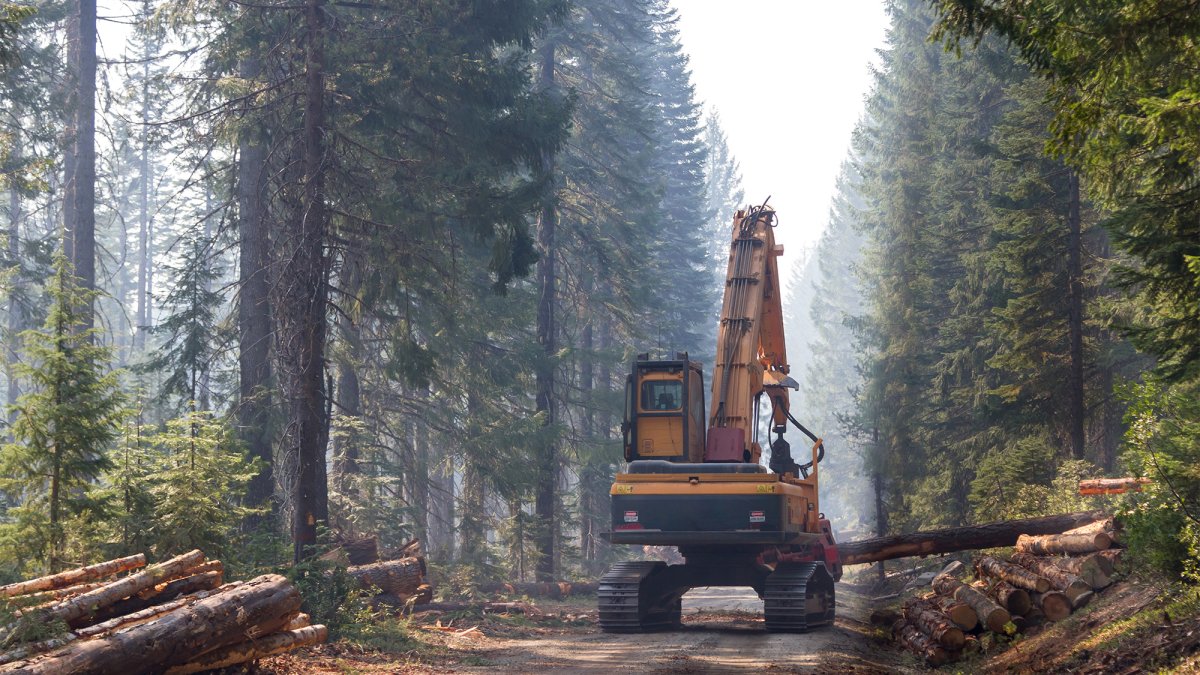

An Oregon environmental group is suing the Department of the Interior to stop a timber sale in the Coast Range because Congress invalidated the BLM resource management plan that would have ordinarily guided the sale of about 1,300 acres of timber in sensitive salmon-rearing habitat.
Legal experts suggest this could be the opening salvo in a barrage of similar lawsuits that maintain federal timber sales, oil and gas leases, renewals of grazing permits, and even holiday-season permits to cut Christmas trees on public land are all illegal because Congress nullified the agency plans that authorized them.
The Oregon lawsuit, filed today in U.S. District Court in Eugene, is essentially using Congress’ action to stop the very resource extraction that many Republicans hoped to accelerate when they used the controversial Congressional Review Act to rescind Resource Management Plans on millions of acres of BLM land around the West.
In the case of the Oregon suit, the environmental group Cascadia Wildlands claims the Aloha Trout Forest Management Project is illegal because the BLM “may approve timber harvest from its lands only pursuant to a valid resource management plan (RMP).” But the suit claims the BLM’s plan was invalidated by Congress.
At issue is last October’s decision by Congress to nullify three BLM Resource Management Plans, in Montana, Wyoming, and Alaska, using the Congressional Review Act to call their authority into question. After the Government Accountability Office concluded that the RMPs could be considered “rules” and not simply “plans,” all RMPs across the nation were considered nullified. President Trump signed the CRA resolutions into law in December.
The Oregon lawsuit claims that, because BLM’s management plans are nullified, then any actions the agency might take that descends from the plan, including timber sales, are also invalid. The last valid RMP for public lands in western Oregon is the Northwestern and Coastal Oregon RMP, approved by the BLM in 2016. It guides sustainable timber harvest on 1.3 million acres of federally managed lands across western Oregon.
The Oregon lawsuit specifically names Secretary of the Interior Doug Burgum, the U.S. Department of the Interior, and Steve Pearce, the newly confirmed director of the Bureau of Land Management, as defendants.
It may be the first of many, and maybe hundreds, of similar cases, says John Ruple, research professor of law at the University of Utah and director of the influential Law and Policy Program at the Wallace Stegner Center for Land Resources and the Environment.
“I would not be surprised if there are more lawsuits like the one in Oregon,” he says. “The argument is really simple and straightforward.”
Ruple says the basis of the legal action is embedded in the text of the Congressional Review Act, enacted in 1996.
“The very first line of the statute states that before a rule can take effect, it has to be submitted to Congress,” he says. “Since 1996, there’s been this question out there: What constitutes a rule? And over that 30-year time period, the Forest Service, the BLM, the National Park Service, and the U.S. Fish and Wildlife Service have all been of a like mind that land management plans are not ‘rules’ and therefore not subject to the CRA.”
Consequently, none of the agencies’ land management plans have been submitted to Congress. That system has allowed plans to be widely circulated for public input, and for the leasing, permitting, and administration of plans to be predictable and orderly.
“Fast forward to the last Congress, which introduces and then passes these resolutions of disapproval saying these plans are rules,” says Ruple. “Then the president signs those resolutions into law. You have both Congress and the president saying that plans are rules. It seems to follow pretty clearly that if plans are rules, they must be submitted to Congress before they can take effect. But because they weren’t submitted to Congress, it’s a clear argument that those plans were not lawfully enacted and therefore can’t go into effect.”
In a floor speech last year, Montana Senator Steve Daines (R), sponsor of the Congressional Review Act legislation nullifying the BLM’s resource management plans, claimed the statute was “righting a wrong” in order to “unleash Montana’s energy” resources.
Oil and Gas Leases May Be Next
The Oregon lawsuit descends from language in federal regulations that states “Resource management authorizations and actions shall conform to the approved plan.”
“If those authorizations have to conform to an approved plan and your plan wasn’t approved, then how can those authorizations be valid?” Ruple notes. “Here we have a challenge in Oregon to one timber sale, but it seems like you could just as easily make that argument about many of the upwards of 5,000 BLM APDs (Applications for Permits to Drill) that have been issued but not developed. They presumably were issued based on consistency with an RMP that was finalized less than 30 years ago” when the CRA was in effect.
Ruple says the consequences of the CRA action “pinwheel” out to potentially affect a wide scope of activities governed by land-management agencies.
“If you want to take your kid out and cut a Christmas tree off National Forest lands, you have to get a permit first,” he notes. “That permit has to be issued consistent with a forest plan. You want to go rafting down the Middle Fork of the Salmon River? You’ll need a permit issued consistent with a BLM management plan. If those plans are nullified, I would presume the permits are invalid.”
He noted consequences could extend as far as Vail, the destination Colorado ski resort.
“That ski area operates on a lease with the National Forest Service,” he says, noting that impacts could also ripple out to public land rights-of-way permits for transmission lines, water lines, and renewable energy facility siting.
“This Was Very Avoidable”
In November, a group of 30 leading environmental-law professors, along with former BLM leaders, energy executives, and a handful of conservation organizations, sent a letter to the BLM’s acting director warning that more than 5,000 oil and gas leases on more than 4 million acres of public land could be invalidated by the CRA. The letter noted that by treating RMPs as “rules,” every plan enacted since 1996 could be invalidated.
Ruple was not only one of the signatories of the law professors’ letter; he was its lead author.
“There are a lot of people who tried to warn Congress about what I think were very predictable consequences,” Ruple says. “We all said, ‘Don’t do this. The unintended consequences are severely destabilizing.’ Set aside whether you think these plans are good or bad — we take no position on that. We just think this is indiscriminate and descriptive and really unhelpful.
“I don’t know where things broke down,” he continues. “I don’t want to point a finger at Congress or the president, but I don’t know if people didn’t understand or pay attention to the warnings or disregarded them. But this was very avoidable.”
Read Next: Americans Already Agreed How to Balance Energy Development on Public Land in Their States. The House Just Voted to Undo It
The Oregon lawsuit asks the federal district court to disallow the Aloha Trout Forest Management Project. The timber sale “was not in accordance with law and must be declared unlawful and vacated” under the federal Administrative Procedures Act. The suit further asks the court to “declare that all permits, leases, rights of way, and other site-specific authorizations issued pursuant to the [Northwestern and Coastal Oregon RMP] are null and void, and as a legal matter, were never issued.”
The Department of the Interior responded to Outdoor Life’s inquiries about the lawsuit, but declined to comment because of the “pending litigation.”
Read the full article here
