



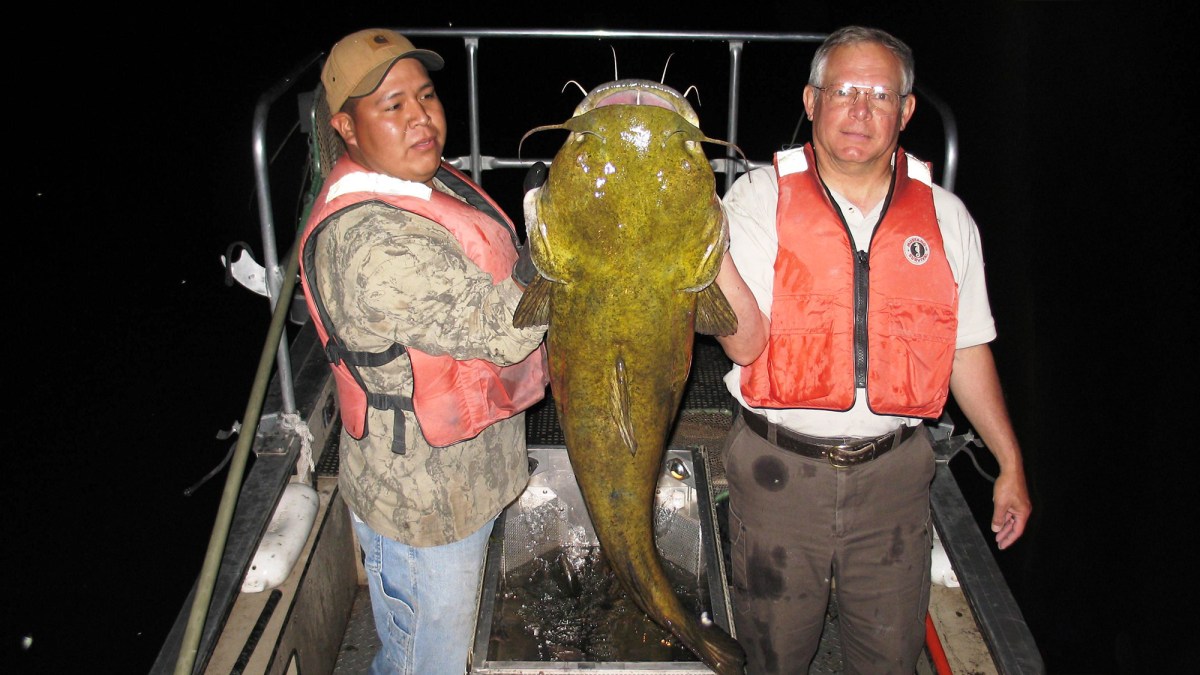

So, you want to catch a big flathead catfish. That’s a laudable goal. These brutes commonly exceed 50 pounds. World-record-class fish top 120. While in the same family as channel and blue catfish, these shovel-headed giants differ so much in their habits and physical characteristics, they’ve been placed in the genus Pylodictis, to which no other fish belongs. Learning how they differ from their kin allows you to fish for them properly, increasing your success rate.
Lesson 1: Think Like a Predator
The first concept to grasp is that flatheads are bushwhackers. In daytime, they hide around or within submerged logs, driftwood piles, toppled trees, snags, and riverbank cavities, waiting to ambush passing prey. Flatheads aren’t built for extended chases like their streamlined cousins, preferring instead to dart out from hiding and devour unwary prey. Flatheads roam very little, and when they do, they roam at night or when rains create turbid, high-water conditions, never venturing far from their preferred home quarters.
Related: Hot Dogs Are Still the Best Bait for Catching Channel Catfish
Channel cats and blues sometimes act likewise, but not nearly as often as their big brown cousins. Knowing just these things can immediately improve your odds for flathead-catching success — focus your daytime fishing efforts on dense, shady near-shore cover such as blowdowns and drift piles, and continue to fish near such cover at night. Extracting fat flatties from these spots isn’t easy, but it can be done if you fish with heavy line on tough tackle. Drift in a bait beneath a float or on a tight line, and stay alert.
Lesson 2: Learn About Loners
Jumbo flatheads are testy beasts. Unlike blues and channel cats, which frequently gather in loose schools, flatheads are aggressive toward others of their kind. As a result, a prime piece of flathead real estate rarely harbors more than one heavyweight adult, so you’ll probably find it fruitless to continue fishing a single spot of cover after catching a good fish.
Catch one here; move over there. That’s another key to success.
Lesson 3: Don’t Drop Deads
Many anglers are under the impression that big flatheads will eat virtually anything.
Flatheads often scavenge and aren’t picky about their food. But this applies primarily to small individuals. Juvenile fish up to a few pounds will hit stinkbaits, chicken livers, worms, crawfish, and other normal catfish baits without hesitation.
Related: 11-Year-Old Battles a 72-Pound Catfish and Just Misses Catching a State Record
If you’re seeking heavyweight flatheads, however, these baits rarely work. The big guys seldom eat invertebrates or rummage for dinner. A meat-and-potatoes meal for a giant flathead is another fish — a live fish — so that’s what you should use to entice them. Good choices include live sunfish, suckers, bullheads, carp, goldfish, and chubs.
Lesson 4: Keep It Clean
Flatheads can taste and smell certain compounds in the water in extremely minute quantities. This can be good because it helps them zero in on your bait. But be sure to avoid handling things such as gasoline, sunscreen, tobacco, and insect repellent, which will send them scurrying away from even the most tantalizing baits.
Lesson 5: Feed the Bear
Today’s anglers have learned that channel cats and blue cats feed actively throughout winter, even when lakes and rivers ice over. Not so big flatheads. These fish enter a hibernation-like state when the water temperature drops below 45 degrees, lying inactively on river and lake bottoms until spring warms things again.
Related: These Are the Biggest North American Catfish of All Time
To compensate for winter’s period of lean rations, however, flatties gorge in spring to ease their wake-up hunger pangs and again in fall to gain weight like bears preparing for hibernation. Fish these seasons for an increased chance of a hookup.
Read the full article here
