




Editor’s note: This article first appeared on The War Horse, an award-winning nonprofit news organization educating the public on military service. Subscribe to their newsletter.
The soldier wakes at 6 a.m. after getting only three or four hours of sleep.
He showers, shaves and puts on his uniform by 7 a.m., even as his head pounds from a traumatic brain injury. Sometimes, while walking to a mandatory daily roll call, the piece of shrapnel still lodged in his back catches on his shirt.
He’s not in the barracks. He is recovering at the Soldier Recovery Unit at Walter Reed National Military Medical Center.
“It’s horrible,” he said. “I’m here to recover, not show up in uniform and play Army games.”
This soldier was critically wounded in the Iranian attack on Port Shuaiba, Kuwait, that killed six service members and injured dozens more. Four months later, he said, he was only recently able to see a neurologist for the first time.
“There were a lot of things that they missed that I should have done a long time ago,” he said.
His experience was not isolated.
The War Horse spoke with four Army Reserve soldiers from the 103rd Sustainment Command who were wounded in the attack. They described delayed testing and treatment, inconsistent care depending on which Soldier Recovery Unit received them and restrictions from taking leave to visit family. All four spoke on condition of anonymity because they remain on active-duty orders and feared retaliation that could damage their careers.
The War Horse corroborated key details of their accounts through separate interviews and reviews of medical records, photographs and documents from the attack and its aftermath.
Though the soldiers received Purple Hearts for being wounded in combat, they said the military medical system was failing to provide the care they needed.
Two of them, interviewed separately, used nearly the same words: “The military sees us as numbers.”
The ‘Peacetime Effect’
Military medicine has long struggled with what researchers call the “peacetime effect.” Medical teams become highly proficient at treating combat casualties during war, only to see those skills deteriorate once the fighting is over.
A 2023 research paper by the Institute for Defense Analyses described the cycle bluntly. Military medical forces excel at combat care during wartime, the authors wrote, “but then see these gains erode after the wars end.”
The problem has concerned federal watchdogs for decades, said Rashmi Agarwal, director of defense capabilities and management at the U.S. Government Accountability Office. Her office has monitored whether military medical personnel receive enough training and real-world experience to be prepared for battlefield casualties.
“The concern is that these personnel just simply don’t have adequate exposure to a high volume of critical injuries, and that leaves them not well prepared to treat these casualties when they’re in the battlefield,” Agarwal said.
Recent reports from the GAO and the Defense Department’s Office of Inspector General have raised similar concerns.
The military has tried to close that gap by placing military medical units in civilian trauma centers where doctors, nurses and medics can regularly treat patients with severe injuries. Some military hospitals have also begun accepting civilian trauma cases to give their medical staff more experience with the kinds of wounds they could encounter in combat.
But other developments have moved in the opposite direction.
In May, ABC News reported that the Army was canceling dozens of medical training courses because of a budget shortfall, including courses intended to provide frontline combat care.
Training issues were already evident before those cuts. In an article published by the Army, a senior enlisted medic in the Minnesota Army National Guard wrote that only half of the Army Reserve and National Guard medics sent to the Middle East had completed a critical combat medicine course before deploying in 2024.
U.S. Central Command, which oversees forces in the Middle East region, and the Department of Defense did not respond to multiple requests for comment for this story.
No Evacuation Plan
The problems in Port Shuaiba began before the March 1 attack.
Soldiers had requested additional medical support in the weeks before the strike, CBS News reported. But when the drone hit, the unit had no established plan to care for the wounded.
“There was absolutely no evacuation plan,” said an Army colonel wounded in the blast. “If someone happened to have keys for a van in their pocket, then we got that van and we loaded soldiers into it.”
A few Kuwaiti ambulances arrived, but the colonel said most of the wounded were transported in an improvised rush.
It was “Googling what the closest hospital was and just driving in a panic,” he said.
Several of the most seriously injured underwent emergency surgery at a Kuwaiti hospital and were medically evacuated on March 4, according to people familiar with their treatment and to open-source flight-tracking data.
Others remained in Kuwait for more than a week despite perforated eardrums, shrapnel wounds and symptoms of traumatic brain injury. They stayed in safe houses, eating military field rations and takeout while waiting to leave the country.
A medic eventually conducted traumatic brain injury assessments, which helped document that the injuries occurred in combat. But it wasn’t until nine days after the attack that the soldiers boarded a flight to Ramstein Air Base in Germany.
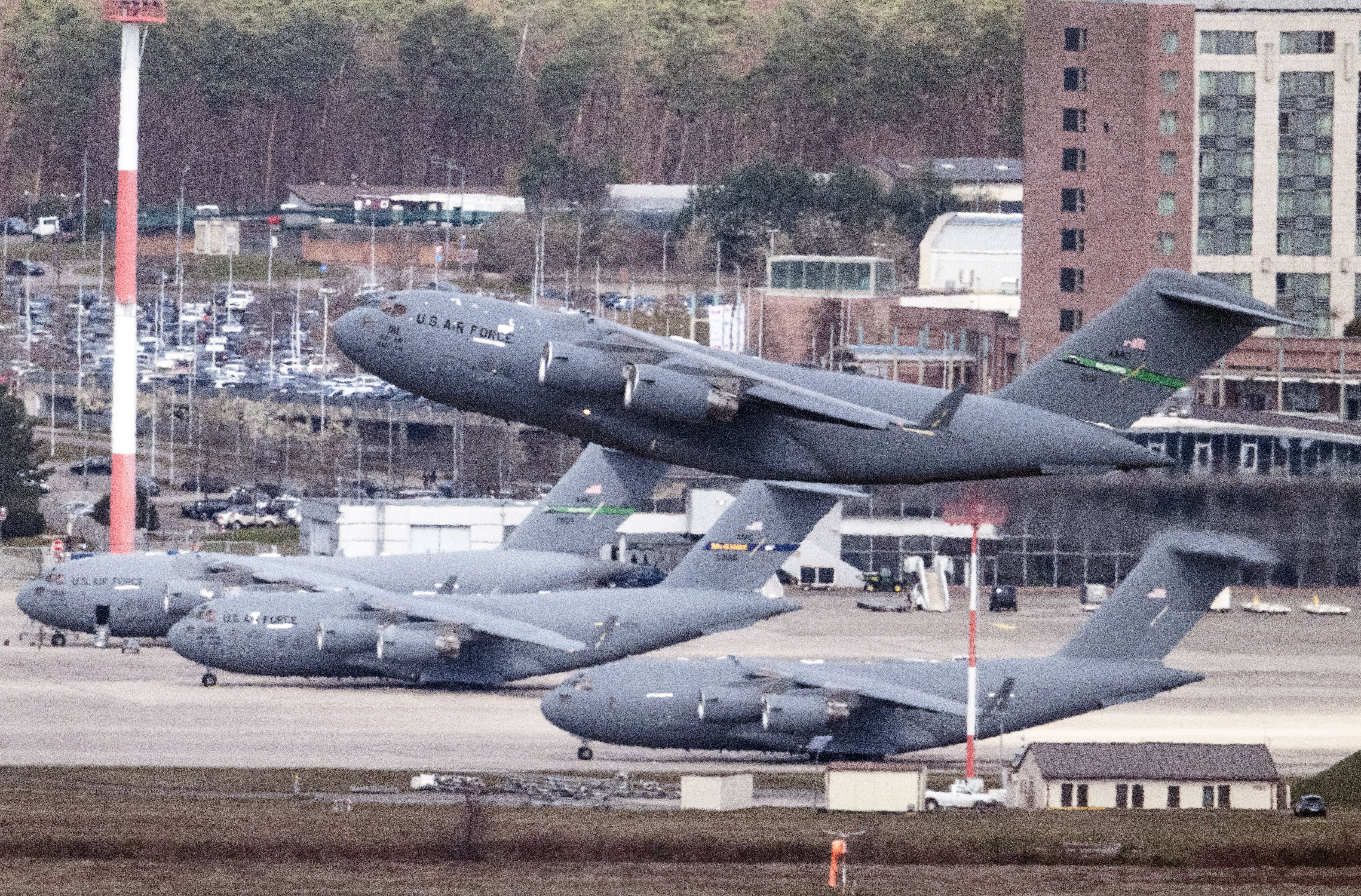
When they arrived, the colonel said he felt relieved. He believed the wounded troops would finally receive comprehensive medical care at Landstuhl Medical Center.
Instead, “one by one they turned us away,” he said.
Multiple soldiers said Landstuhl staff told them that because they had not arrived on a formal medical evacuation flight, they were not being treated as wounded in action. They were denied inpatient beds and told to schedule outpatient appointments weeks later, in April or May.
Officials at Landstuhl did not respond to questions from The War Horse.
The War Horse spoke with multiple experts in military medicine about the soldier’s dealings with Landstuhl staff. All of them said the term “wounded in action” is typically determined by whether troops are wounded by enemy combatants, not by the type of flight they take.
“If you have rated a Purple Heart, which can only be obtained by an injury sustained from direct contact with the enemy, then that’s a MEDEVAC,” said retired Rear Adm. David Lane, a former Navy surgeon who deployed with the Marines and retired in 2018.
By the time the soldiers reached Fort Hood in mid-March, they were frustrated and still in pain.
They had gone days without being able to refill prescriptions issued at the hospital in Kuwait. One soldier with a badly injured shoulder had been relying on Motrin and Tylenol. At Fort Hood, she said, she repeatedly had to remind medical providers that she had survived a drone strike.
A couple of weeks after arriving, one of the soldiers received a call from a German phone number. Landstuhl was finally ready for the appointment he had been told to schedule before leaving Germany.
Alone in the Recovery Unit
At the end of March, the soldiers were told they could continue recovering in the Army’s Soldier Recovery Units, or SRUs, a network of 14 facilities for wounded, injured or ill soldiers with complex medical needs. Several members of the unit chose to go home instead.
Others asked to remain together. The Army denied the request and sent them to units across the country, generally based on their home of record. The soldiers were told the policy would place them closer to family and other support.
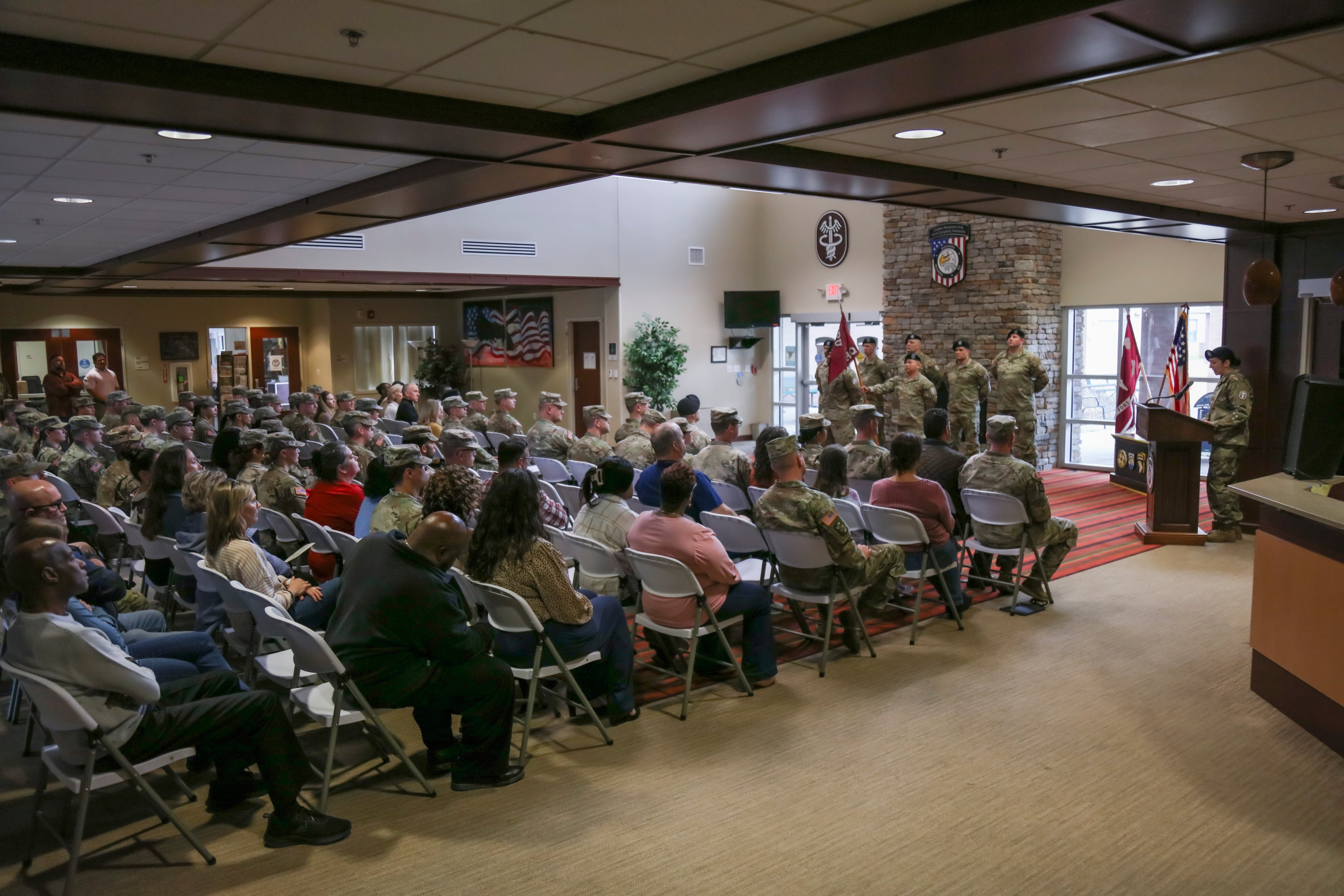
Instead, some said, the separation left them feeling even more isolated.
“I literally lived in my room by myself,” one soldier said. “It kind of took a toll on my mental [health].”
She asked to join group therapy but was told there were no openings. She requested leave to visit family and was denied. Eventually, she left the Soldier Recovery Unit and turned to the Department of Veterans Affairs for care.
“I was just so fed up, and I didn’t want to be isolated again,” she said.
But getting care through VA also proved difficult, this soldier said. She said primary care appointments were repeatedly canceled, and because her military medical records had not been transferred into the VA system, she could not receive referrals for specialty care, such as neurology or orthopedics.
“I see why a lot of soldiers snap,” she said. “Because if you’re physically wounded and you’re fighting the VA or you’re fighting military doctors, it messes with your mental health. You give up.”
The War Horse told VA it could not share the soldier’s name or facility because doing so would identify her as a source. The department did not dispute any of her specific claims about her care. Instead, VA press secretary Quinn Slaven criticized the reporting and the reporter, saying she “is not interested in verifying facts” and “prefers to write about hearsay.”
Not everyone describes the recovery units negatively.
The soldier at Walter Reed said his appointments appeared to receive priority, though some were still scheduled two or three months away. Still, he wanted to return home to the Midwest, where he could be near his wife and children and receive treatment at a local trauma center.
“Why can’t they keep me in orders, send me home where I’ll probably do a lot better mentally, and let me finish out care there?” he said.
The Army Reserve colonel recovering in another SRU said he appreciated the support of the SRU staff. But it took two months for the unit to arrange a CT scan for a persistent cough. The scan showed abnormal tissue growth in his lungs, possibly from inhaling unknown toxic fumes during the blast.
One problem, he said, is that SRU patients use the same medical facilities as everyone else on the installation. That can leave combat-wounded soldiers waiting alongside patients seeking care for appendicitis, broken bones and other conditions.
“There should be a mechanism, I think, to just push us to the front of the line for some of these initial tests, if nothing else,” the colonel said.
Some soldiers have already been discharged from the SRUs and cleared to return to duty.
One said he was told his injuries were not severe enough to require complex care, despite a traumatic brain injury, hearing loss and post-traumatic stress disorder. He is now trying to obtain treatment through the civilian health care system.
“I’ve been struggling to get mental help,” he said. He has also not yet seen a neurologist.
“It’s a whole complex system that at some point, even me as a soldier, I just give up on it.”
On July 29, 13 Democratic lawmakers wrote to Defense Secretary Pete Hegseth demanding answers about the treatment of soldiers from the 103rd Sustainment Command.
“We are alarmed by reports of failures of DoD to provide medical care for soldiers from the Army’s 103rd Sustainment Command who were injured in the strike,” they wrote.
Sen. Tammy Baldwin, one of the lawmakers who signed the letter, told The War Horse that she had heard directly from troops with serious brain injuries who waited weeks for care.
“That is absolutely unacceptable,” Baldwin said.
For several survivors of the drone attack, however, the larger concern is what their experience says about the military’s ability to care for the next wave of wounded troops as the war with Iran continues.
“These soldiers that are getting injured, they have to advocate for themselves,” said the reservist still recovering at Walter Reed. “If they don’t, they’re not going to receive proper care, and they’re going to be screwed.”
Read the full article here
