




Editor’s Note: This article first appeared on The War Horse, an award-winning nonprofit news organization educating the public on military service. Subscribe to their newsletter.
It was only a month after the roadside bombing. I was still in Landstuhl Regional Medical Center, Germany, in June 2006, undergoing successive rounds of surgery. Rods protruded from my limbs, keeping the broken bones of my right forearm and left thigh immobile until the doctors could complete a series of bone grafts and insert the titanium screws and bars so that my broken extremities would hold on their own.
It was an exhausting and painful process, made easier by the hours of relief spent with my wife, Michele. Unfortunately, the peace between surgeries and checkups was sometimes interrupted by visitors. Privately, I was not enthused. I knew I should have been more gracious and appreciative that people cared about wounded soldiers and wanted to show their support. I was sure there were men and women who had suffered through extended hospital stays and could’ve dearly used some company.
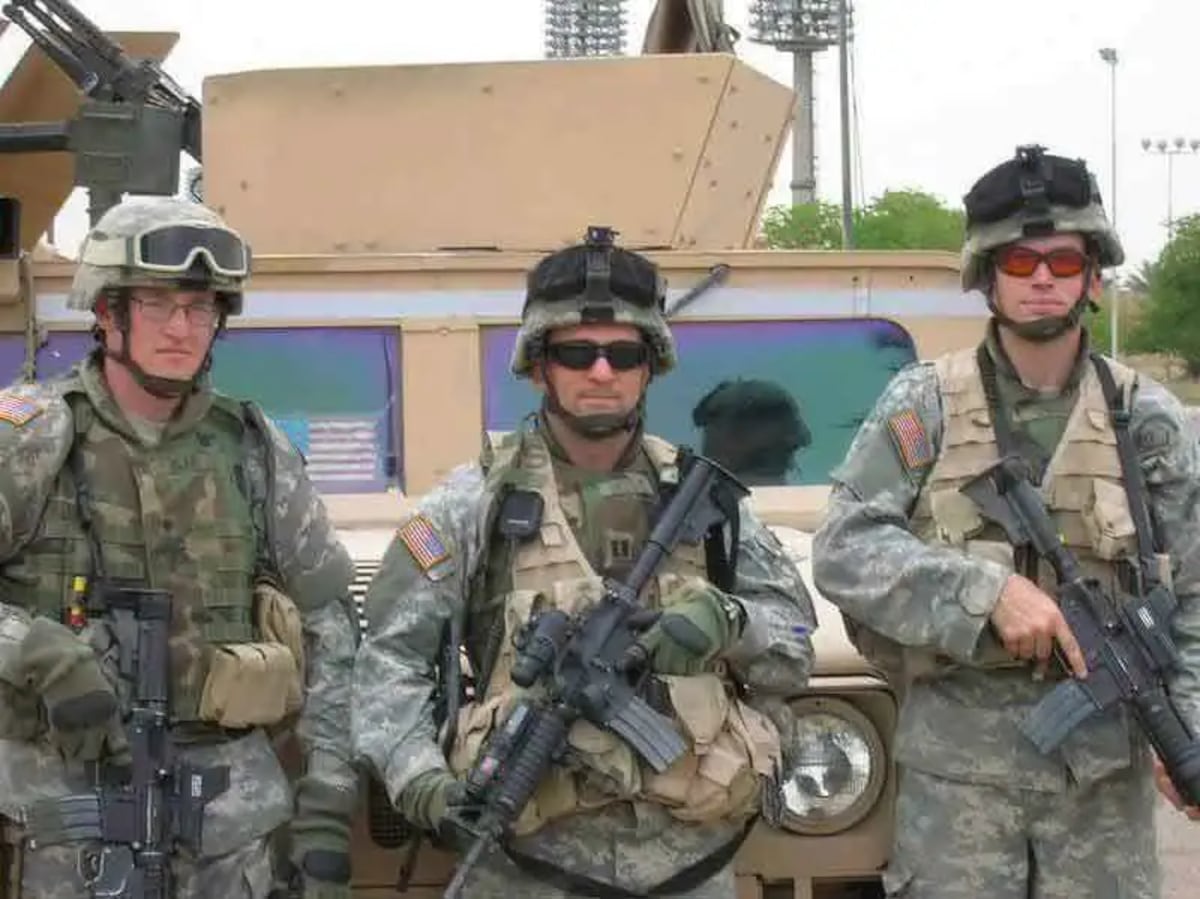
But I just wanted to be left alone with Michele, whom I almost widowed a few days before. On May 25, 2006, an explosive force projectile hit the M114 up-armored Humvee I was in. It killed my commander, Capt. Douglas DiCenzo, and the vehicle gunner, Spc. Robert Blair, and severely wounded the driver, Spc. Matt Owens, and me.
For the first week or so, I put on an upbeat attitude for everyone who showed up. But soon I started asking the hospital staff to turn people away, no offense intended. Some were musicians I didn’t listen to or athletes who played sports I didn’t care about. Maybe even a couple of actors from shows I never watched.
I can only speculate as to their motives. The celebrities were not followed by PR teams or photographers; they weren’t trying to burnish their image. Rather, they appeared to be attempting something genuinely humane and patriotic. I bore them no ill will, but I’d always been ambivalent about pop culture icons on a normal day. The days in Landstuhl were far from normal. Being nearly incinerated pegged my natural introversion at 11 and broke the knob off.
Obviously, I couldn’t turn away senior officers, though I was not sure they even wanted to be there. My own division commander seemed eager to pin the Purple Heart on my pillow and get the hell out of my hospital room. Perhaps it was the smell—no one likes the stench of disinfectant masking the remnants of various bodily fluids. That early in the war, maybe he wasn’t used to being around the wounded. Regardless, he couldn’t wait five minutes for my wife to make it back from the cafeteria down the hall, so she didn’t even attend my “awards ceremony,” such as it was.
Conversely, some of the other officers were almost reverent. One lieutenant colonel’s eyes were dewy when he looked at me, and he spoke in a tone I would reserve for someone who actually did something impressive. I just … didn’t die.
It was odd treatment, to say the least, for a second lieutenant like me. I held the most awkward rank in the United States Army—allegedly in charge as a 22-year-old despite little life experience and a total lack of tactical expertise. If you overplayed your hand as a second lieutenant, you risked irrelevance by appearing heedless and failing to earn your soldiers’ trust. But if you underplayed your hand, you risked irrelevance as an empty uniform in the formation, effectively a sock puppet and paperwork rubber stamp for noncommissioned officers.
All this to say, just about nobody holds a second lieutenant in awe. Being subject to reverent, deferential tones from anyone else in a uniform from any rung below or above on the ladder was, to put it mildly, a culture shock.
That same misty-eyed lieutenant colonel wanted me to chat with his son, a high school senior who was applying to West Point. I was unsure of the assignment. Was I supposed to be an inspiration because I had put on a brave face despite being wounded? Or was I a cautionary tale to get the young man to consider the risks of service? The poor boy looked as awkward as I felt when he came to visit me, still a bit hazy from a recent surgery. Lord only knows what I told him.
I do not remember the officer’s or his son’s name. I sometimes wonder if that kid ended up going to West Point after all. If so, I hope he had a good career.
The respect felt unwarranted. Doug DiCenzo and Robert Blair deserve to be remembered as heroes. The infantrymen, medics, doctors, PAs, and nurses who saved my and Owens’ lives are heroes.
But all I did was survive. After the blast, I was lying in a crater, with a broken arm and leg, high on adrenaline. The most I managed to do was prop myself up enough to wave down the medic.
I didn’t feel even a bit heroic. I felt like a wreck being held together by duct tape and wishful thinking.
There’s one class of visitor I didn’t turn away, however: Vietnam veterans who came to chat with service members who had been medevaced. They handled the situation with the greatest ease. They had seen comrades mangled by combat, and all seemed to instinctively understand the inevitable conflicting emotions that those of us who survived contended with.
They also grappled with a war where strategic goals shifted amorphously over the years, and popular sentiment waxed and waned greatly from its onset to its height. In reality, all wars are full of moral ambiguities once you get past the surface, but Vietnam vets were handed a conflict lodged in the gray both in reality and in the public consciousness.
They did their duty despite getting screwed over at every turn. They often fought in conditions that made anything I endured in Iraq look tame in comparison. Sure, I got pretty jacked up in a war that is difficult to classify as an unequivocal victory, but at least my country loved me to pieces when I got home. My dad’s generation got no such support.
On May 28th, one year to the date of my commissioning, another Vietnam vet visited me. He also happened to be Chairman of the Joint Chiefs of Staff Gen. Peter Pace, who came with his wife. I was ragged, unshaven, and had a graduated jar of my own urine on a table between us because the doctors needed to measure my output for some reason or other.
“You look like you’ve been through it, lieutenant,” he said, good-naturedly.
“Well, sir, Baghdad isn’t Hue city, but it wasn’t exactly fun,” I responded.
Gen. Pace had given a speech during my senior year at West Point, and I remembered from his biography that he’d commanded a rifle platoon during the Tet Offensive in Hue. The city saw the most intense urban combat of the Vietnam War.
“Tet was rough, but at least we actually got to fight back,” he said.
With those words, Gen. Pace voiced a frustration that I and many veterans felt during Operation Iraqi Freedom and Operation Enduring Freedom, which were dominated by improvised explosive devices. Killing the enemy isn’t fun or even gratifying, but it is cathartic to, as Gen. Pace put it, “fight back.” It was a catharsis that many soldiers, including me at that point in my career, were denied.
Of course, it was also a double-edged sword since some soldiers suffer moral injury from the act of killing. It’s not something I’ve personally struggled with, but I have friends who do.
The conversation flowed easily for more than two hours. Gen. Pace and his wife, Lynne, told us anecdotes of their early married life in the Marine Corps, which drew laughter from me and Michele. Despite the huge gap in age and seniority, the interaction felt natural; it was a sharp contrast to uncomfortable reverence or the disinterested box-check visit from my own division commander.
Gen. Pace had nearly four decades of service in the Marine Corps to my one year in the Army. The moment had an arc that somehow felt right amid all the wrongness. The torch passed from one generation to another sometimes illuminates a tangled morass, but it is passed down in good faith and allegiance, nonetheless.
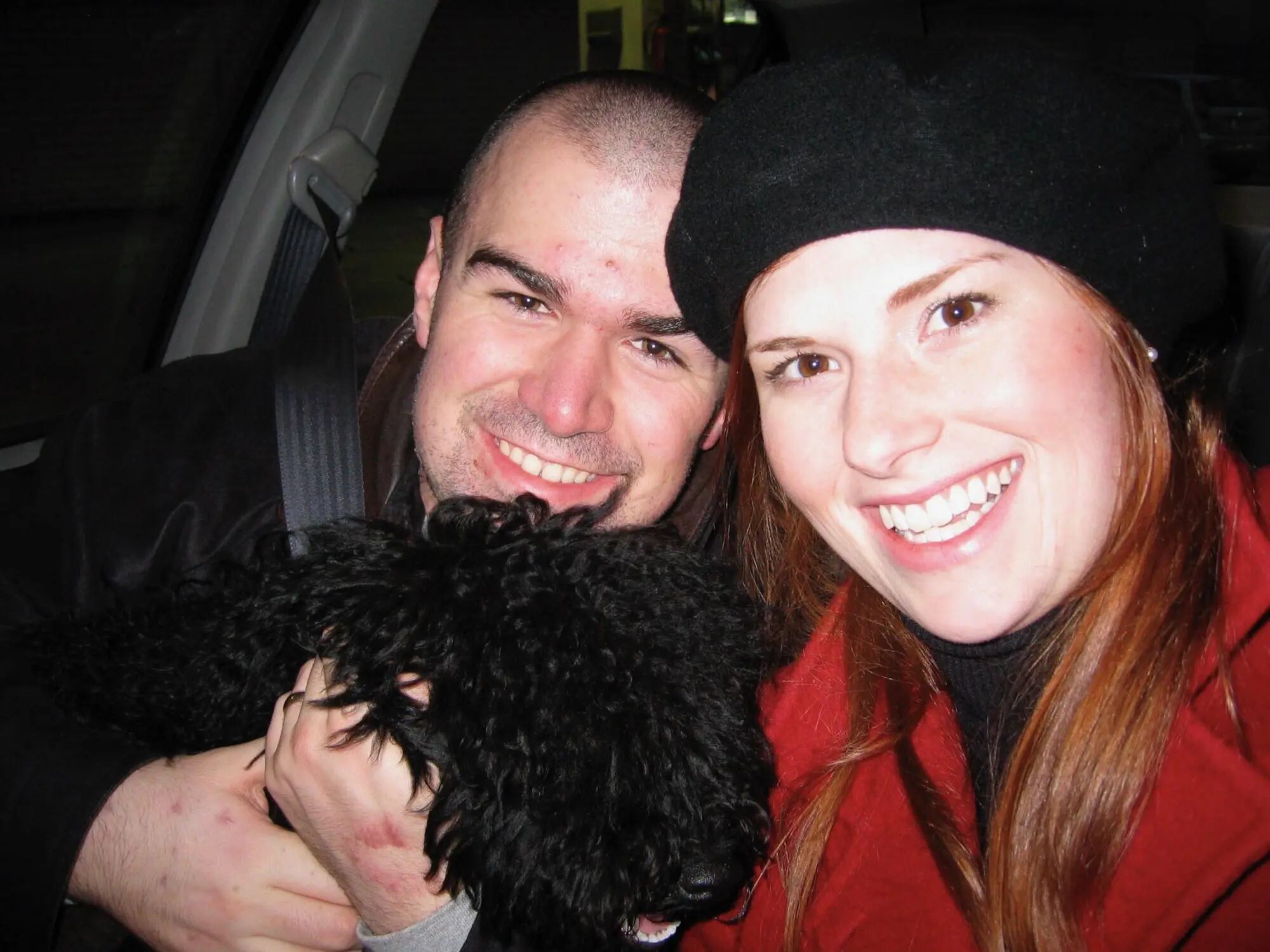
In time, the surgeons completed their good work, and I was allowed to return to my quarters in Germany. In a stroke of divine providence, Michele and I occupied first-floor housing. I have no idea how I would’ve navigated stairs on the walker I still needed then. I was able to work with the rear detachment on limited duty in between the fiendish ministrations of the physical therapists.
I frequently returned to Landstuhl for follow-up X-rays and reevaluations. Every few weeks, they cut the casts on my arm and leg back a few inches. I learned to walk normally, then to jog, then to run and march under a ruck again. The unit returned from Iraq, and I was simply one officer among many in my battalion.
Even as we prepared for the next combat deployment, it was a relief to be out of the petting zoo and back with my fellow line animals.
Read the full article here
