



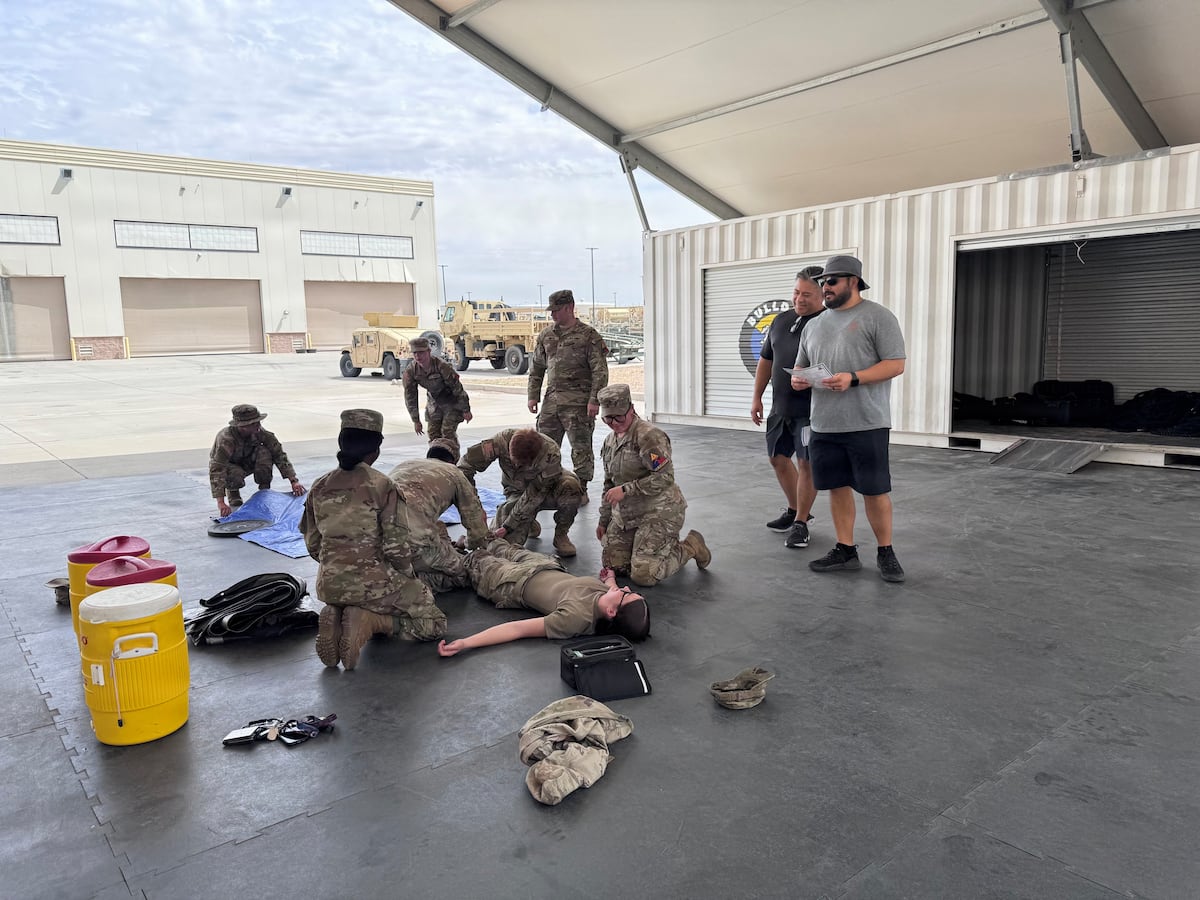

For a second year, cases of military heatstroke increased in 2025, according to new data published by the Defense Health Agency. That’s despite nearly a decade of intensive efforts to address and prevent heat injuries through awareness, training and deployment of body-worn devices that can flag symptoms of heat risk before they turn deadly.
But that may not be a bad thing, according to an epidemiologist who coauthored the latest report.
The survey data, published in June in the Pentagon’s Medical Surveillance Monthly Report, shows that heatstroke cases are up from 471 to 518 from 2024 to 2025. It’s a significant climb from 2023, which had 407 heatstroke cases. While cases dropped slightly in 2022 and 2023 from 2021’s total of 459 cases, 2025 was the worst year for heatstroke since 2018. That year, which saw 578 heatstroke cases — an alarming peak for documented data — helped prompt the founding of the Army Heat Center and other structural changes to protect troops.
Last year’s reported heatstroke cases were also notable in that there was a steep increase in hospitalizations, both those reported by the Defense Department health system and those only reported at a later point by troops. Reported hospitalizations were up from 132 to 173; while those initially unreported were up from 198 to 228. The cases that received ambulatory care at the scene were down, from 141 to 117.
Dr. Alexis Maule, who works at the Defense Health Agency-Public Health Disease Epidemiology branch in Aberdeen, Maryland, said that the rise in hospitalizations might be interpreted as a positive trend. While the increase in heatstroke could be a sign, he said, that early signs of heat exhaustion are being missed in the field, it could also mean that dangerous symptoms are being flagged and diagnosed more consistently.
“There are two hallmark symptoms that distinguish heat stroke from heat exhaustion. Those are a core temperature equal to or above 104 degrees Fahrenheit, and a change in mental status, whether that be extreme confusion, delirium, and in some cases, loss of consciousness,” Maule told Military Times.
“So it’s possible that the increase in heat stroke identification is related to an increase in field medics or other medical providers in the field acquiring core temperatures prior to service members being seen by medical providers in a healthcare facility, or accurately assessing individuals’ changes in mental status and noting that prior to their transport to medical care,” he continued.
Total heat illness diagnoses saw a slight decline in 2025, with 2,751, down from 2,859 in 2024. The Marine Corps and Air Force saw steep reductions in heat exhaustion cases that appear to account for the difference. What’s less clear is whether any of the interventions the military has taken in recent years are having their desired effect.
The Army and Marine Corps in 2024 debuted the wearable Heat Illness Protection System, or HIPS, using the devices at specific training events and locations such as Marine Corps Recruit Depot Parris Island, South Carolina, to monitor troops’ vitals and flag “wobbles” that could predict danger.
Earlier this year, Army Heat Center Director Lt. Col. Dave DeGroot said at a forum focused on heat injury prevention that the devices could detect heatstroke as much as 12 minutes sooner than conventional observation methods. But not every unit and formation is using the devices. It’s also likely that more years of data are needed to discern the impact of new prevention efforts.
To that end, the Marine Corps earlier this month released new interim guidance on heat and cold injury prevention that stressed data collection and rigorous reporting.
“We do see fluctuations in data every year, so that’s why it’s important to not only look at the current year that you’re reporting on,” Maule said.
“The reality is that the military has to continue to train warfighters in all environmental conditions, you know, 365 days a year, and the surveillance data tries to provide commanders with an objective and highly specific picture of the magnitude and severity of the threat of heat illness. And then we hope that leaders can deploy evidence-based prevention and mitigation strategies where they’re needed to preserve readiness, but without compromising training rigor,” he concluded.
Read the full article here
