



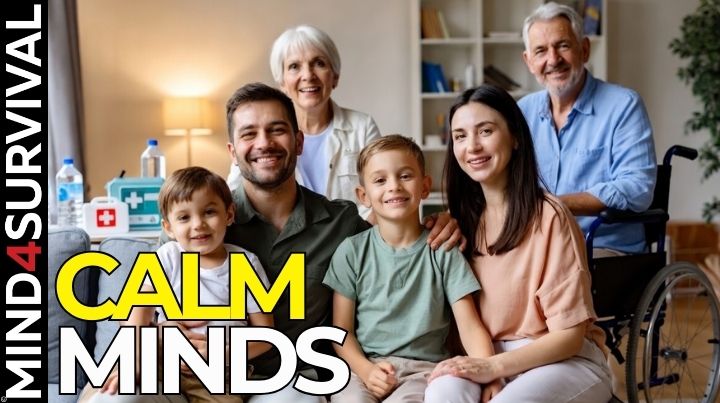

When a tornado touches down, and the sirens begin to wail, adrenaline kicks in. For many of us, our path to safety is clear: get to the shelter and hunker down. But for the members of our families with difficulty getting around, or acting on their own—children, those with disabilities, and the elderly—that path isn’t always so straightforward.
Speed and mobility are usually luxuries during an emergency. Cognitive challenges can make it difficult to process warnings and unfolding events. It’s the limitations of ourselves and those whom we care about that require a different level of preparedness. It requires us to move beyond standard advice and build tailored plans that account for specific needs.
Preparing those with individualized needs requires extra thought. It’s about anticipating barriers before they become life-threatening obstacles. Here is how you can ensure everyone in your circle is as ready as possible should a tornado strike.
TL;DR: To protect children, the elderly, and people with disabilities during tornadoes, build a personalized safety plan, include essential supplies, and ensure their specific needs—like mobility aids, medication, and comfort items—are met before, during, and after the storm.
Quick Look at What You’ll Learn
Protecting Children: Calm, Comfort, and Clarity
Kids look to adults to gauge how scary a situation is. If you panic, they feel it and will likely panic too. If you have a plan and execute it with the calm confidence of a prepared person, they will feel safer, even when the world outside your protective bubble is going crazy.
Before the Storm: Demystify the Danger
Fear often comes from the unknown. Talk to your children about tornadoes in age-appropriate language. Explain that a tornado is a big windstorm and that the sirens mean it’s time to go to our really cool and fun safe place.
- Practice Drills: Make tornado drills routine. Turn it into a game where everyone sees how quickly they can get to the “safe spot” and get into the “turtle position” (crouched low, hands over head).
- Identify Helpers: Teach children who to look for if they’re out and about, and get separated from you—police officers, firefighters, or neighbors you trust.
During the Tornado: Physical and Emotional Safety
- Helmets are Essential: Debris is the leading cause of tornado injuries. Bike helmets, batting helmets, or even motorcycle helmets can save a child’s life. Keep them stored directly in your shelter.
- Distraction Tools: The roar of a tornado is terrifying. Keep noise-canceling headphones or ear muffs in your kit to dampen the sound. Have a “comfort bag” with a favorite toy, coloring books, or a tablet (with downloaded movies) to keep their focus off the storm.
- Physical Shielding: If you don’t have a safe room, use your own body to shield them. Get them under a sturdy table, cover them with a mattress or heavy blankets, and lie on top or next to them to provide an extra layer of protection.
Assisting the Elderly: Mobility and Medication
For older adults, the biggest challenges are often mobility issues, hearing impairments, and reliance on medical equipment. For a person with limited mobility, a plan that requires running down stairs isn’t a good plan. That’s a setup for failure during an emergency.
The “Go-Now” Strategy
- Accessible Shelter: If an elderly family member lives in a home with stairs, their bedroom should ideally be on the ground floor. If that’s not possible, identifying a safe space on the same floor as their bedroom is critical, even if it’s less ideal than a basement. A reinforced interior closet is better than falling down the stairs trying to reach the cellar as a tornado bears down.
- The Buddy System: If an elderly neighbor lives alone, be their designated “storm buddy.” Agree beforehand that you will call or check on them immediately when a watch is issued, not waiting for the warning.
Medical Preparedness
- Medication Supply: Keep a minimum 7-day supply of all prescription medications in a “grab-and-go” bag. Local pharmacies may be closed or inaccessible after a storm.
- Hard Copies: Keep physical copies of medical history, doctor contacts, and insurance cards. Electronic records might be inaccessible if power and cell networks fail.
- Aids and Spares: If they rely on hearing aids or glasses, keep spare batteries and an old pair of glasses in the emergency kit. Being unable to see or hear instructions during the aftermath adds a dangerous layer of confusion.
Supporting Individuals with Disabilities
Disabilities vary widely, from mobility impairments to sensory processing disorders. Your plan must be as unique as the individual you are protecting.
Mobility Impairments
- Clear the Path: Ensure the route to your shelter is wide enough for a wheelchair or walker and free of tripping hazards, such as loose rugs or clutter. Seconds count.
- Transfer Plans: If the person cannot move from a wheelchair to the floor, they should remain in the wheelchair. Lock the wheels, cover their head with a helmet or sturdy object, and wrap them in heavy blankets or even a chaotic mattress to shield against flying glass.
- Evacuation Chairs: If you are in a multi-story building without an elevator (or if the elevator is unsafe), consider investing in an emergency evacuation chair (sometimes called a ‘stair chair’) designed to move people down stairs safely.
Sensory and Cognitive Disabilities
- Visual Alerts: For those who are deaf or hard of hearing, rely on weather radios with strobe-light attachments or on smartphone apps that vibrate intensely for alerts. Do not rely solely on sirens.
- Comfort and Routine: For individuals with autism or sensory processing disorders, the chaos of a storm can trigger a meltdown. Have a sensory kit ready—weighted blankets, noise-canceling headphones, and familiar fidget tools.
- Social Stories: Use social stories or visual schedules to explain what will happen during a tornado. “First, the siren sounds, then we go to the safe room, then we wait.” This predictability can reduce anxiety. (Source)
Post-Tornado Recovery for Vulnerable Groups
The danger doesn’t end when the wind stops. The aftermath—power outages, debris, and heat—hits vulnerable populations hardest.
- Power Dependency: If someone relies on oxygen concentrators, CPAP machines, or refrigerated medicine, you need a backup power source. A portable generator or a large battery bank isn’t a luxury. During a disaster, it’s a medical necessity.
- Disorientation: Landmarks may be gone. This is incredibly disorienting for those with dementia or cognitive impairments. Keep them close and under constant supervision.
- Reassurance: Trauma happens during disasters and lingers after. Be patient. Children may regress in behavior (bedwetting, clinginess), and the elderly who have lost everything may feel a loss of independence as they are forced to rely on others. Re-establishing routine, even a small one like a regular mealtime, helps restore a sense of normalcy.
The Bottom Line: We Are Their Shield
Some uninformed people like to portray preparedness as a lone-wolf survivalist skill. But the truth is, real preparedness is about family and working with your self-defined community to make everyone’s lives better. It’s about being the shield for those who cannot shield themselves.
Take a hard look at your current plan. Does it rely on everyone being able to run? Does it assume everyone can hear the siren? If so, it’s time to adjust. Build a plan that accommodates the slowest, the youngest, and the most fragile among you. When you do that, you don’t just survive the storm—you ensure your whole family comes out the other side together.
Additional Resources
Read the full article here
