



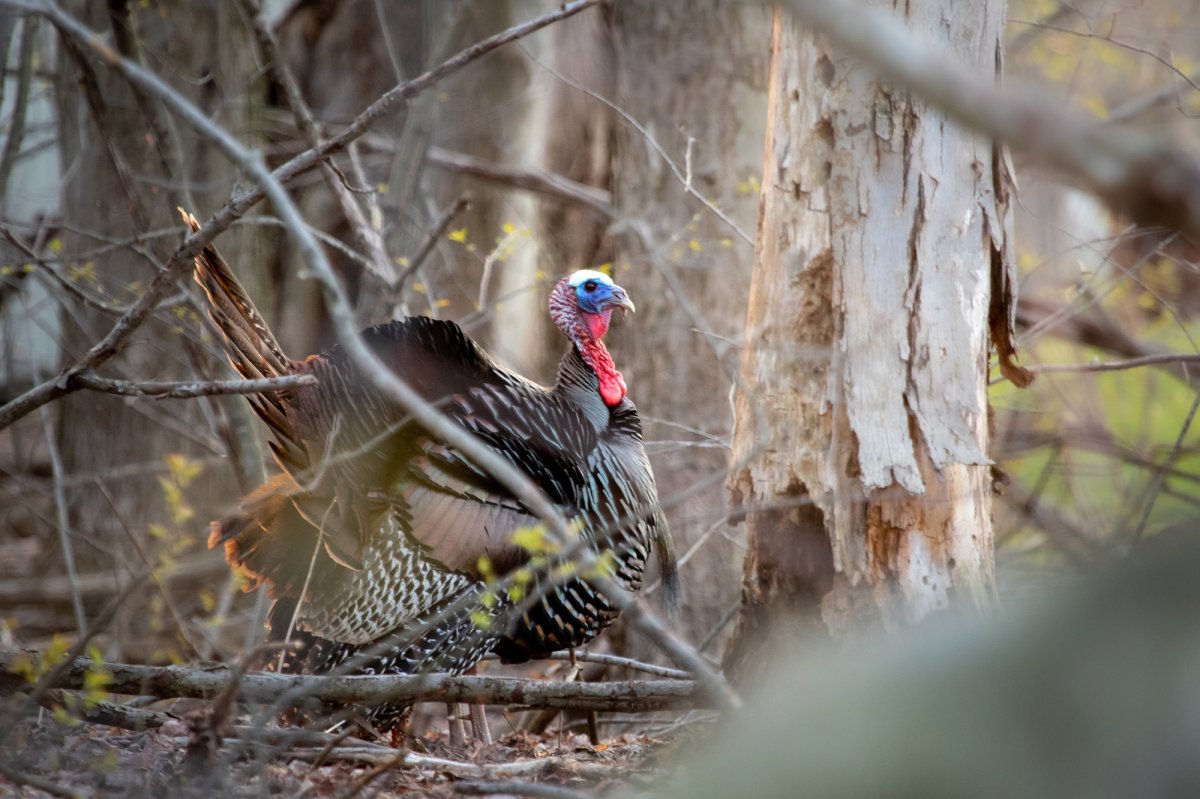

If you turkey hunt long enough, you’ll find yourself in some scenarios that will leave you scratching your head wondering, What the heck just happened? Turkeys have a funny way of disappearing or doing the exact opposite of what you expect. You can have a bird gobbling his brains out one minute, and then the next minute the woods will be completely silent. This can mean that he’s charging into gun range.
But after an hour of him not showing, any hunter would start second guessing.
Maybe he went silent because a hen swooped him up? Maybe a coyote ran through and spooked him? Or maybe a gaggle of jakes came in and ran him off? Even an experienced woodsman can have a hard time reading the cryptic signs of a wild turkey.
In my recent hunts in Mississippi, I ran into no shortage of these head-scratching moments. One of the scenarios had us working toward a turkey that was gobbling at every call, plus every crow and woodpecker in the woods. We made our way into a setup 300 yards from him and he went completely silent, almost instantly. It was hard to say if we spooked him, if a hen rounded him up, or if something even weirder happened. I’m still wondering about what happened as I write this.
It was one of those situations that left us headed back to the truck with our confidence shattered and brains scrambled. Because turkey hunting is such an auditory experience, you don’t often get to watch what happens to a turkey’s mood during these situations. Observing a turkey’s behavior is key for judging when to rev up your calling, and when you need to dial it back. But when you’re turkey hunting in dense timber with little visibility, it can be hard to interpret just what’s going on in the turkey’s head throughout the morning’s hunt.
Read Next: Turkey Hunting Tips from the Pros
Honestly, the best thing you can do is just shake off an encounter like this and keep trying.
Read the full article here
