



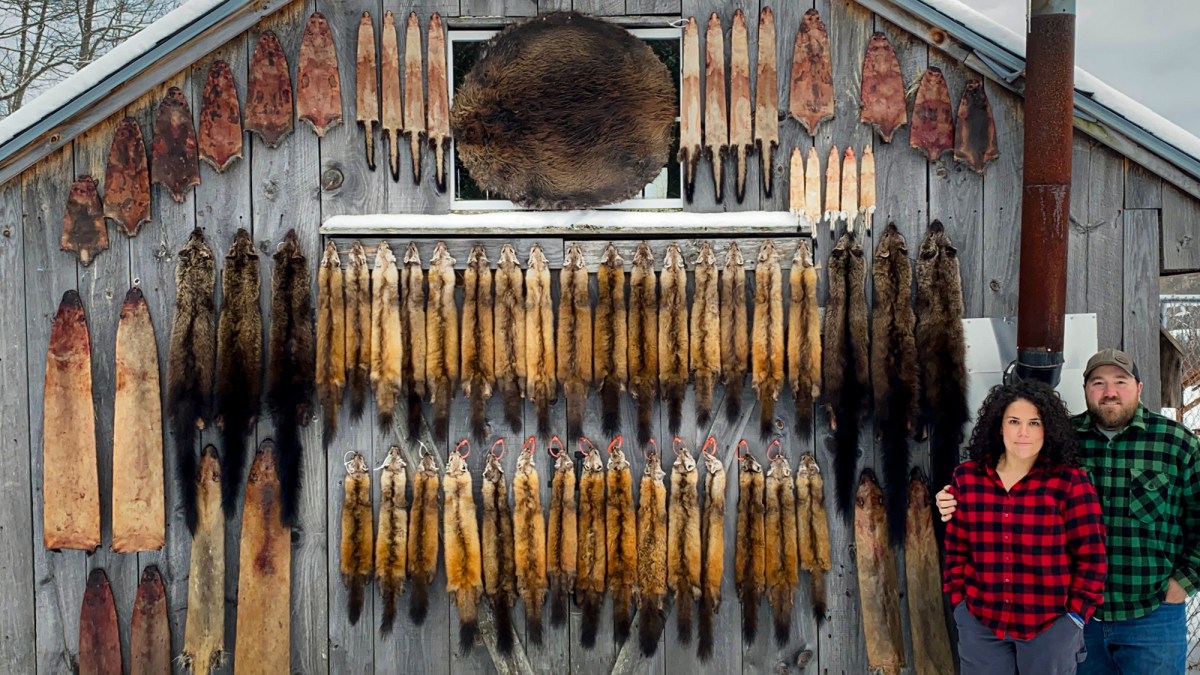

On Thursday Etsy, the massive online marketplace for handmade goods and craft supplies, joined the list of groups pressured by animal-rights activists to adopt a sweeping fur ban. The new policy goes into effect on August 11. The fur ban, which echoes language in a similar petition advancing in Colorado, will disrupt thousands of global sellers and upend small businesses owned by American trappers.
Etsy’s new policy, which was distributed to sellers via email Thursday, cited the change as “part of [its] ongoing biodiversity efforts…” The Brooklyn-based company announced that “Etsy will prohibit the sale of … items made from or containing the fur of animals killed primarily for their pelts.”
Wildlife managers and lawful trappers say Etsy’s fur ban is a misunderstanding of the role of trapping in wildlife management, and fur’s environmental advantages.
“A lot of our furbearers are at all time high populations,” says Jason Wisniewski, the president of Fur Takers of America. “We’re seeing record cases of canine distemper among raccoons in many states, and sarcoptic mange. And a lot of that [is related to] a poor fur market in recent years. And in the absence of a good fur market, Etsy is a very important outlet for a lot of our trappers.”
While the fur market experienced a small bump recently as the popularity of vintage furs sparked demand for new fur, fur has been on a well-documented decline from historic highs decades ago. The Etsy fur ban does not include “taxidermy and byproduct materials (such as leather, sheepskin, wool, or mohair).”
“It’s really a disheartening policy from Etsy,” says Wisniewski. “I think the reason for the distinction [between fur and other animal products] is they consider leather as a byproduct of growing beef. Wool is a byproduct of growing lamb. I think they’re looking at the fur industry as everything is harvested just for that fur, which couldn’t be farther from the truth. Most people are unaware that fur is the byproduct of trapping and predator hunting. We trap and hunt as a wildlife management tool.”
In addition to its role as a renewable product, fur sales help “defray the cost of wildlife management,” says Wisniewski. “Like covering the gas fees. We [legally] have to run our traplines every day and, especially when you’re looking at four dollars a gallon [for gas], that adds up.”
In other words, says Wisniewski, dedicated trappers will continue to trap even when fur sales are down because trapping is a management tool first. And in the absence of a strong traditional fur market, trappers like Cassie Larcombe of Palermo, Maine, have turned to online marketplaces like Etsy to sell their wild furs and finished fur products.
“Etsy’s new policy, by and large, appears very similar to the recent legislation on banning fur sales [that animal-rights activists] are trying to pass in each of the states,” says Wisniewski.
California became the first state in the U.S. to ban most trapping and, in 2023, fur sales. Since then, several states, including Rhode Island, Oregon, Connecticut, Massachusetts, and New York, have introduced legislation to ban or restrict fur sales. Some cities and municipalities have also passed their own fur bans. Boulder, Colorado, passed its Humane Clothing Act by ballot measure in 2022. And last month, the Colorado Parks and Wildlife Commission advanced a petition to ban fur sales, going against public opinion and state wildlife manager recommendations in one of the messiest commission meetings in recent history.
Small Trapping Businesses Depend on Etsy
Larcombe and her fiancé, Brian Donaghy, started their Etsy storefront in 2022 for their small business, Maine Wild Harvest Co. Etsy was responsible for more than 1,300 sales to customers in 40-plus states across the country. Their primary offerings include legally trapped wild furs from their home state. That includes pelts from beaver, raccoon, gray fox, red fox, skunk, otter, mink, pine marten, and fisher. After the ban goes into effect, the only products they currently offer that they could continue selling are stickers and wild chaga mushroom tea.
“That platform was our main means of our store front,” says Larcombe. “It’s where ninety nine point nine percent of our sales are processed through. We had our own website in the beginning. I don’t want to say Etsy frowned on that, but they essentially did … they want traffic driven to their own platform. So we decided to solely sell on Etsy. This [fur ban] has a direct effect on us.”
When Maine Wild Harvest Co. first opened shop, Larcombe and Donaghy adhered to all Etsy policies and all state and federal wildlife regulations. Etsy’s full policy, which also cites the Endangered Species Act, is available here.
“Everything that we have listed is all ethically and sustainably harvested, legally, based on the state-regulated season,” says Larcombe. “Everything that we [ever] intended on selling, of course, is not an endangered species. Because of course you can’t trap an endangered species. Which is wild in and of itself [that we have to say that] but here we are.”
Now Larcombe and Donaghy plan to pivot to a different marketplace as soon as late spring. At least one animal-rights activist has already commented on Larcombe’s social media accounts — where she first raised the alarm and attracted the attention of the Bangor Daily News — have already threatened to campaign for fur bans on whatever platform she moves to next.
The Coalition to Abolish the Fur Trade celebrated Etsy’s policy change, which it numbers among its fur-ban victories. Those include persuading corporations and events, like Hearst media and New York Fashion Week, to go fur-free.
“The fur industry has one less place to sell its death products after activists pressured the online marketplace [Etsy] to ditch fur,” reads the Coalition’s statement. “It only took fifty eight days and over fifty protests to defeat this e-commerce giant!”
Both Larcombe and Wisniewski note that wild fur is natural and appears in many more products than most people even realize. That will make it challenging for Etsy to equitably enforce its own fur-ban policy, which could result in punitive measures for sellers who are transparent about their material sources and finished products.
“The famous painter, Bob Ross? He used a lot of badger fur paint brushes. They loaded paint better and captured a lot of intricate detail, such as fur when painting faces of animals,” says Wisniewski. “Makeup brushes include fur. Most of the better-quality felt Western hats [use beaver felt]. Those really became popular because of the TV show Yellowstone — there was a huge uptick in the beaver market. You don’t get that [quality] with synthetic materials.”
In addition to hobby markets for everything from fly-tying materials to Renaissance fair furs, key cultural markets include Native American regalia and fur hats for orthodox Jewish communities (skunk hats are currently trending). Fur is also important among some Black communities; consider the Black caucus that overturned a proposed fur ban in Chicago last year.
“I think it’s more out of ignorance that [antis] don’t understand our natural resources — whether it be wild fur or ranched fur — have many uses,” says Wisniewski. “They think fur is just a luxury item, and it really isn’t.”
An “Eco-Friendly” Company
Another misconception among antis is the environmental footprint of tanneries, where furs are processed, says Wisniewksi. The global fashion market is a major contributor to microplastic and forever chemical pollution, from production to final product.
“Some of our biggest wild fur tanneries in the country don’t even have to get industrial effluent discharge permits or anything because that discharge is so environmentally benign,” says Wisniewski. “And we want to certainly decrease our footprint of plastics. It’s all we hear about, how much plastic pollution there is … We used natural materials for the longest time, and we’ve [culturally] gotten away from that.”
Larcombe agrees. She says it’s “wild” that Etsy touts itself as an eco-friendly company that cares about biodiversity, which it references in the new fur-ban policy.
“It doesn’t make any sense. If you’re banning fur, then you’re saying faux-fur is okay, which is a petroleum-based product,” says Larcombe. “Fur is naturally biodegradable, it’s reusable, and lasts for years and years. If you think of all the non-fur stuff we buy that’s petroleum-based, plastic-based? It doesn’t last. It doesn’t biodegrade. It’s just an interesting stance that Etsy is an ‘eco-friendly’ company. Banning furs is quite the opposite.”
Larcombe is realistic about Etsy’s continued ignorance around lawful trapping, which she says is no different from deer hunting as a wildlife management tool. While the policy only specifies fur from animals killed “primarily for their pelts,” Larcombe expects all fur products to be banned from the site starting in August.
“We’re not trapping … just to kill the animal, which is a huge misconception and a common anti-use mentality. They think we’re just killing [wild animals] for their fur. Absolutely not. But to get that delineation understood by Etsy, and by the same people [who pushed the ban] will never happen. That’s just the sad reality.”
Still, she’s hopeful for the future of Maine Wild Harvest Co., which she says will maintain a presence on Facebook as she and her partner transition to a new storefront. Larcombe also urges hunters and anglers to consider taking up trapping, both for the benefit of native game like nesting ducks and turkeys, but also for holding the line against these types of campaigns by animal-rights activists.
Read Next: If You Eat Meat, Why Aren’t You Okay with Trapping for Fur?
“I just wish more sportsmen and women as a whole understood how valuable trapping is. It’s no different than hunting and fishing,” says Larcombe. “Even though we’re trappers, we’re also fly fishermen, we’re also bowhunters. I know based on data sets it’s not the other way around. You don’t always have deer hunters who are trappers … I just think [trapping] is so crucial. And trapping isn’t what it used to be or what people think it entails, because it’s vastly changed over the last fifty years. It’s very ethical in comparison to the past.”
Read the full article here
