



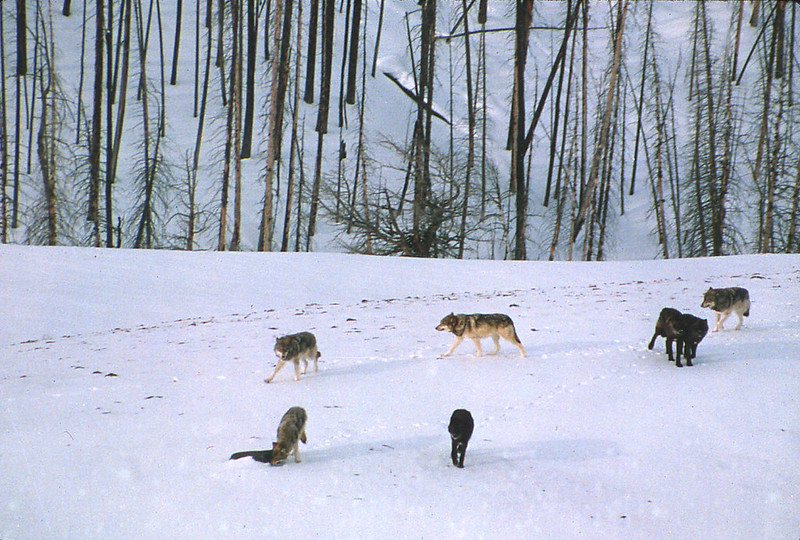

Gray wolves in the Lower 48 have bounced on and off the Endangered Species Act list for years now. And on Thursday, the U.S. House of Representatives passed a bill that would remove federal protections yet again and bring wolf management back to the states. The Pet and Livestock Protection Act cleared the House by a vote of 211 to 204.
The bill, sponsored by Reps. Tom Tiffany (R-WI) and Lauren Boebert (R-CO), aims to delist the populations of gray wolves that remain protected under the ESA in 44 states. The species is already delisted in Montana, Idaho, and Wyoming, as well as in the eastern thirds of Oregon and Washington. And while the topic of wolf delisting remains a heated topic nationwide, it is particularly contentious among Tiffany’s and Boebert’s constituents.
Proponents of the bill, and its supporters in the hunting and ranching communities, say that in the time since gray wolves were first listed as endangered or threatened in the late 1970s, the species has recovered to the point where federal protections are no longer necessary. In a news release celebrating the bill’s passage on Thursday, Tiffany pointed to the growth of wolf populations in Michigan, Minnesota, and Wisconsin from somewhere in the hundreds to around 4,000 today.
“Despite this recovery,” Tiffany said in a statement, “activist judges continue to ignore the science, leaving livestock and pets to be slaughtered and rural communities vulnerable.”
Related: Wisconsin Wolves Have Already Attacked More Hunting Dogs Than Last Year — With 6 Dogs Killed in Just 2 Days
The bill’s opponents, meanwhile, have argued that wolf populations are still too vulnerable to be entrusted to the states. Addie Haughey, a legislative director at Earthjustice, said in a statement that the vote “puts wolves in the crosshairs.” She pointed to the wolf hunt Wisconsin held in 2021 — which is the last time gray wolves were delisted and when hunters exceeded the 119-animal quota of gray wolves by taking a total of 216 wolves. (Earthjustice, an anti-hunting organization, has frequently filed lawsuits to prevent wolves from being delisted.)
The push to delist would also affect the “experimental” population of wolves being brought back to Colorado. Although it’s unclear how this would impact the state’s current reintroduction efforts.
To call those efforts contentious would be an understatement. During the two years since Colorado Parks and Wildlife began releasing wolves in the state to fulfill a voter-implemented ballot measure, the program has sown division and distrust among Coloradans, particularly between wildlife advocates, CPW, and livestock producers. This has led to strongly-worded letters from local officials, death threats from members of public, and, more recently, the resignation of CPW director Jeff Davis
“[This delisting vote is] a major win for ranchers, farmers, and property owners in Colorado and nationwide,” Boebert said in a statement Thursday. “The science has been clear for years: gray wolves are fully recovered, and their resurgence deserves to be celebrated as a true conservation success story. It’s long past time to delist them and empower states to set their own management policies.”
Recognizing the back-and-forth that has defined wolf management at the federal level, the bill also includes language that aims to prevent future court challenges to delisting. It now heads to the Senate for consideration.
Read the full article here
