



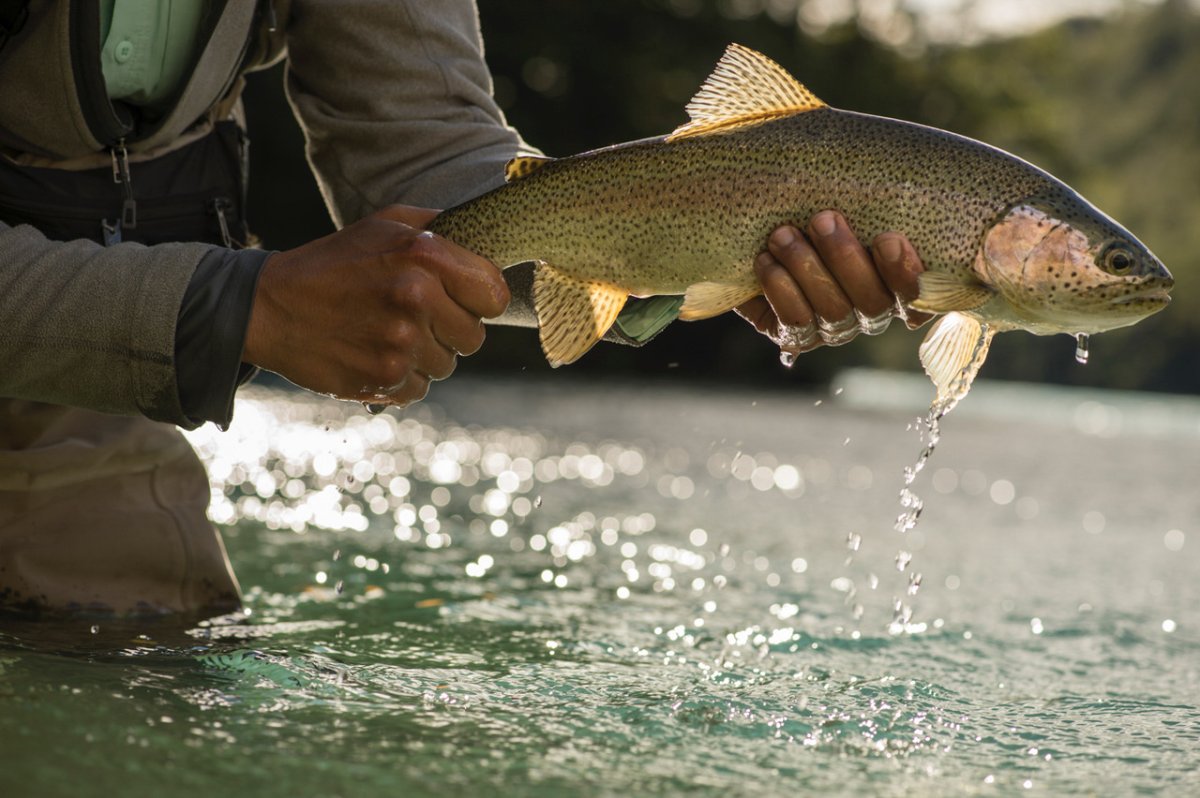

I’d venture to guess there aren’t many anglers reading this who haven’t posted a fish photo to social media. The cell phone that’s always in your pocket makes it easier than ever to capture our catches. It’s so convenient, in fact, that most people are very nonchalant about using their phone camera: swipe, point, shoot, done. Or you can go too far the other way, potentially harming the fish by keeping it out of the water too long or mishandling it as you try to nail the perfect shot. But there is a happy medium that elevates your images while keeping the fish safer.
My good friend, Tim Romano, is one of the best fishing photographers in the business. He’s traveled world on assignment for countless magazines and gear brands, and you don’t earn a reputation like his by mistreating fish. Romano, of course, is a trained photographer which you and I are not, but you don’t need to be a pro to capture better images that are less taxing on your catch. With a few simple tricks and words of advice, Romano can help you elevate your game with the camera that’s in your pocket 24/7.
Listen to this week’s episode of Quick Strike on Apple, Spotify, or wherever you get your podcasts.
Have a Plan
Working in haste is rarely the best way to score a great image. Likewise, sacrificing your catch because you need 20 tries to get it right doesn’t work either. So, what’s the solution? According to Romano, all you need is a little forethought before you make that first cast.
“You have to anticipate that something’s going to happen, that you’re going to catch a fish,” he says. “If you take a minute to look around before you start casting and decide that once a fish is netted I’m going to move to this spot on the bank because there are no limbs or anything in the way of the shot, you’ll save time. It seems trivial, but these little things make a difference. Instead of fumbling with your phone with a fish in the net, make sure your buddy knows your passcode and knows where the camera app is located. Have a plan.”
While these might seem like no-brainers, Romano also points out that you need to make sure your phone or camera is charged. If it’s located in a backpack or bag, do you have quick access to it if you land a fish? Are the lenses clean? Are they fogged because a warm camera in the truck has just been thrust into freezing air? If you’re alone do you know how to quickly set your timer and frame a shot? Being ahead of all these little things will add up to minimizing time out of the water promote a healthier release of your catch.
(You can also quickly access the camera on most smartphones without passcodes. iPhone: Swipe from right to left on your iPhone’s lock screen. Android: Once enabled, double tap the power button.)
The Rule of Thirds
The camera built into your phone is more powerful than you think. Truthfully, it shoots better quality images than professional cameras guys like Romano were shooting a few decades ago. However, many of us don’t use our phone cameras to their fullest potential. As an example, iPhone cameras let you easily adjust exposure with a thumb slide, yet many people rarely touch this feature. Likewise, you can tell your camera to put a three-panel grid over your screen while shooting, and according to Romano this is one of the best tools for grabbing a high-quality grip-and-grin.
Last Week’s Episode: Definitely Don’t Skip This Easy Winter Maintenance for Your Fishing Reels
“To get a good composition, think about the frame you’re shooting and break it into thirds,” he says. “Place your subject, whether it’s the fish or your buddy, in one third of the image, whether it’s the left, right, top or bottom. Turning on the built-in grid on your phone makes this really easy, and you’ll have a much nicer shot.”
Romano says when shooting a fish, he’ll often focus the camera on its eye. In case you weren’t aware, simply tapping any spot of your screen adjust the focus to that point. Using portrait mode on your camera will take this focal effect a step further by softly blurring out the background and really drawing attention to one part of your catch.
Shoot More to Catch More
If you ask Romano how he feels about your standard grip-and-grin image, he’ll tell you it’s very boring. He’s not wrong. Many anglers go directly to this pose and never consider that a close-up of a tail or a low angle shot of the fish in the water could be far more interesting. Furthermore, Romano encourages anglers to shoot a lot more than the fish. Good photography tells a story, and your one grip-and-grin rarely captures it in full. Romano also posits that by shooting more throughout the day, you can catch more fish in the long run.
“You get to a spot and you’re really excited. You just want to get rigged up and start fishing, right?,” he says. “But I find that if I slow down a little bit and pay attention to my surroundings, I start seeing things that I probably wouldn’t have seen. Maybe it’s birds or certain currents, which then ties into fishing. Maybe you didn’t see how that tree was casting a shadow but slowing down to shoot more photos puts you a little bit more in a state of mind to be present and paying attention.”
The social media algorithm will thank you for slowing down, too. At least at present, carousels of images that tell a tale from beginning to end tend to get seen by more followers than single images. You might be surprised by how many more likes and comments you get by giving people more than a grip-and-grin that does little beyond show you caught a fish. Romano encourages everyone with a camera to be weird and think outside of the box now and again.
Read the full article here
