



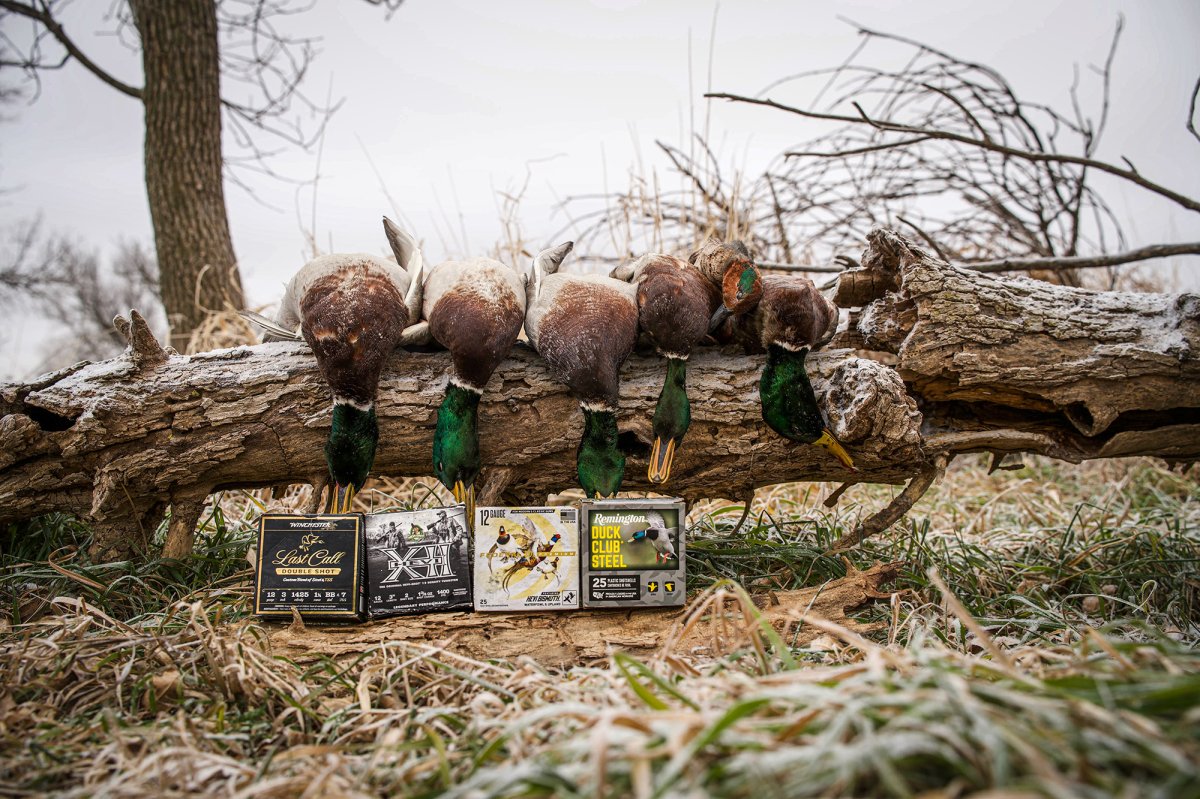

With the ongoing tariff uncertainty and scarcity of some materials, the duck load world is in a bit of turmoil. Sure, you can still grab a box of cheap steel loads anywhere you like. But for a lot of smaller ammo makers who are turning out denser-than-steel loads, availability has become an issue.
Then there’s the matter of price, which is wildly variable based on the brand and pellet material. For example, a cheap steel load will cost about $20 per box, while the really good Hevi-Shot loads can cost upwards of $70 per box.
Some duck hunters will swear that all you need to kill ducks is “X cheap steel brand,” while other hunters will tell you that steel only cripples ducks at distance and if you want to kill them cleanly you need to shoot “X expensive brand.”
To bring some objective data to this discussion, I recently tested four types of duck loads with four types of pellet material: steel, bismuth, steel/TSS, and Hevi-Shot. I shot each load at 40 yards through the new Beretta AX800 Suprema with a modified choke. I counted the number of pellet strikes within a 30-inch circle drawn around the core of each pattern. I shot three patterns with each load and averaged them. I also shot three rounds from each load into ballistic gel to evaluate 40-yard penetration.
Beyond this basic data, I’ll also add some anecdotal evidence from shooting ducks over the years with a variety of ammo. I think all of these different types of loads have their place, but there are significant differences in performance between them.
Patterning and Penetration Test Results
| Rem. Duck Club, No. 2 Steel | Fed. Hevi Bismuth, No. 3 | Win. No. 2 Steel / No. 7 TSS | Hevi-Shot XII, No. 2 | *Hevi-Shot XII, No. 6 | |
| Av. Pellet Strikes (30″ circle, 40 yds) | 114 | 103 | 102 | 93 | 260 |
| Ballistic Gel Penetration (40 yds) | 3.25″ | 3.5″ | 4.25+” | 5.5″ | 3.4” |
*Hevi XII No. 6 loads were tested with a Benelli SBE 3 Advanced Impact.
Understanding Shotshell Lethality
Two things matter when we’re talking about killing ducks: pattern density and penetration. We want as many pellets on target as possible and we want those pellets to penetrate as deeply as possible. But here’s where we’re at the mercy of physics.
All things being equal, to increase pattern density you need more pellets in the shell. And with practical limits on velocity, the way to increase penetration is to use a denser pellet material. Unfortunately we only have so much payload to work with in a shotshell (usually either 1¼ ounces or 1⅜ ounces for 12 gauges).
So we’ve got to balance the density of the pellets with the number of pellets packed into a payload. For example, there are 197 No. 3 steel (density of 7.8 g/cc) pellets in a 1¼ ounce payload. There are 152 No. 3 bismuth (density of 9.8 g/cc) pellets in a 1¼ ounce payload. So with bismuth you’re working with fewer pellets, but they’re denser so they’ll penetrate better. Is that worth it? Read on and check out my full review of the best duck loads here.
Steel: Remington Duck Club
See It
Cons
- Lighter pellet material
- Poor penetration for farther shots
Key Features
-
Payload: 1¼ ounces -
Pellet size: No. 2 -
Advertised velocity: 1400 fps -
Pellet Strikes: 114 -
Penetration: 3.25 inches -
Pattern Percentage: 73 percent -
Pellet density: 7.8 g/cc -
Price per box: $23
There are a bunch of steel loads out there that include different designs and technologies. But in my experience, if you’re going to shoot a steel at ducks, you might as well save your money and just go with a basic No. 2, 1¼ ounce payload at a standard velocity. The key is picking a load that patterns the best out of your shotgun/choke combination. With my Beretta AX800 and a modified choke, this Remington load shot excellent patterns. In fact it put the most average pellet strikes on target for any load in this test. At 40 yards, it delivered a 73 percent pattern, which is solid (pattern percentage is calculated by the number of pellets that end up on target versus the number of pellets in the load).
But steel comes up short on penetration. My gun/choke combo would be deadly on ducks with this steel load to 40 yards, but I would not shoot it farther than that. Since it’s a lighter material, steel loses velocity more rapidly down range. Also, the larger pellets have more surface area, which means more resistance going through a medium. Sure, you could increase the shot size to BB (which you’ll notice penetrated the ballistic gel much better), but then your patterns will be sparse at distance. A 1¼ ounce BB load only has 90 pellets in the shell.
You could try going with high-velocity steel loads to increase penetration, but the choke manufacturers that I’ve interviewed caution against going with wicked fast steel loads (over 1500 fps) because they tend to not pattern well. If somehow you’re able to find a high velocity No. 2 steel load that shoots tight and consistent patterns out of your rig, well then you’ve established an affordable duckslaying setup. Otherwise you’ll have to keep shots closer, or step up to a more expensive pellet material.
Bismuth: Federal Hevi Bismuth
See It
Pros
- Slightly better penetration than steel
- Not as pricey as tungsten
Cons
- Lighter patterns
- Performance benefits might not be worth price jump
Key Features
-
Payload: 1⅜ ounces -
Pellet size: No. 3 -
Advertised velocity: 1450 fps -
Pellet Strikes: 103 -
Penetration: 3.5 inches -
Pattern Percentage: 61 percent -
Pellet density: 9.8 g/cc -
Price per box: $64
Bismuth ammo isn’t as easy to find as it used to be. In fact Boss Shotshells, which helped repopularize bismuth waterfowl ammo, is moving to a copper pellet material. But Federal and its sister company Hevi-Shot are continuing to produce their Hevi Bismuth loads, and you can find them online and on store shelves.
I went with a No. 3 pellet size for this test because I believed it would be comparable to a No. 2 steel load in terms of patterning and penetration. This bismuth load did penetrate a bit better than steel but it produced lighter patterns, which wasn’t a total surprise to me. Bismuth is soft so it typically requires a tighter choke than steel for good 40 yard patterns. When shooting bismuth for waterfowl, an Improved Modified choke seems to be about right.
If I were going to pick Hevi Bismuth as my go-to waterfowl load, I’d opt for a smaller pellet size of No. 4s, select the heavier 1⅜ ounce payload for maximum pellets, and I’d run an IM choke.
Stacked Steel / Tungsten Super Shot: Winchester Double Shot
Pros
- Great combination of pattern density and penetration
- Relatively affordable for TSS
Cons
- Overkill for close-range ducks
Key Features
-
Payload: 1 1/4 ounces -
Pellet size: BB & No. 7 -
Advertised velocity: 1450 fps -
Pellet Strikes: 102 -
Penetration: 4.5 inches (steel) / More than 6 inches (TSS) -
Pattern Percentage: 88 percent -
Pellet density: 7.8 g/cc & 18 g/cc -
Price per box: $50
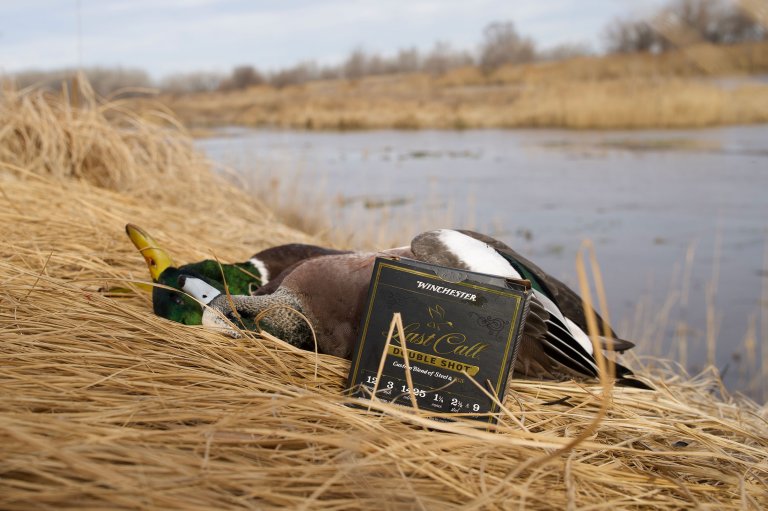
If you’re looking for extra lethality without breaking the bank, it’s hard to beat a duck load that combines steel and tungsten super shot pellets. Apex Ammunition has led the way here for years, and I’ve had excellent results shooting their ammo. But this fall, availability of their stacked steel/TSS loads has been sporadic. So Winchester’s Double Shot is a welcome addition to the field. Their payload holds approximately 30 percent TSS and 70 percent steel.
I’ve shot both their No. 2.5 steel / No. 9 TSS blend as well as the BB steel / No. 7 TSS on waterfowl in North Dakota and Nebraska. I’ve been immensely impressed by their duck killing ability, especially the BB and No. 7 loads.
The basic concept is that those little No. 7 pellets fill in the gaps around the large BBs, making for a full pattern at distance. And because the load is only 30 percent TSS (we counted 30 No. 7 pellets in the shell) it’s still somewhat affordable. What’s most incredible about these loads is the penetration they delivered. The little No. 7 TSS pellets blasted clean through the block of ballistic gel, which I was not expecting. Combine that with a phenomenal 88 percent pattern at 40 yards and you’ve got one crusher of a duck load.
Double Shot availability, at least for right now, is great and you’ll find it in stores and online — even while TSS is becoming scarce and expensive around the ammo market. Winchester says that its sheer size as an ammo maker has helped the company handle market volatility.
“In our case it’s not so much availability, but costs on raw materials are a challenge for everyone with pretty shocking increases recently,” says Nathan Robinson, the marketing manager for Winchester. “Due to our size and longevity we have a supply chain advantage that ensures affordable pricing and availability that we are able to pass along to consumers.”
The upshot: If you want ammo that’s better than steel and can stomach paying about $2 per shell, then buy a flat of Winchester Double Shot BB/7s. You won’t regret it.
Tungsten: Hevi-Shot, Hevi XII
See It
Pros
- Incredible penetration
- Great pattern percentages
Key Features
-
Payload: 1⅜ ounces -
Pellet size: No. 2 -
Advertised velocity: 1400 fps -
Pellet Strikes: 93 -
Penetration: 3.5 inches -
Pattern Percentage: 86 percent -
Pellet density: 12 g/cc -
Price per box: $70
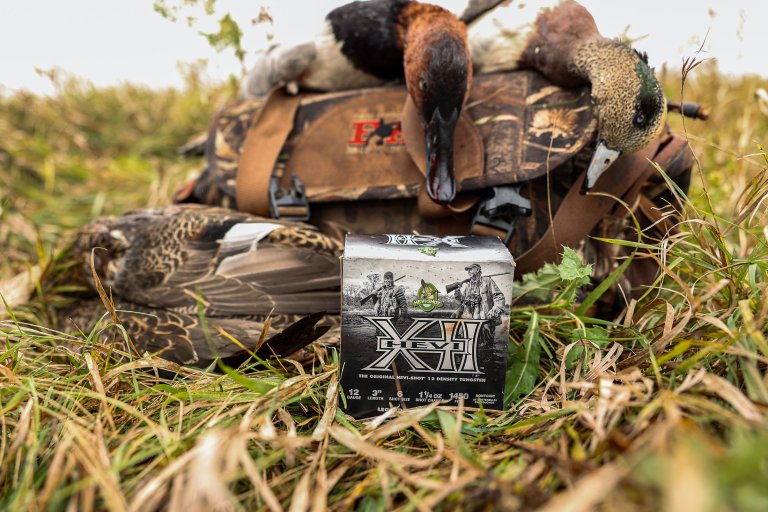
If price is of no concern, then Hevi-Shot XII loads are what you should load up your duck gun with. Hevi-Shot’s own proprietary pellets consist of tungsten and other materials, and have a density of 12 g/cc (hence the name). Lead shot has a density of about 11.2 g/cc. For this test I used the No. 2 shot size to match the pellet size of the steel load, and the Hevi XIIs turned in an impressive 5.5 inches of penetration.
Interestingly, due to their formation process these Hevi XII pellets come in some odd, inconsistent shapes — not perfect spheres like steel. You would think that would mean more fliers and lower pattern percentages, but that didn’t play out in my patterning work. These loads averaged 86 percent patterns at 40 yards out of the Beretta AX800, which is outstanding. They simply have a lower pattern density because there are fewer pellets in the payload to begin with.
While these No. 2s absolutely crush ducks (and are great on geese, too) my favorite Hevi XII load is the No. 6 1⅜ ouncers. In previous testing those No. 6 pellets penetrated better than No. 2 steel. And pattern density was astounding — upwards of 260 pellet strikes in a 30-inch circle. That’s more than double all of the other loads in this test.
In the field I witnessed remarkable lethality results on ducks between 40 and 50 yards. The denser patterns make it much more likely that you’ll put pellets in the duck’s head or neck, killing them cleanly.
Besides price, the only issue is that these No. 6 loads can be tough to find in stock, especially during the middle of the hunting season.
Final Thoughts
When matched with the proper pellet size and choked properly, denser pellet materials really do kill ducks more efficiently. In other words, yes, more expensive duck loads have real benefits that you will experience in the field. With more lethal loads, you’ll do less shooting to fill your bag. You’ll spend less time chasing down crippled ducks and swatting wounded ducks on the water.
But you can’t simply buy a more expensive load and expect to stone every duck that crosses at 45 yards. The most important factor in killing ducks cleanly is your shooting ability. If you don’t shoot well (that means you should practice) then stepping up to a more expensive load will only mean that each miss costs more.
Watch Next: Video: We Tested Benelli’s Advanced Impact Barrel Claims
And remember that duck hunting at its very best is a close-range game. Decoying ducks in tight and shooting them over the spread at 20 yards is really what it’s all about. For that, any basic steel load will work well. Duck-hunting Fudds will say that you never need to shoot beyond 30 yards. “Just get better at calling and hiding,” they’ll grumble. But if you’ve chased all varieties of ducks through the flyways, then you know that there are some hunting scenarios that require longer shots.
So if you’re going to take deep shots, then it’s your responsibility to shoot well and use a lethal choke/load combination. If you find yourself missing or wounding ducks, then the first thing you should do is limit your range.
Read the full article here
