





NRL Hunter matches are fun. They improve your skills, and they’re accessible to normal, everyday hunters. The rules and courses are challenging but simple, and you don’t need a fancy custom rifle to compete. In fact, the spirit of NRL Hunter is a come-as-you-hunt style of competition. As NRL Hunter has developed and grown over the years, shooters have developed their equipment to maximize performance within the rules — sometimes referred to as “gaming.” While you’ll regularly see expensive custom rifles at these matches, you don’t need one to compete. In fact, the factory division has rules specifically intended to limit competitors to rifles that they can buy at the gun store. There are lots of factory rifles that can work well in NRL competition, but these are some of our favorites.
Seekins Havak PH3 NRL
See It
Pros
- Designed specifically for NRL Hunter
- Full-length M-Lok Rail
- Quick-change barrel system
- Integrated optic rails
- Lifetime warranty
Cons
- Action can get a bit sticky when dirty
Price: $2250
We’ve often praised Seekins Precision for their quality and innovative rifle builds, and their Havak PH3 NRL model is no exception. This is a rifle that’s designed specifically to fit within the factory class and maximize performance. NRL-specific upgrades include a Triggertech Diamond trigger with a lighter range than the standard PH3 — rifles in the factory division must use the trigger they ship with — and a Seekins ATC muzzle brake. Both the regular PH3 and NRL models include full-length M-Lok rail. This is a key feature because ARCA and picatinny rail can be added, but only using existing mounting holes on the rifle’s stock.
The PH3 is accurate and a class leader for factory rifles. Introduced in 2025, you’ll hardly find a stage waiting area that doesn’t have one or two of them decked. If you’re wanting one of the best factory rifles for NRL, the Havak PH3 NRL is the way to go — though if you don’t mind a slightly heavier trigger and plan on using a suppressor, the standard Havak PH3 is an equally appealing option and you can save a few hundred bucks.
Tikka T3X UPR
See It
Pros
- Adjustable stock with good ergonomics
- Great accuracy
- Good trigger
- Great value
Cons
- Traditional sling swivel studs — no rails
- Proprietary magazines
Price: $1680
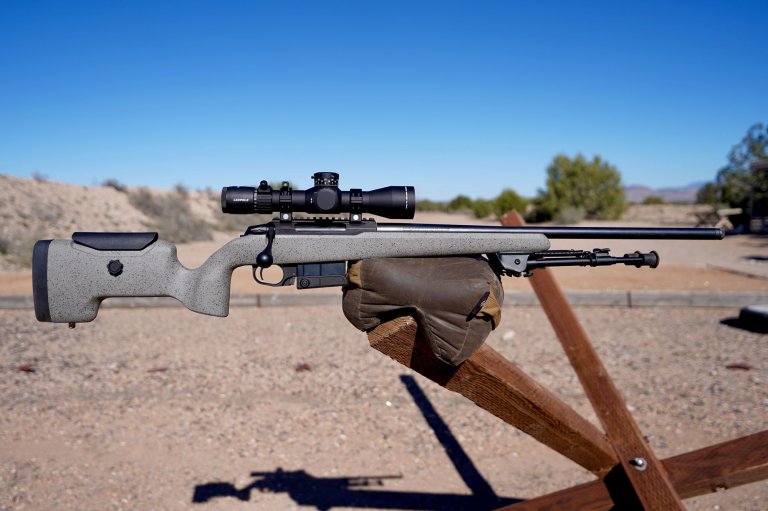
Another factory rifle that’s a great fit for NRL Hunter is the T3X UPR from Tikka. Shooting Editor John B. Snow reviewed this one a couple years ago and it’s an excellent, and pretty affordable, precision rifle. The UPR features a fiberglass and carbon-fiber stock with excellent target-shooting ergonomics. It has a vertical grip, adjustable comb, and wide, rigid fore-end. The action features an integral optic rail, and the whole rifle comes in at 7 pounds, 13 ounces — the model we tested was chambered in 6.5 Creedmoor.
The T3X UPR produced excellent accuracy for us, printing many 0.5- to 0.6-inch groups. We tested it before we adopted our 20-shot aggregate protocol, but rest assured it would perform just fine. There aren’t many factory rifles that would best it on steel plates at an NRL match. The only real downsides are that the rifle uses proprietary magazines rather than AICS — though the mags work well — and traditional sling swivel studs rather than flush cups and a pic rail. You could use the existing sling stud holes to mound a piece of picatinny or ARCA rail for your bipod (though that would move you out of the factory division into Open Light), but we’d like to see the rifle come with this. At the price, it’s an excellent value and puts you at no disadvantage.
Christensen Arms Evoke
See It
Pros
- Affordable
- Good ergonomics
- Accurate
- Uses AICS-pattern magazines
Cons
- Non-adjustable comb
- Only shorter barrel lengths
Price: $950
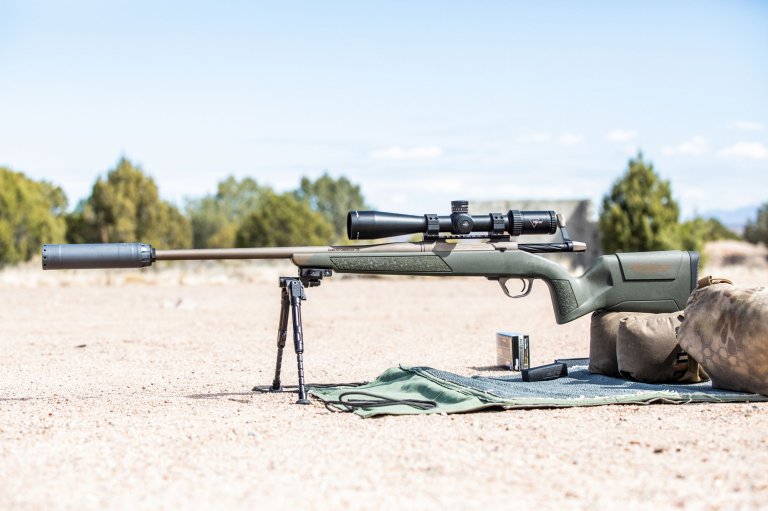
The Christensen Arms Evoke, which hit the market in 2025, is a base model two-lug action with a steel barrel, but it’s an excellent option for anyone wanting to dabble in NRL. We tested and reviewed the Evoke and, for a sub-thousand-dollar rifle, it performed very well. It’s Christensen’s base model, but is damned accurate and its composite stock has great ergonomics.
The Evoke is a solid hunting rifle, but its target-style grip, AICS compatibility, and starting weight all contribute to making it a good NRL candidate. It features a built-in flush Picatinny rail for mounting a bipod, which also leaves enough real estate on the fore-end for resting on a shooting bag. The muzzle is threaded, allowing for a suppressor or muzzle brake. The only real drawback of the design is the short 20-inch barrel length on the 6.5 Creedmoor model. You’ll want to shoot factory ammo so you don’t have to make power factor (see below), but that’s not necessarily a downside for an entry-level shooter.
Ruger American Gen II
See It
Pros
- Very affordable
- Accurate
- Can use with aftermarket chassis for open classes
- AICS compatible
Cons
- Factory stock isn’t ideal
- Action is a bit clunky
Price: $600
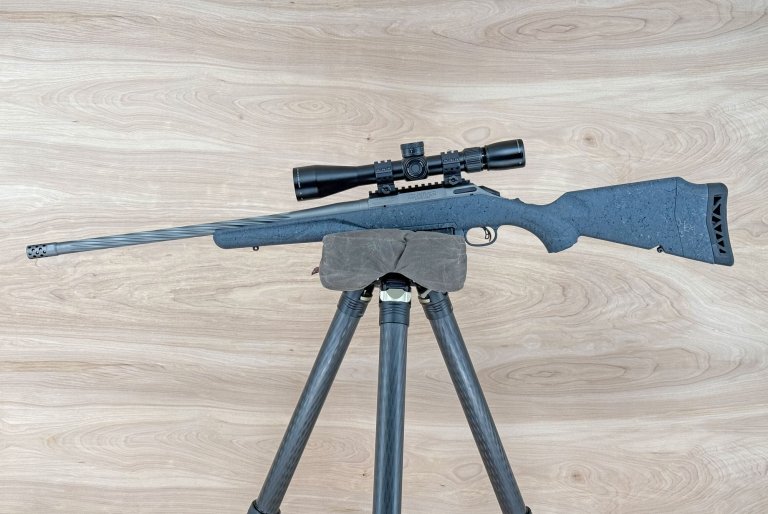
One of the best budget-friendly options for anyone looking to try NRL Hunter is the Ruger American Gen 2. They are very affordable and generally quite accurate. The 6.5 CM version comes with the hardware to use AICS-style magazines which is handy when you need to fire more than four rounds in a stage. Downsides are that the fore-end can be a bit flimsy, and it uses a traditional sling swivel stud for bipod mounting. There isn’t a lot of fore-end space for resting on a bag but, for the price, it’s still a good option.
A nice advantage of the Ruger American Gen II is that it’s also an affordable option to dive into the open classes of NRL as well. You can easily drop the action into a chassis and there are numerous aftermarket barrels available.
Picking a Factory NRL Hunter Rifle
The factory class of NRL Hunter is designed to be accessible and generally restricts rifles to their factory configurations. You can read more about the rules here, but there are a few general rules to keep in mind when picking a gun to use. Your total rifle weight can be no more than 12 pounds. That includes your optic and any devices or accessories mounted to the rifle, except it does not count the magazine, sling, and a recent change was made to allow an additional 10 ounces if you’re using a suppressor. There are more detailed rules about trigger adjustment, rifle bedding, and muzzle devices, so be sure to read up before setting up your rig.
If you want to load your own ammunition, you’ll need to make power factor, which is the bullet’s weight in grains times the muzzle velocity in feet per second. Handloaded ammo needs to achieve a minimum score of 380,000. means your velocity x bullet mass must equal 380,000. (For instance, a 140-grain bullet from a 6.5 Creed needs to run at 2715 fps.) This is intended to promote use of hunting-specific cartridges rather than ultra low-recoiling PRS cartridges. Achieving this with something like a 6.5 Creedmoor can be tough in shorter barrels, but you can use factory-loaded ammo which is exempt from the power factor requirement.
Accessory Considerations
One of the most important things when picking a rifle to use in NRL Hunter is considering how a particular gun will work with your shooting accessories. Some of the most basic and common necessities for succeeding and having fun in NRL competition are a good tripod, tall bipod, and a good shooting bag. You want a rifle that will allow you to use a good bipod — most of which use Picatinny or ARCA mounting. In many stages you’ll need to use your shooting bag resting on a tripod, rock, or other prop, and having a fore-end that’s long enough to fit your bag snugly between the bipod and magazine is a big plus. A rifle that allows easy mounting of a full-length ARCA rail, such as the previously mentioned Seekins PH3, can be clipped into a tripod, and an ARCA-mounted bipod like the MDT CKYE Pod can be slid along the ARCA to squeeze a shooting bag snugly when more support is needed. A rifle that works well with the accessories and gear you’ll be using is a huge benefit.
Final Thoughts
I firmly believe that every big-game hunter can benefit from participating in NRL competition. Even in the non-competitive (and more affordable) skills division, it provides excellent practice and pressure for hunters to improve their skills. You don’t need to spend thousands of dollars on a rig to get into the game, but knowing what traits to look for will help you pick a good gun to get started.
Read the full article here
