



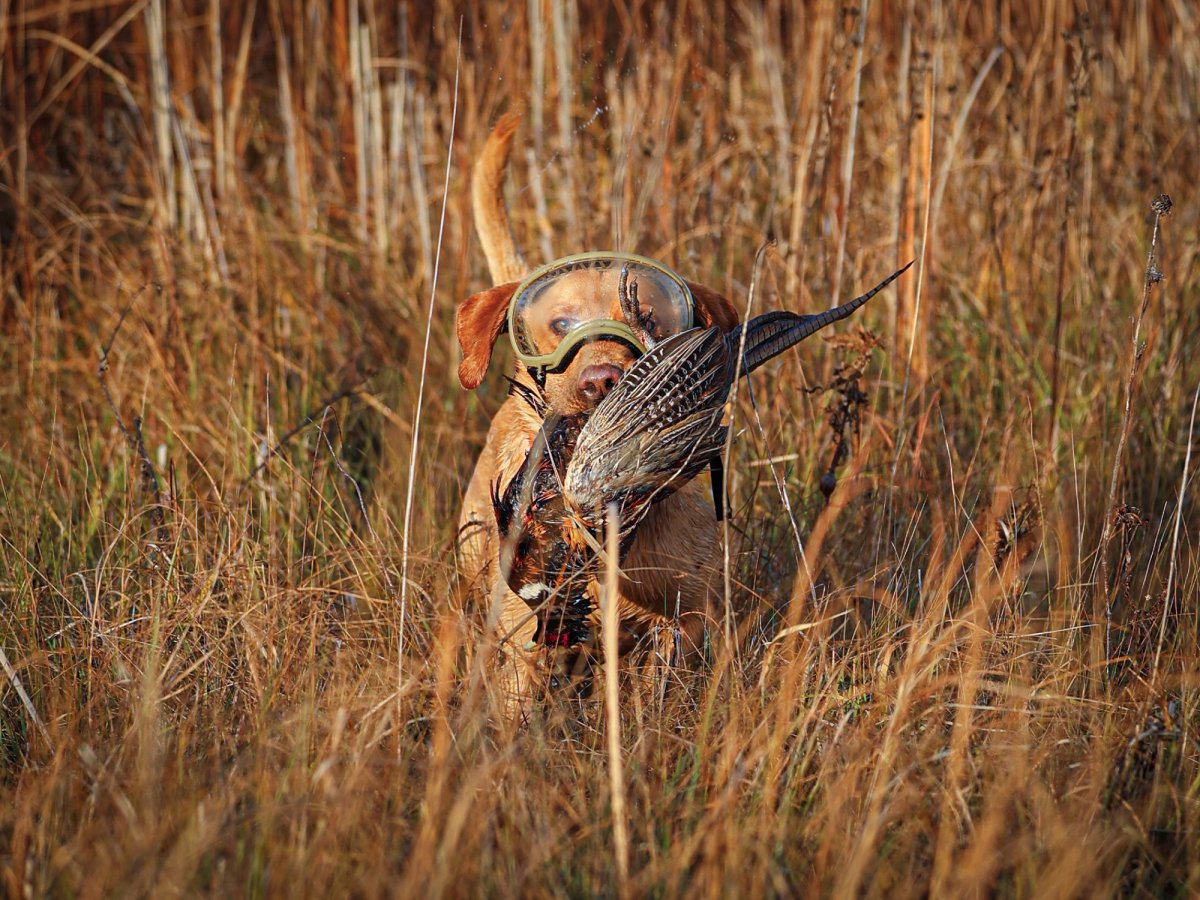

My four-year-old Labrador had been on dove duty for a full week. Hatchet would mark and retrieve mourning doves shot in the decoys, but mostly he was locating birds eager shooters had sailed among the scorched sunflowers and crispy ragweed. The oppressive heat made finding them that much harder.
This went on for several days. The skin around Hatchet’s eyes swelled and itched and bled. He scratched and rubbed them, compounding the problem. My dog looked less like a yellow Lab and more like an actor in an allergy commercial. Eye rinse helped, but didn’t prevent fresh cuts and scrapes, or stray seeds from gathering in his eyes.
Finally it got so bad that I bought a pair of Rex Specs, the ridiculous-looking goggles you see marketed for the sort of dogs bred to take out Osama bin Laden but instead end up on overstimulated doodles. Our dove season was over by the time the goggles arrived, but I trained Hatchet to wear them anyway and stashed them in the truck — just in case.
Eye Injuries in Bird Dogs
A month and a half later, Hatchet and I had just killed our limit of wild roosters when I noticed he was squinting. It was our eighth day of hunting and he was due for a couple days rest. Instead, we drove two hours in the middle of the night to the nearest emergency vet in Fargo, North Dakota.
No amount of eye rinse could dislodge what looked like a piece of grass embedded in his cornea, the transparent outer layer of the eye. My vet and the graveyard-shift receptionist I had spoken to were clear: eye problems are always an emergency. If left untreated, foreign objects can migrate, rupture the eyeball, and cause blindness. My dog needed surgery to remove the stat.
I slept in my truck in the vet parking lot and received my cone-clad, doped-up dog at 4 a.m. He promptly dragged me into the cedar bushes around the clinic to trail rabbits. Stoned out of his mind on residual anesthesia and pain meds, he repeatedly tried to shove his face into the bushes, risking the open wound in his eye. I grabbed the goggles.
It’s common for Hatchet to get seeds or other debris in his eyes during hunts, especially because he excels at working thick cover where roosters like to hide. Whenever we return to the truck after hunting a spot, I’ll do a quick tailgate check — literally examining a dog on your tailgate so he’s at eyelevel. I visually inspect his eyes (along with his nostrils, mouth, ears, paw pads, and coat) for any foreign bodies. Sometimes that means tiny seeds or cattail fluff or tiny pieces of sticks.
Rex Specs
Amazon
See It
Pros
- Protects your dog’s eyes
- Multiple sizes
- Adjustable fit
- Replaceable lenses
Cons
- Lenses fog and scratch
- Visibility varies with conditions
- Can still get debris in them
To remove foreign bodies, I keep eye rinse in the truck and flush his eyes liberally. I also keep clean Q-tips on handy, which are handy for lifting seeds when gently pressed to the corner of the eye. (The dry cotton on tear-soaked debris sucks them right out.) Foxtails and grass awns are particularly dangerous because their sharp, pointed tips can puncture skin (anywhere on the body) and cause infection, abscesses, or migrate into the body. Watch your dog for signs of squinting, blinking, runny eyes, or pawing at his face. Even if your dog’s eye looks okay, there’s a chance he could have an issue you can’t see (like something lodged under the third eye lid) that will require a vet visit.
After a week off, Hatchet was cleared to hunt again — as long as he wore eye pro. We hit our favorite spots and took several new hunters out to kill their first pheasants. Soon Hatchet was rousting birds out of overgrown creek bottoms and tracking down crippled roosters in cattails. The doggles were a mild nuisance, but one he tolerated in order to hunt.
It was nearly two weeks out from his surgery when I unloaded Hatchet for a final hunt with buddies. We were a half-mile from the truck when I realized I’d forgotten his goggles. I weighed the risks. Though scar tissue remained (it will take months to fully heal) the open wound in the cornea had closed. This was his fifth season, and his injury had been a freak accident. So we pushed forward and hunted anyway. In the last minute of shooting light, Hatchet flushed and retrieved a rookie’s first rooster.
That evening his right eye was running again. He was squinting and there was a huge tear trail down the side of his face. This time it took me just a second to diagnose the problem. Again, there was another piece of grass in the same cornea — not embedded in the scar tissue, but broken off in the healthy cornea beside it. In a bizarre (and costly) rerun, we drove to the same clinic in Fargo in the middle of the night, and I turned my dog over to the surgeon on call.
To Run Dog Goggles, or Not
Two surgeries, two eye specialists, and six total vet visits later, and I’m told Hatchet’s eye will heal fine.
I’m not sure how he ended up with the same freak injury twice. (Perhaps pain meds and recovery made him more vulnerable to injury, or maybe he just has flimsy corneas.) Either way, it’s an accident most bird dogs will happily never experience. Ask your buddies — most will say their dogs have never had an issue.
Yet it’s an injury common enough that some vets who work rural areas during bird season recommend goggles. Indeed, the only healthy bird dogs I know who wear goggles to hunt belong to veterinarians. Compared to the thousands of dollars in vet bills I spent on my dog this fall, $100 for goggles and spare lenses is a no-brainer. (I did decline the absurd visor-like contraption one eye specialist suggested because it would be a disaster in pheasant cover.)
There are clear downsides to doggles. The more stuff your dog wears, the more likely he is to get hung up on something — perhaps when he’s out of sight from you. Sticks (yes, an entire stick) and other debris gets lodged in the goggles. The straps get soaked and frozen depending on the conditions. The lenses fog, gather moisture from vegetation, and scratch, making it difficult for Hatchet to see and — worst of all — mark fallen birds. We lost three scrappy roosters this season that I feel sure wouldn’t have escaped if Hatchet had an unobstructed view.
But as one of the many vets I’ve seen this fall told me, no solution is perfect for protecting your dog from the hazards of hunting. To shield them from injury entirely would require never hunting them. And that’s certainly not an option. I’m not sure if I’ll make him wear dog goggles every season after this one. But keeping a pair of goggles handy? That’s a small price to pay to keep my dog hunting.
Tips for Training Your Bird Dog to Wear Dog Goggles
- Train your dog to tolerate the goggles before you need them. Rex Specs includes training tips, which involve positive reinforcement (with treats for Hatchet) and fitting the goggles without lens first. Like most training efforts, shorter sessions are better.
- Treat the doggles as if you would an e-collar: Make sure your dog gets to do something fun whenever you put them on.
- Get lots of replacement lenses. The clear lenses scratch and cloud with use, particularly in heavy cover. Look through the lenses yourself from time to time. If you’re annoyed by your field of view, your dog is too. It’s time to swap the lens.
- Treat the Rex Spec lenses to prevent fogging. Borrow a tip from scuba divers and use anti-fog drops or wipes, or try mixing baby shampoo with water and spraying it on the lens. After application, rinse the lens.
- Take extra care during warmer weather. Properly fitting the goggles requires snug straps, including around your dog’s chin. Hatchet was still able to pant while wearing the goggles, but he can’t open his mouth quite as wide — and therefore dump as much heat — with them on.
- Routinely inspect the goggles, which will gather seeds and plant material. Wipe them with a clean microfiber cloth.
- Give your dog breaks. I remove Hatchet’s goggles during water breaks and whenever he’s in the truck.
Keep Your Dog Safe in the Field
Prevention is a big part of bird dog first aid. Here’s how I make sure my dog stays healthy — and hunting — all season long.
- Carry a first-aid kit in your vest. I have a basic lightweight kit (you can buy dog-focused first-aid kids and tailor it to your needs). I added QuikClot and a small tourniquet, and a lightweight rope leash, which can serve all kinds of uses in a pinch (such as a muzzle in case your dog is in extreme pain).
- Carry snacks, pliers, and wire cutters. After my dog stopped just short of a coyote snare a few years ago, I carry heavy-duty wire cutters. Some hunters prefer pliers for removing snares, and I carry a Leatherman to pull burrs, cactus spine, or porcupine quills. Bring something safe for your dog to eat in case of hypoglycemia. I like to-go cups of Jif peanut butter; a buddy carries a squeeze bottle of honey.
- Have a plan for carrying your dog out of the field. My Lab is usually down to 53 pounds during the height of bird season. I can and have carried him on my shoulders to get him out of a bad situation, but my bird vest will also unhook at the top to allow me to carry him long distances back to the truck.
- Keep a bigger first-aid kit in your truck. This is your second line of defense in the event of an emergency. I keep an oversize first-aid kit stuffed with everything from paw ointment sticks and nail trimmers to a staple-gun and spare prescription meds. (If your vet refuses to stock your dog with emergency carprofen ahead of bird season, it’s time to find a new vet.)
- Do a tailgate check before you put your dog up, every time you hunt. This means running your hand over your dog, looking in his eyes, nostrils, and gums, and checking each pawpad. You’re looking for any scrapes or punctures under the fur, and any foreign bodies. Sharp seeds like foxtails or grass awns can embed in the skin and turn into a nasty abscess or actually work under the hide and migrate into your dog’s organs.
- Keep eye rinse and Q-tips handy. Dogs often get seeds or other debris in their eyes, and flushing them can prevent bigger problems. Sometimes eye rinse won’t clear seeds from the corner of my dog’s eye, and dabbing a clean Q-tip in the corner will pull them out with minimal fuss.
- Train your (next) dog to tolerate physical examinations. I worked with my dog since he was a puppy so that he would easily accept being handled and I often peered in his ears, touched his paws, and blew in his eyes. Now he stands easily for tailgate checks. (At one vet visit, an eye specialist and his vet students poked and prodded Hatchet and his eye for a full 30 minutes to give him the full work up. Hatchet sat patiently and endured it all. The vet said he’d never seen anything like it.)
Read the full article here
