



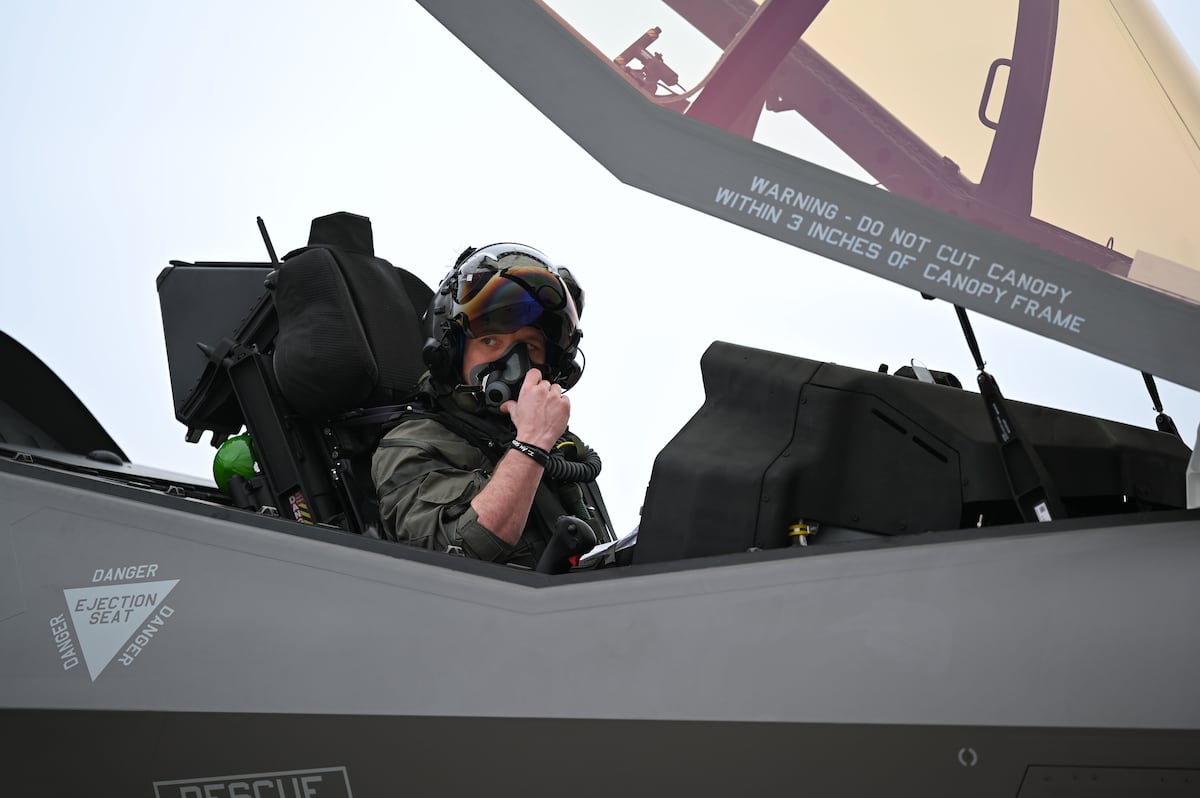

The U.S. Air Force is looking for contractors who can train foreign pilots receiving American military aid, according to an Air Force Request for Information.
Training, which will be conducted at bases in the continental United States, includes instruction in a variety of combat and non-combat missions, and using numerous types of demilitarized or commercially derived aircraft, according to the RFI.
The Air Force Security Assistance Training Squadron, as part Air Education Training Command, trains more than 9,000 students annually from 142 nations under the Foreign Military Sales program. The RFI is aimed at assessing what capabilities industry can provide for this work.
The RFI specifies training foreign pilots from among a menu of nine types of missions: combat support and light attack; reconnaissance and observation; intelligence, surveillance and reconnaissance; search and rescue; maritime patrol; electronic warfare; medical evacuation; transport and airlift; and VIP transport.
The Air Force envisions a comprehensive curriculum that includes pilot and crew training in “basic flight skills, advanced combat maneuvers, mission planning, and execution tailored to the specific requirements of each aircraft and operational environment.” This will be accompanied by support training in communications, intelligence analysis and logistics.
Training will be provided through classroom instruction and electronic courseware, including interactive simulation and virtual reality systems. In addition, contractors will also provide simulator training in practicing emergency procedures and mission rehearsals.
The Air Force already trains foreign pilots on advanced aircraft such as the F-15, F-16 and F-35. However, the long list of potential military and civilian aircraft types — manufactured by multiple nations — in the RFI consists of older and simpler aircraft of the kind that might be found in less developed parts of the world.
The list includes jet and prop trainers such as the T-38, L-39, AT/T-6 and PC-9, and civil aviation models such as the C-172. Contractors must also be prepared to handle a wide range of cargo and passenger aircraft, including lighter types such as the C-208 and C-145, medium types such as C-26 and KA-350, and larger models such as the C-212 and C-130.
Training aircraft may involve business jets such as the Lear Jet, C-500 and Gulfstream, as well as the bigger passenger jets such as the Boeing 707 and 737. Potential helicopters include the MD500, UH-1, S-70 and Mi-17.
Training will have to meet international flight regulations and Federal Aviation Administration flight rules. Instruction will be at the industry partner’s facilities, utilizing their aircraft and infrastructure, said the RFI.
Companies will be asked to describe their “methodologies for pilot and crew training, the use of high-fidelity simulators, academic training delivery methods, maintenance and technical training procedures, and aircrew and operations support training,” the RFI said. “Discuss any innovative solutions or emerging technologies your company employs to enhance training effectiveness.”
Not surprisingly, the Air Force wants companies that know how to work with international students. Bidders will be asked to describe their “experience in addressing cultural considerations and the specific operational requirements of partner nations under the [Foreign Military Sales] program.”
Given the menagerie of U.S.- and foreign-made aircraft involved, contractors must be capable of maintaining planes under difficult conditions. Bidders must show they “understand the current market landscape and capabilities of potential suppliers to meet the unique needs” of international partners under the Foreign Military Sales program, the RFI noted.
The deadline for the RFI is March 4.
Read the full article here
