



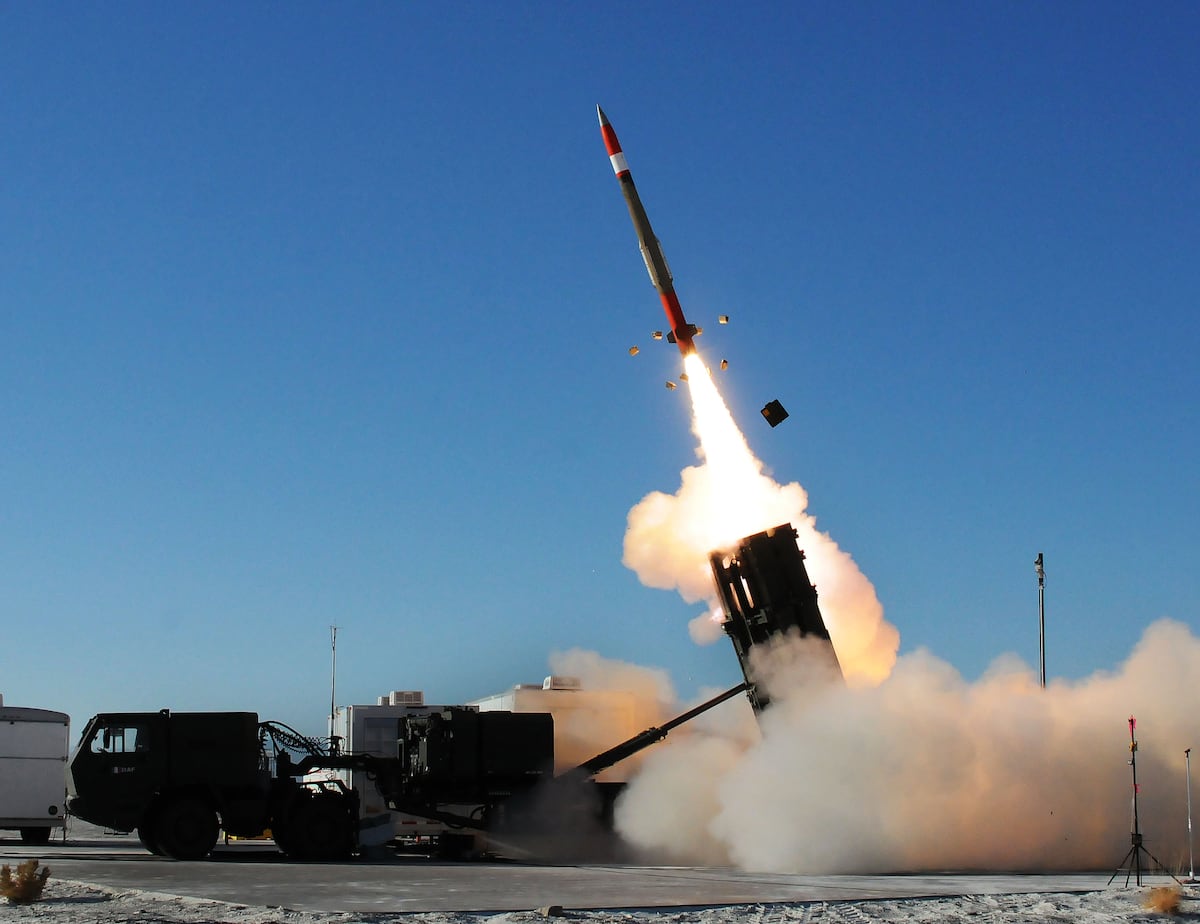

Boeing has reached a framework agreement with the Defense Department to triple the capacity of seekers for the Patriot Advanced Capability-3 Missile Segment Enhancement, the company announced Wednesday.
The contract framework, which will be spread across seven years, will match Lockheed Martin’s push to surge production on the PAC-3 MSE all-up round.
Lockheed in January announced a seven-year framework agreement to increase annual PAC-3 interceptor production from approximately 600 to 2,000.
“This agreement paves the way for us to scale rapidly to deliver increasingly sophisticated seekers,” Bob Ciesla, vice president of Boeing Precision Engagement Systems, said in a release announcing the deal. “In 2025, we increased deliveries by over 30% and we’re excited for the opportunity to grow our highly skilled workforce.”
Work on the seekers is expected to begin immediately, the company announced, and will be completed at Boeing’s facility in Huntsville, Alabama.
Boeing’s PAC-3 seekers work by identifying, tracking and knocking out a range of threats, from ballistic missiles and hypersonics to hostile air platforms.
Once the seeker identifies the target, the highly maneuverable interceptor, which uses a two-pulse solid rocket motor, engages and eliminates threats via direct body-to-body contact.
Wednesday’s announcement, meanwhile, comes as the U.S. military’s reliance on costly interceptors against cheap munitions, particularly those deployed by Iran during Operation Epic Fury, has come under increased scrutiny.
Iran’s stockpile of unmanned Shahed drones is immense, with the Islamic Republic reportedly producing 10,000 per month. Contrast the $35,000 average cost of an Iranian Shahed drone with an estimated $4 million price tag of a PAC-3, and the cost exchange, if engaged, is 114-1 in favor of Iran.
In spite of the lopsided cost, the Pentagon last week also announced a deal with BAE Systems and Lockheed Martin to quadruple production of infrared seekers for the Terminal High Altitude Area Defense interceptor.
That seeker deal aligns with a contract agreement in January between the Pentagon and Lockheed to quadruple the company’s annual production of THAAD interceptors from 96 to 400.
“To build a true Arsenal of Freedom, we must strengthen every link in the chain,” Michael Duffey, under secretary of war for acquisition and sustainment, said in a Wednesday release. “This agreement with Boeing is a direct reflection that speed, volume and a resilient supply chain are paramount. We are moving beyond the old model and forging direct partnerships with critical suppliers to ensure the entire defense industrial base is postured to expand production and deliver the decisive capabilities our warfighters need at speed and scale.”
J.D. Simkins is Editor-in-Chief of Military Times and Defense News, and a Marine Corps veteran of the Iraq War.
Read the full article here
