



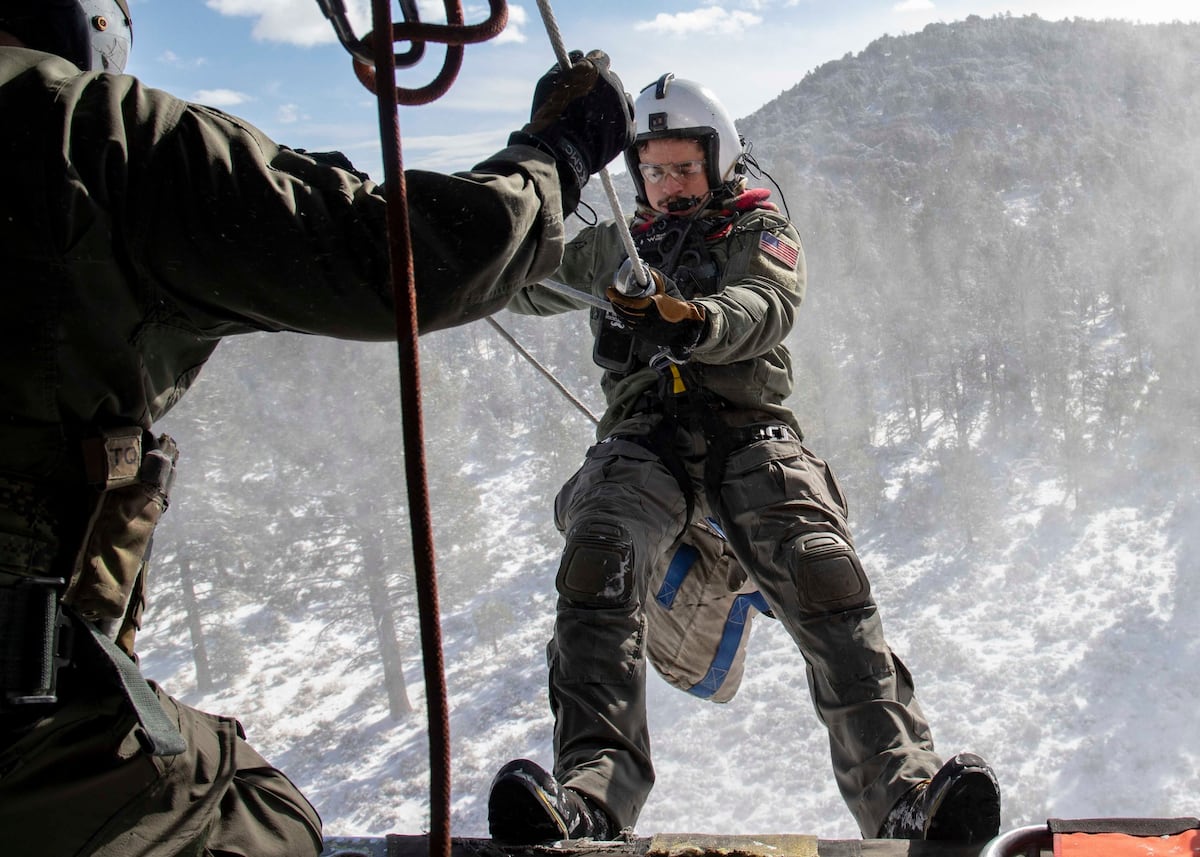

A U.S. Navy search-and-rescue team known as the “Dust Devils” played a pivotal role in the rescue of an Air Force pilot who safely ejected from an F-16 fighter jet that crashed in Southern California last month, Navy officials said Wednesday.
The team assigned to Air Test and Evaluation Squadron (VX) 31 at Naval Air Weapons Station China Lake, California, arrived at the aviator’s location a little over 30 minutes after it was informed about the crash near China Lake on Dec. 3, according to a Navy release.
The release does not provide additional details about the crash, but officials reported last month that a pilot flying an F-16C Fighting Falcon as part of a routine training flight for the Air Force’s Thunderbirds demonstration squadron safely ejected before the jet crashed near Trona, an unincorporated community near China Lake.
RELATED
The rescue crew, which is primarily tasked with helicopter rescue operations during emergencies, landed 75 yards from an emergency medical services team and got to work.
“As SAR medical technicians, we are trained to recognize serious causes of injuries,” said crew member Hospital Corpsman 1st Class Brian Romero. “In this specific case, an aviator can experience extreme forces far beyond what the human body is built to tolerate. With this in mind, we moved with a sense of urgency.”
The crew helped transport the injured pilot to University Medical Center Las Vegas, Nevada, maintaining medical care throughout the flight to ensure the patient remained stable.
The flight to Las Vegas, however, posed its own set of hurdles, including cold temperatures and aerial vibrations, the latter of which can present challenges for providing care to individuals.
Once the team arrived in Las Vegas, they delivered the patient to the emergency department, riding in the ambulance until the trauma team at the hospital took over.
Romero attributed the team’s swift response to the training and planning that goes into search-and-rescue operations.
He also credited assistance from San Bernardino fire officials and the U.S. Air Force Thunderbirds, both of which were on the scene of the crash when the team arrived, according to the release.
“That teamwork is what made everything go smoothly,” he said.
The pilot was treated for non-life-threatening injuries and the circumstances surrounding the crash remain under investigation.
Riley Ceder is a reporter at Military Times, where he covers breaking news, criminal justice, investigations, and cyber. He previously worked as an investigative practicum student at The Washington Post, where he contributed to the Abused by the Badge investigation.
Read the full article here
