



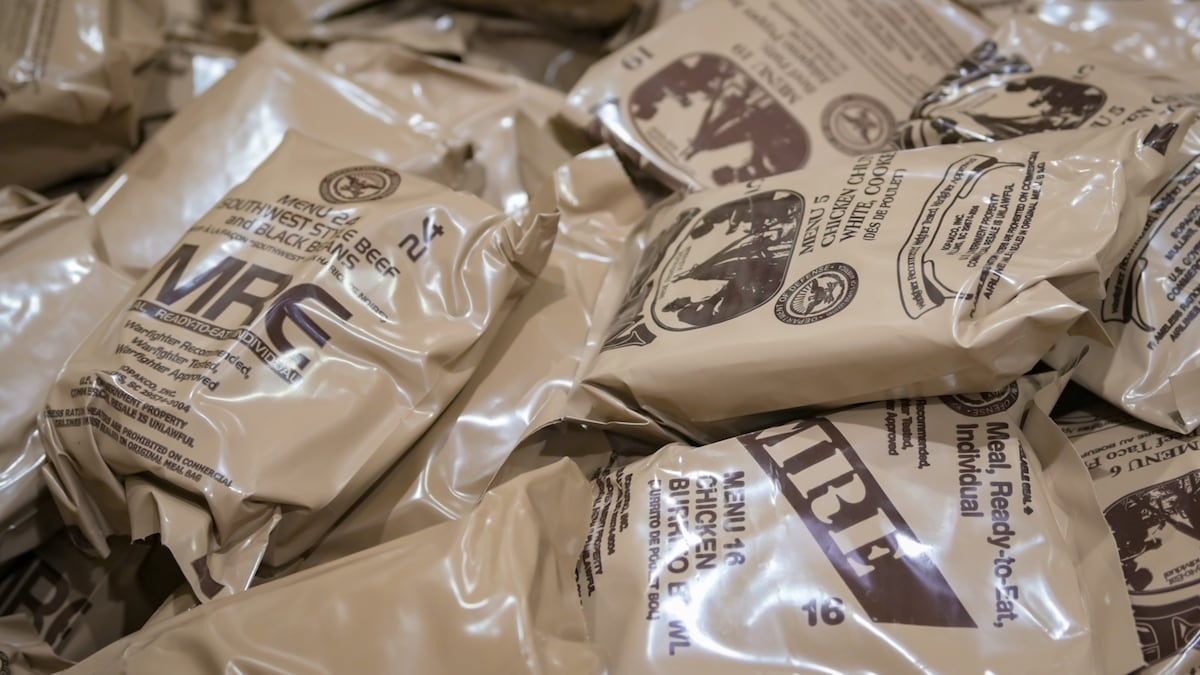

Long before cardboard boxes filled with frozen gel packs and prepackaged ingredients started appearing on suburban porches, the U.S. military had already solved the problem of feeding people who could not make it home for dinner.
The Meal, Ready-to-Eat, better known as the MRE, was designed for war. It had to survive heat, cold, impact and time. It had to deliver calories and consistency in places where kitchens did not exist. And it had to do all of that at scale.
Sound familiar?
Today’s meal-delivery industry, from subscription kits to fully prepared microwavable trays, operates on many of the same principles: Portion control, modular packaging and optimized logistics. Veterans who open a cardboard box filled with premeasured ingredients often recognize the parallels immediately.
The evolution of military rations shows just how deliberate that system became. From older field staples to modern retort pouches, MREs were engineered to balance durability and nutrition. A look back at MREs through the years illustrates how packaging and contents changed to meet operational demands. Meals had to withstand long storage and rough transport while still delivering predictable fuel.
That predictability is central.
Each MRE is structured around caloric requirements and mission profiles. A standard menu includes an entree, side, snack, dessert, beverage powder and accessory packet. Nothing is random. It is a calculated intake designed to support performance.
Modern meal-delivery companies market the same precision. Protein totals are highlighted. Calorie counts are featured prominently. Macro breakdowns are listed like briefing slides. For service members who once identified meals by menu number rather than flavor description, the emphasis on data feels familiar.
Behind the scenes, the logistics mirror each other even more closely. Feeding deployed troops requires a supply chain that can move millions of individually packaged meals across continents. As recently as last year, the Department of Defense refined packaging dimensions, pallet configurations and distribution systems to reduce waste and maximize efficiency. Those lessons now underpin commercial food distribution networks that ship insulated boxes nationwide on strict timelines.
Inside the development process, the parallels become even clearer. Military food scientists test taste, texture and shelf life inside controlled environments before a menu ever reaches a unit. A visit to the kitchen where MREs are created shows how rigorously meals are evaluated for stability and performance. The civilian meal kit industry uses similar controlled testing to ensure consistency across thousands of shipments.
Convenience may be the most obvious link. MREs were built for speed. Open. Heat if you can. Eat if you cannot. No dishes, no prep, no grocery run. The civilian market reframed that efficiency as lifestyle optimization: 10-minute dinners with minimal cleanup and reduced food waste.
There is also a psychological component. Field rations were never just about calories; they provided routine. In austere environments, opening a sealed meal at a predictable time created a small anchor in an otherwise unstable day. Modern marketing leans on the same promise: reliability, dinner handled and one less decision to make.
Of course, today’s meal kits are designed for aesthetics and convenience, not survival in a combat zone. No one is building a subscription box around instant coffee and wheat bread snacks.
Still, the blueprint is unmistakable. Long before venture capital discovered the efficiency of meal delivery, the military had already tested the model under far harsher conditions.
For veterans, the comparison is less surprising than ironic. What once arrived in a case bound for a forward operating base now shows up with a friendly logo and a discount code.
Observation Post is the Military Times one-stop shop for all things off-duty. Stories may reflect author observations.
Read the full article here
