



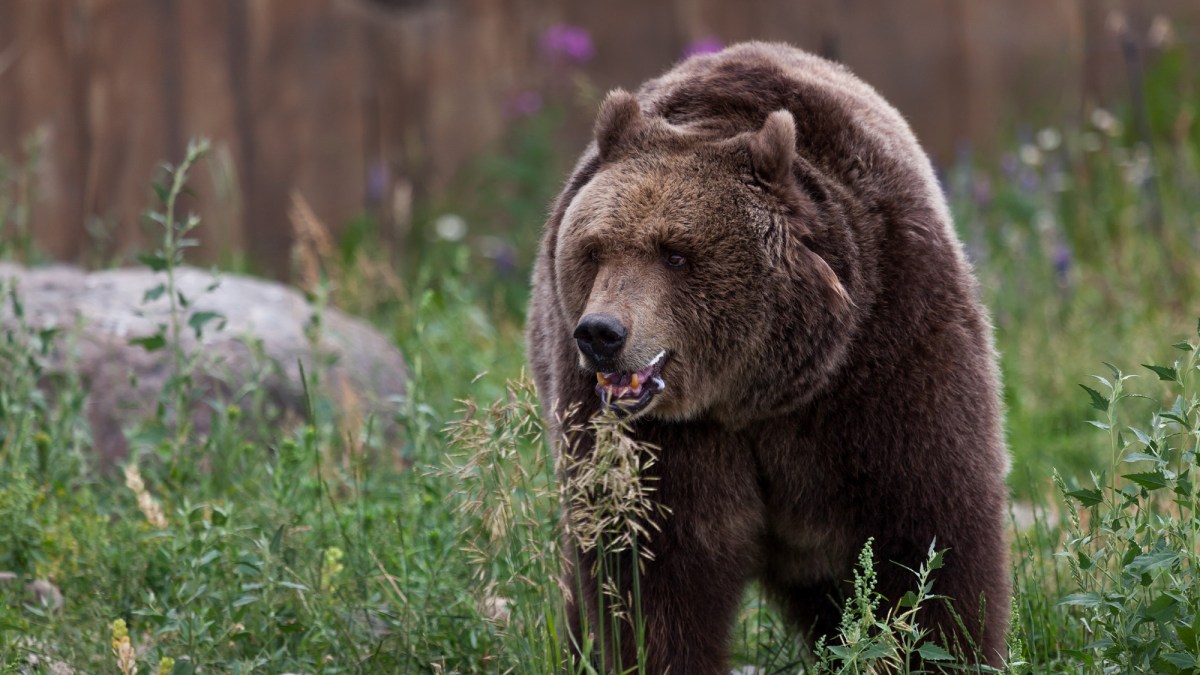

A 72-year-old woman is in the hospital after she bumped into a sow grizzly with a cub on a trail Sunday afternoon near Tyaughton Lake in British Columbia.
“The bear was batting them around in the altercation,” David McKenzie, Pemberton Search and Rescue president told CBC. “It was quite serious. They have several lacerations of the face, arms, neck, along with an actual C1 (neck) fracture.”
A B.C. Wildfire Service crew fighting a fire in the area found the hiker and coordinated with rescue teams for her extraction. She went by air ambulance to the hospital where she’s in serious condition.
The attack occurred in what is considered prime grizzly bear habitat with higher-elevation salmon streams and dense cover below the tree line. Of the five units in southwest British Columbia, the South Chilcotin Ranges unit has the most grizzly bears, with 222 animals. The other four units in the region have 76 combined. Grizzly bear hunting in the area stopped in 2017. (Alberta re-opened restricted hunting for problem bears in 2024, but B.C.’s ban still stands, and griz attacks have doubled in the province since the ban started).
“It’s got a fairly good population, especially since the grizzly bear hunt was closed in 2017,” said Wayne McCrory, provincial bear biologist. “We just have to do our best to avoid encounters.”
After this most recent attack, investigators met the hiker at the hospital. They heard her account of what happened and collected some clothing to compare with evidence found at the scene. They determined it was a defensive attack by a female bear with at least one cub. Conservation officers tacked warning signs throughout the area, but they are not looking for the sow or attempting to capture her.
Similarly, the grizzly bear that killed a Florida hiker in Montana’s Glacier National Park May 3 is not being searched for either. The Interagency Grizzly Bear Committee released its report on that case in late July. DNA samples from bear hair collected at the scene determined the Glacier case was also a defensive attack during a surprise encounter. It is not considered a stalking or a predation encounter because the bear did not try to eat or bury the man.
Read Next: Animal Advocates Ask Montana to Force Hunters and Trappers to Carry Bear Spray
In that case, 33-year-old Anthony Pollio was hiking after sunset in an area with a heavy patch of downed trees, which probably made it hard for man and beast to see each other until they were in close proximity. Upon contact Pollio used bear spray, fell off — or was thrown off — the steep trail then climbed back up to the trail where he was bitten in the head by a male grizzly that’s at least 15 years old. The bruin’s last trace of DNA in the agency’s database comes from rub-tree samples in 2011. He’s a life-long park resident with no history of conflicts with people. The Pollio case was the park’s first fatal grizzly attack since 1998.
Read the full article here
