



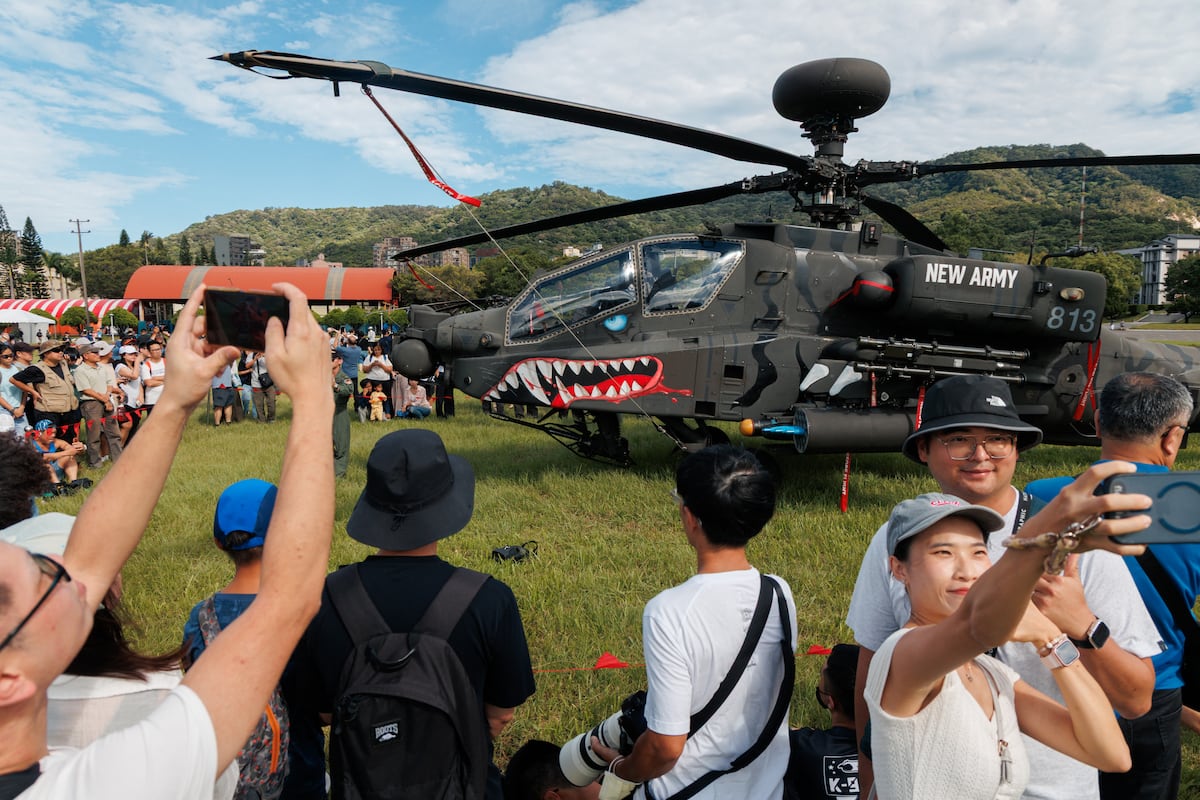

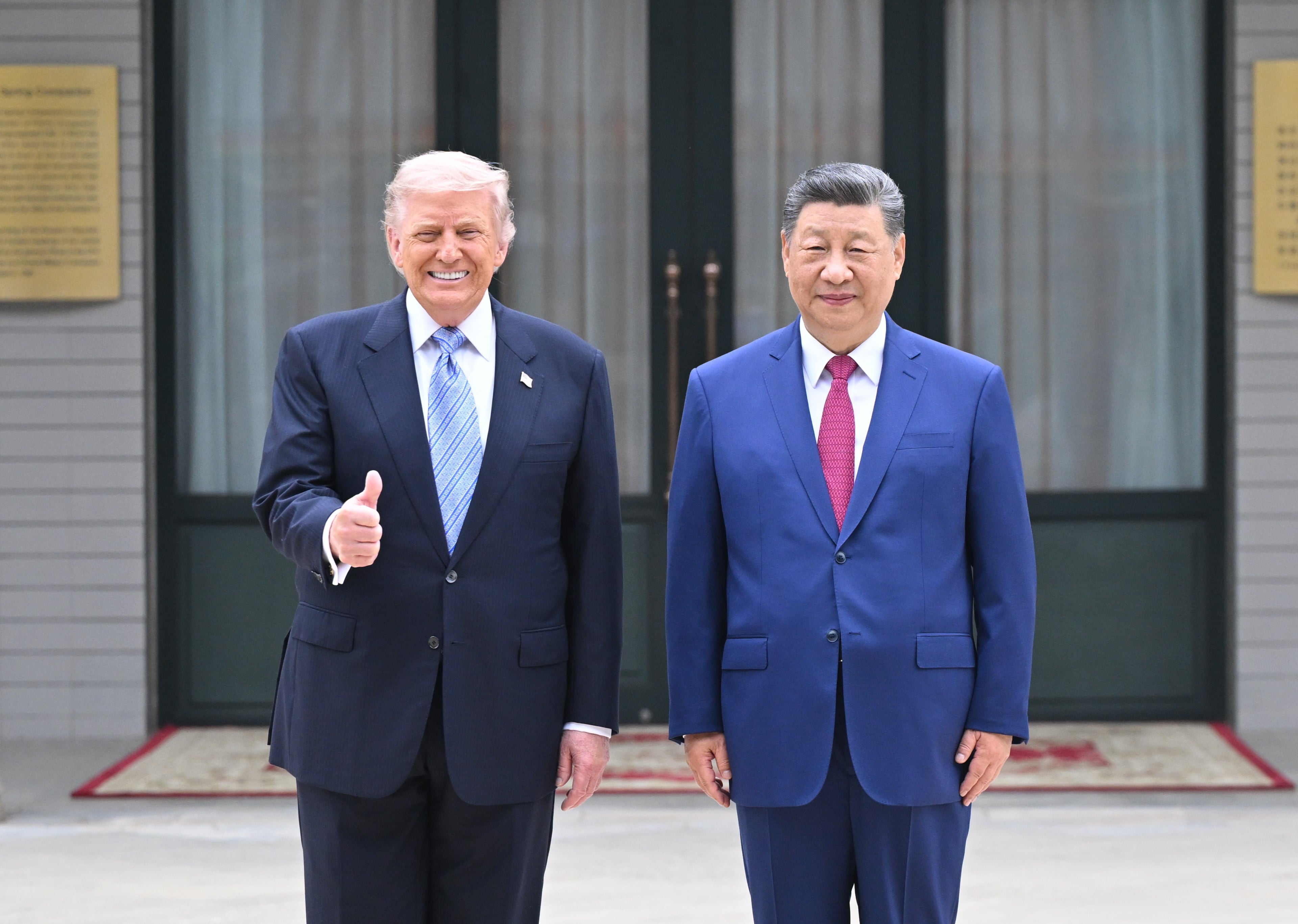
NEW TAIPEI CITY, Taiwan — U.S. President Donald Trump is still holding off approval of a $14 billion weapons package for Taiwan, a potential military rival to Beijing. He pulled back in May after meeting his Chinese counterpart Xi Jinping, who opposes U.S. military aid to Taiwan.
But on July 15, the U.S. House of Representatives passed a bill that includes $500 million in Foreign Military Financing for Taiwan, one in a chain of Pacific Rim allies that U.S. officials have long seen as a buffer against Chinese military expansion.
While the half-billion-dollar allocation in the 2027 fiscal year appropriations bill does not commit money to a particular arms package, analysts say it’s a sign that the Republican Party-dominated Congress values the defense of Taiwan in case China ever attacks with its larger armed forces, and that Washington intends to fulfill at least older arms purchase deals.
“This $500 million Foreign Military Funding demonstrates that Congress has not reduced its security support for Taiwan following the Trump-Xi meeting and reflects Congress’s desire to avoid long-term constraints on military aid to Taiwan due to White House negotiations with China through appropriations and delivery requirements,” said Huang Chung-ting, associate research fellow with the Institute for National Defense and Security Research in Taipei.
RELATED
Trump’s signature, needed to pass the appropriations bill, would imply continued weapons sales of some kind despite the unknown fate of the $14 billion package, analysts said.
Foreign Military Financing – usually grants or loans – for U.S. allies abroad may technically go toward acquiring weapons, military training or other related services.
“Foreign military financing concerns how weapons are ultimately paid for but not whether the weapons are actually sold or transferred in the first place,” said Sean King, vice president of New York-based political consultancy Park Strategies.
Trump has not ostensibly withdrawn any previous but unfulfilled U.S. arms sales for Taiwan, meaning that the proposed congressional funding could go toward one of those, experts say. U.S. arms sales to Taiwan date back more than four decades and can take years before payments and delivery dates are settled. As of April, sales of 30 individual weapon types were partly unfulfilled, according to the Taiwan Security Monitor research initiative of the George Mason University’s Schar School of Policy and Government.
The most recent items appear in a $11.1 billion batch of weaponry fully approved by Washington in December. It includes M109A7 self-propelled howitzers, the high mobility artillery rocket system HIMARS, Javelin anti-tank missiles and unmanned attack aircraft systems. Taiwan’s Cabinet approved its own special budget in May to help pay for the purchases.
“My assessment is that while there was indeed a political pause after the Trump-Xi meeting, it was not a complete halt to arms sales to Taiwan, but rather (it) targeted new cases that had not yet received approval,” Huang said.
“This delay likely involved Trump’s negotiations with China, a review of weapons stockpiles and internal White House scrutiny, and cannot be explained by a single reason,” he said.
The appropriations bill still requires U.S. Senate review before it would go to Trump’s office.
China claims sovereignty over self-ruled Taiwan and has threatened to take the island by force, if needed. Over the past four years the People’s Liberation Army has increased the frequency of military exercises near Taiwan, often in the 160km (100 miles) strait separating them.
Trump said after his meeting with the Chinese president that withholding the arms deal was a “good negotiating chip.” But in June, the U.S. State Department reiterated long-standing policy that arms sales to Taiwan were not dependent on Beijing’s consent.
Experts anticipate a White House announcement on the $14 billion arms package only after Trump and Xi meet in September in the United States, as announced by Washington.
“It may be that Trump is delaying a public announcement until after Xi’s visit to avoid being the skunk who came to the garden party,” said Doug Barry, a professor at The George Washington University and a former communications director with the U.S.-China Business Council.
“It’s odd there has been no public announcement,” he said.
Read the full article here
