



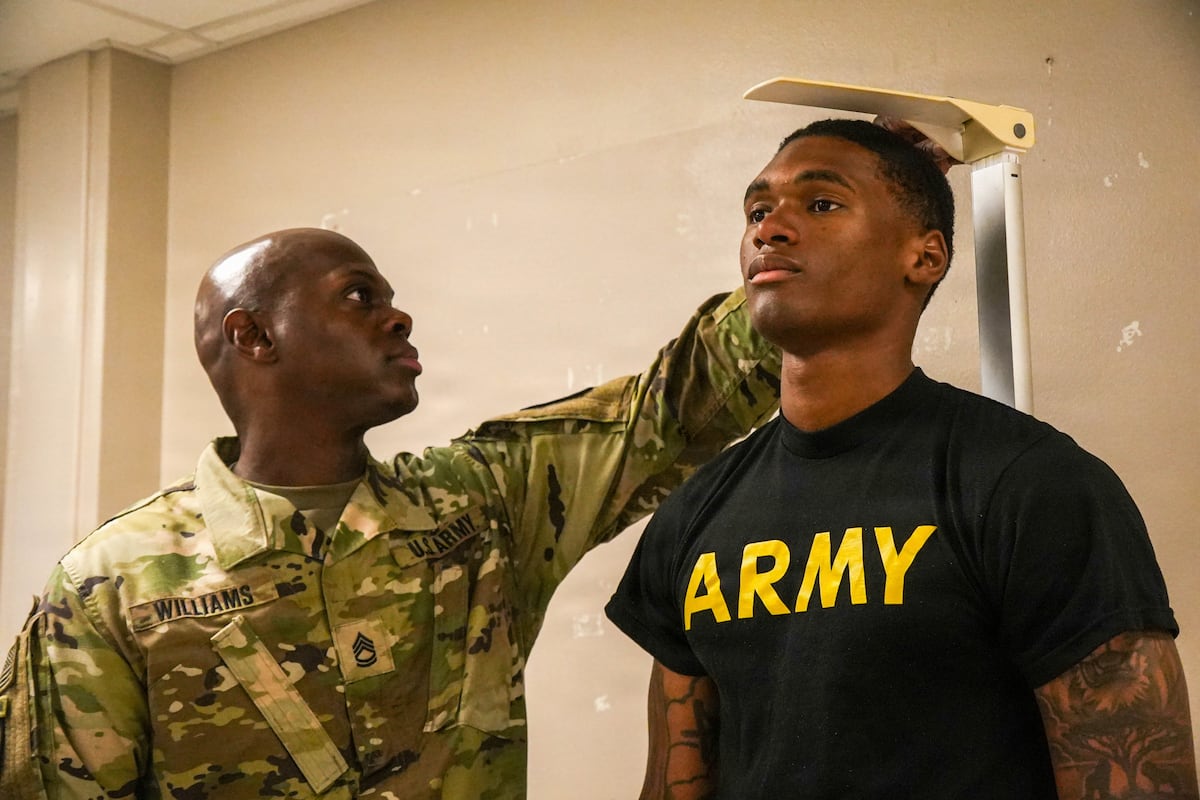

The Army scrapped its height-and-weight tables and tape test in favor of a semiannual waist-to-height measurement, the service announced Tuesday.
The new assessment will measure a servicemember’s waistline at the naval and divide that circumference by the person’s height in inches to formulate a ratio. Soldiers must have a ratio below 0.55, the Army said.
The move follows a January Pentagon directive introducing the standard.
Soldiers with a ratio exceeding 0.55 will be subject to a confirmation test, formally flagged and enrolled in the Army Body Composition Program, in an attempt to get the service member back to meeting the standard.
The Army has initiated a 180-day assessment period and no soldiers will be separated for failing the new test during that time.
Commanders may test a soldier’s waist-to-height ratio if they think the soldier does not meet the standard at any time.
“This is about lethality and health,” said Sgt. Maj. Monsanto, a senior enlisted leader for the Army’s Directorate of Prevention, Resilience, Readiness. “We are adopting new metrics to ensure our soldiers are healthy and physically fit to fight and will,” he said in the statement.
The Pentagon’s memorandum said that service members who excel at fitness tests might be given exceptions to the new requirements, but the Army’s statement does not include any mention of allowances.
Defense Secretary Pete Hegseth has publicly criticized the armed forces’ fitness standards. “It’s tiring to look out at combat formations, or really any formation, and see fat troops,” he said in a speech last year, adding that it was “completely unacceptable to see fat generals and admirals in the halls of the Pentagon and leading commands around the country and the world.”
Alongside changes to physical fitness, Hegseth has also reinstated stricter grooming standards and pushed for soldiers in front-line roles to meet “the highest male standard only.”
Eve Sampson is a reporter and former Army officer. She has covered conflict across the world, writing for The New York Times, The Washington Post and The Associated Press.
Read the full article here
