



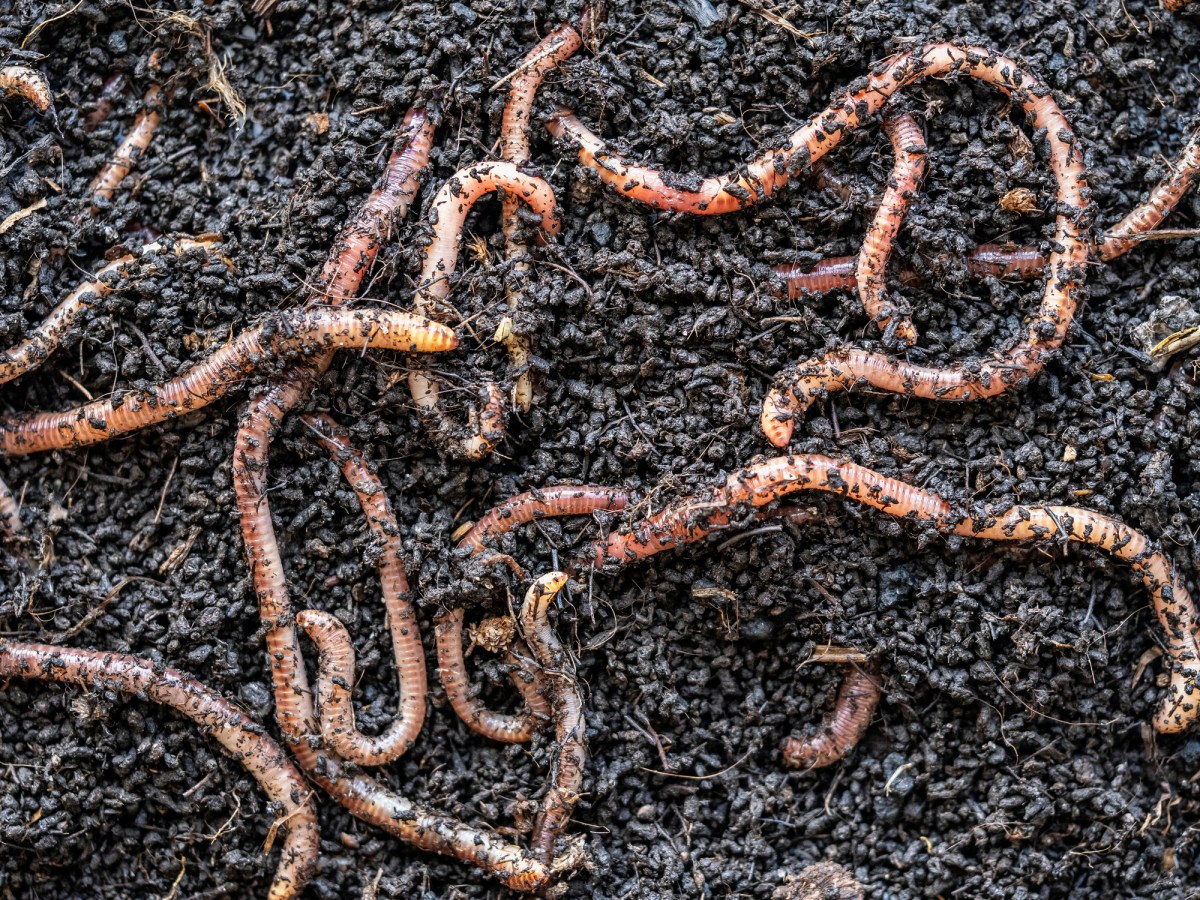

If you know where and how to look for worms, you can easily fill your entire summer requirements from the abundant worm beds that exist in nature. Worms are a favorite bait of a great many anglers, and the search for worm beds is an activity that demands many of the skills of a prospector. Even modern techniques of worm production have difficulty in matching the natural supply produced in good worm country.
Moist areas along river bottoms and the edges of creeks are likely spots for worm colonies. Try places where the dry and moist soil merge. Although large bodies of standing water are not conducive to worm beds, occasional pockets of water near these large areas often produce worms in quantity.
Look for depressions that carry the waters from the spring run-off to a creek or river. A slightly deeper depression along this route acts as a pocket and continues to hold water when the edges and main channel dry up. Worms come to the moist area under their own power or are washed into the pocket along with decayed leaves and topsoil. These pockets contain vast numbers of worms.
Blue-nose or muck worms can be spotted just under the surface of the water or along the surrounding edges of muck. No special tools are required for digging worms. A bucket can be filled with a few scoops of a shovel or by hand.
The time to search for worms is after the spring run-off begins to subside. They can be found in large concentrations until the warmer weather drives them into the swamplands, where they spread over a large area, making it difficult to find them in quantity.
Two- to five-inch worms prove hardy when kept under cool, damp, and dark conditions. Gather your summer supply and prepare a washtub by filling it with some muck, worm bedding (it’s a lot like moss and you buy it in dry form), and decayed leaves. Dump the worms on top of a soaked piece of burlap placed over the bedding material. A day later you’ll find the healthy worms have burrowed through the burlap leaving the weak or injured ones on top. These should be picked off and discarded.
Read Next: The 6 Best Live Bait Species You Can Catch Yourself
A dark corner of the basement is a good spot for storing the tub. If your family objects, dig a hole in the shaded area of your yard. Keep the worms cool and damp with additional wet burlap, and put a wood cover on the tub to ward off excess water. Frequent sprinkling during the hot weather is necessary if you expect the worms to remain in top shape.
Worms held for any length of time require feeding. Buy some powdered molasses from a feed or grain store, and sprinkle a few handfuls over the worm bed each week to keep your bait healthy.
This story was originally published in the June 1968 issue of Outdoor Life.
Read the full article here
