



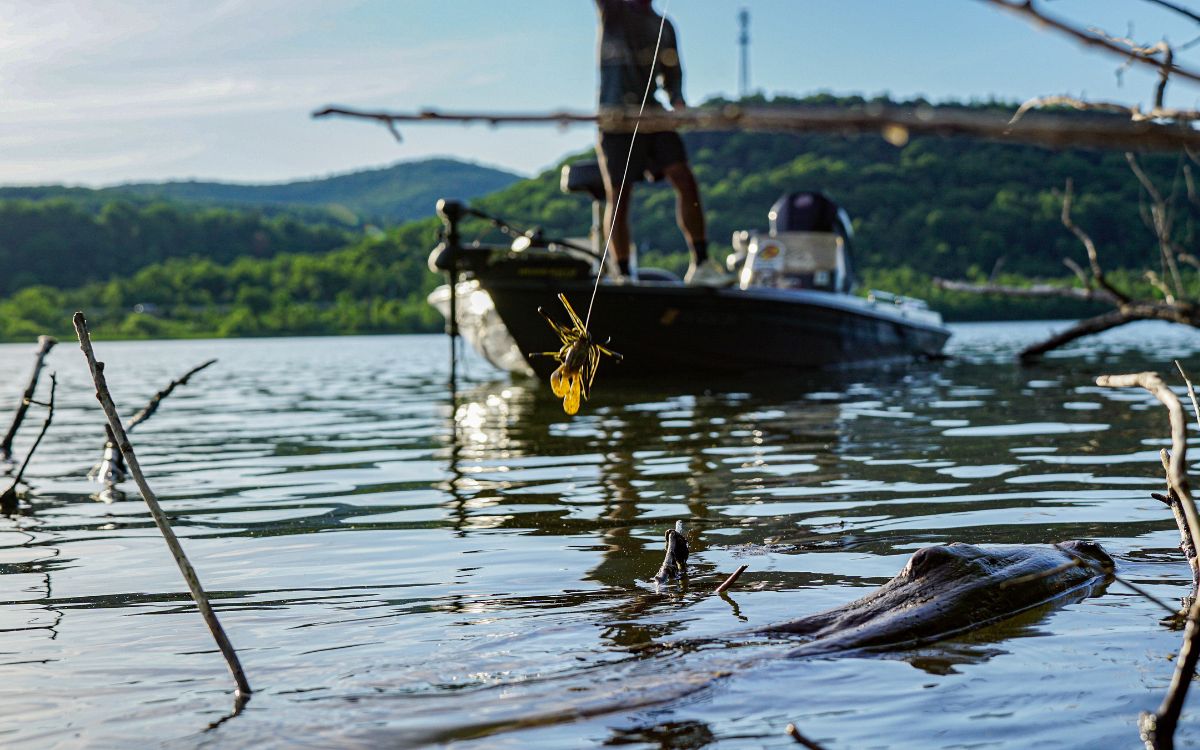

Finding fish on any body of water is easier said than done. A good rule of thumb is that 90 percent of the fish can be found in 10 percent of the waterway. That leaves a lot of room for error for the average angler who just wants to bend the rod on a few bass or panfish. Thankfully, most fisheries have bridges, boat ramps, docks, and laydowns surrounding the banks. These are great places to start if you’re looking for a new honey hole.
While boat ramps, docks, and bridges are all great options, my favorite summertime structure is a laydown. Laydowns can be challenging to fish at times, but without fail, they always seem to hold fish. Effectively fishing a laydown for bass and panfish really just boils down to making smart, accurate casts. You’ll learn to target your desired species and avoid losing so many baits to branches below the waterline.
So if you’re looking for a new hotspot to fish this summer, start by targeting the laydowns on your local water. Here’s what you need to know about fishing a laydown.
What Makes a Laydown So Good?
Bass and panfish aren’t just swimming around the branches and root system of a laydown for no reason. Laydowns supply the biological need for cover. For panfish, it’s all about safety. Bluegill, crappie, and perch are all low on the food chain, and swimming freely in open water means there’s a good chance they’ll become a meal to a larger predator like a bass, pike, or muskie. Submerged tree trunks and branches create a safe haven for smaller fish to hang out, feed on bugs and macroinvertebrates, and simply survive.
As for the bass, they’re there for the same reasons. Food and safety, plus a laydown provides the perfect ambush point. While smaller panfish and baitfish take shelter in the branches, bass will stage lower in the water column or on the outskirts of the laydown and wait for an easy meal.
This is similar to a saltwater reef system. Smaller reef fish will stay among the cover, while larger predatory fish roam the edges waiting for a chance to feed. In essence, a laydown acts as a freshwater reef.
Understanding this will help you better target bass and panfish near laydowns.
How to Fish a Laydown
You’ll have far more casting opportunities while fishing a laydown from a boat, so we’ll start there. To start, you’ll want to position your boat within casting distance — without getting so close that you’ll spook the fish. Whether you’re fishing from a boat or kayak, I’ve found that between 10 to 15 yards from the tree is just about the perfect distance to make accurate casts while still maintaining a safe distance.
This photo (above) illustrates the general gameplan I use for targeting laydowns. The first cast is always to the closest outside edge of the laydown. This will give you a chance to catch the most aggressive fish without blowing out the rest of the tree during the fight. Typically, if you get bit on the first cast, the fish will be swimming away from the tree with your bait, informing you that there are likely even more fish present. The reason for this is the most aggressive fish will want to take its newly acquired meal away from any competition in the tree. Similar to seagulls at the beach, hungry bass will swarm and try to steal an easy meal from their counterparts if given the chance.
The second cast is a little more aggressive but still avoids blowing out the laydown. This cast is typically to the root ball or main trunk of the tree on the shallow side of the laydown. This can be an incredibly productive cast for bass or panfish on the prowl for an easy meal in the shallows. From the bank, you can make the same cast back-to-back on both sides of the tree to ensure you’re covering every bit of the laydown before moving on to the next cast.
For the third cast, you’re fishing the deepest edge of the laydown. You’ll likely feel plenty of branches here, and frankly, there’s a good chance you get stuck if you’re not careful. It’s worth the risk, though: The deepest edge of a laydown typically holds larger fish, especially on sunny days when the fish are seeking the cooler temperatures provided by the shade of the branches. Just make sure you’re confident what you felt was a bite and not a tree branch before setting the hook. For bank anglers, this is a cast I’d likely avoid. If you get stuck, there’s no good way to get your bait back from the depths of the laydown.
The fourth cast is the Hail Mary. If you haven’t gotten a bite yet — and you’re desperate enough — launching your bait into the middle of the laydown is a great way to get that bite. It’s also a great way to lose your lure. On water that gets a lot of fishing pressure, or on incredibly sunny days, this is my favorite cast to make because other anglers are often too afraid to do it. The downside is, you will get stuck fairly often with this cast.
On any of these casts from a boat, you can simply go up to the bait, reel down to it through the branches and pop it off. From the bank, you’ll have to get a bit more creative to try to free your bait (while also staying dry). Laydowns are phenomenal at holding fish. They’re also lure magnets. Accept this before you fish one.
Tackle for Catching Bass Around Laydowns
While you can use almost any rod, reel, and line setup around a laydown, I tend to lean on these setups for both bass and panfish.
Picking the Right Rod
You have a lot of options when fishing laydowns. You can cast a jig, pitch a Texas rig, or go with a wacky rig on the outskirts of the tree. I typically choose the jig, especially for smallmouths and largemouths. The jig pairs nicely with a heavier-action rod, providing more backbone to pull big bass out of the branches during the fight.
With that in mind, the casting rod I lean on for a jig is the Shimano Poison Adrena. The 7-foot medium-heavy rod with a fast-action tip is about the best rod you can get for fishing a jig in and around cover. It allows you to make accurate casts, feel the subtle bites on the drop, and really drive the hook home on the hookset.
Shimano Poison Adrena
See It
Picking the Right Reel
Just like rods, there are plenty of great reels to use for fishing a laydown. But, since I tend to opt for a jig, my reel of choice is the Shimano Metanium DC A. The reel is buttery-smooth when casting, fits perfectly in the palm of my hand, and the DC system helps me avoid backlashes when I inevitably make a bad cast. It offers a phenomenal drag system and is lightweight, which saves your wrists throughout a long day of fishing. But, realistically, any baitcaster with around a 7.1:1 gear ratio and a strong drag system will work just fine.
Shimano Metanium DC A
See It
Baits
The bait options you can fish a laydown with are limited to more weedless rigging applications. If you can Texas rig it, or throw it on a jig, it’s a lot less likely to get stuck. My go-to for fishing a laydown is the Keitech tungsten casting jig paired with a Berkley PowerBait Maxscent Stank Bug. This small-profile combo is perfect for working in and out of the branches without getting snagged, and it’s a bite-sized snack for any hungry bass looking for an easy meal.
Tackle for Catching Panfish Around Laydowns
Picking the Right Rod
Targeting big panfish around a laydown requires a rod that has plenty of give, but also allows you to detect a subtle bite. Thankfully, I’ve found that I don’t need some crazy-expensive option to land big bull bluegills and dinner-plate crappie. My favorite laydown-fishing panfish rod is the Shakespeare Excursion spinning rod. I like the 6-foot-6 medium rod with a fast-action tip. You can feel light strikes on a small jig and set the hook without ripping the bait out of their mouth.
Shakespeare Excursion Spinning Rod
See It
Picking the Right Reel
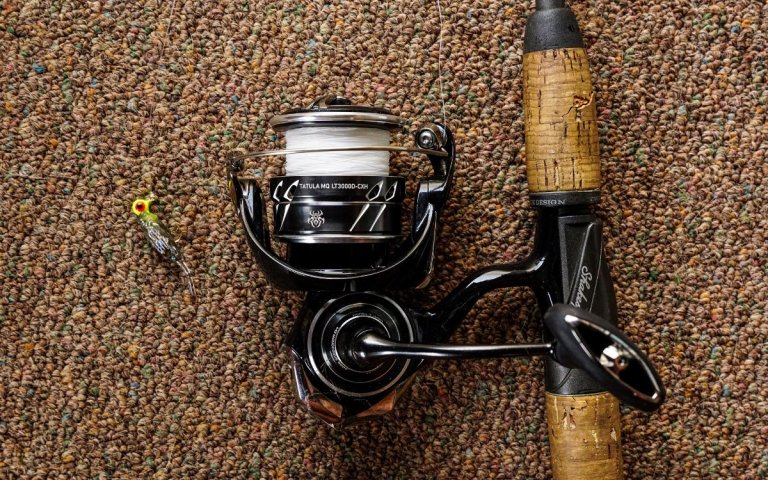
The reel you choose for targeting panfish on a laydown is forgiving. You simply need a nice drag that allows you to gently fight a giant crappie as it tries to pull you back into the tree. As a bass guy at heart, I typically use one of my 2500-size spinning reels and tie on a light-line leader. Lately, I’ve been using the Daiwa Tatula MQ LT. It’s an incredibly smooth reel with a great drag and solid handle. It’s more than enough reel for even the angriest bluegill or crappie and has yet to let me down during a day of panfishing.
Daiwa Tatula MQ LT
See It
Baits
The baits you can fish for panfish around a laydown are the same baits you can fish for panfish around any type of structure. Small jigs with soft plastics or even live bait options won’t let you down. The key is finding the right depth and area of the laydown where your bait is close to the branches, but not getting snagged. For a deeper dive, check out our full list of the best crappie fishing lures and best baits for bluegills.
Final Thoughts on How to Fish a Laydown
Whether you want to fish for panfish or bass, laydowns are a great place to start. You can safely bet that there will be fish around laydowns any time of year, too. Similar to docks and bridges, they’re one of the most reliable places to target.
It’s important to remember that, by tactically breaking down a laydown before casting, you’ll be greatly improving your odds of catching multiple fish from it. Remember to take your time and really try to feel your bait working through the branches so you can differentiate between a bite and a branch, and you’ll find more success while fishing laydowns this year.
Read the full article here
