



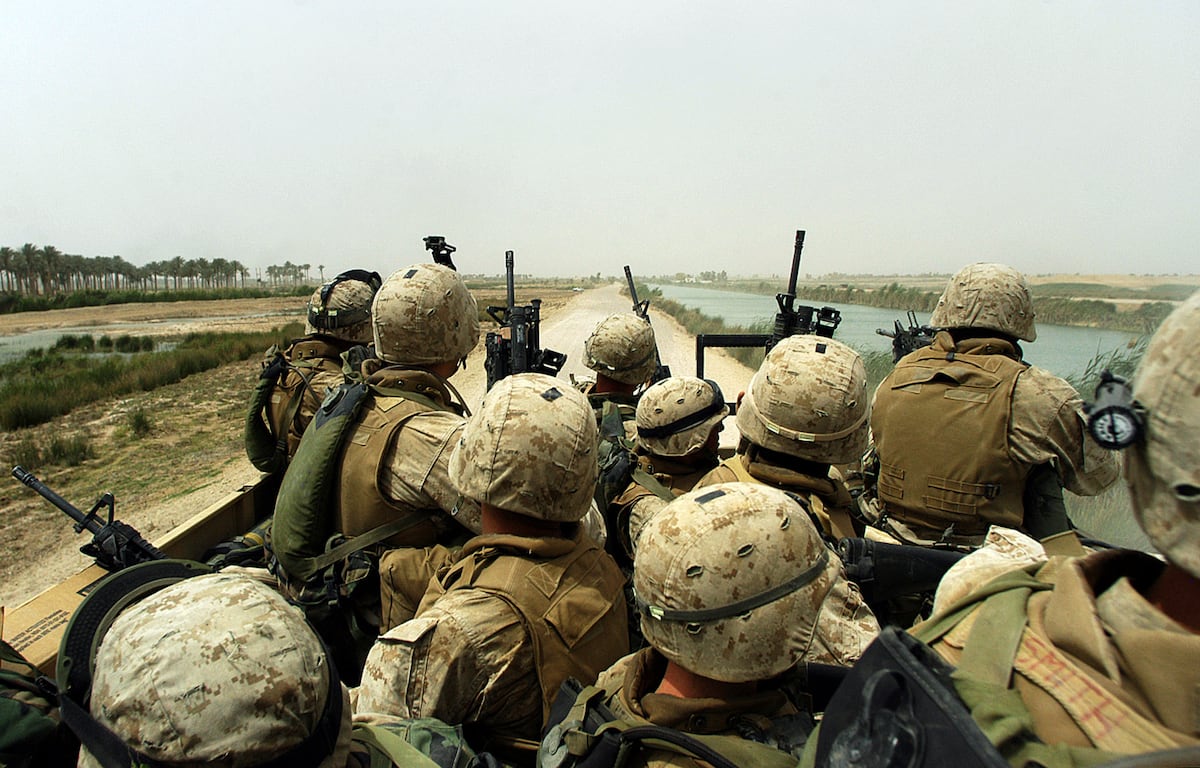

The military is preparing for future conflicts that may look little like the wars fought in Iraq and Afghanistan. At the same time, the generation that spent two decades fighting those wars is steadily leaving the force.
Across the branches, post-9/11 veterans are retiring, transitioning to civilian careers and stepping away from leadership and training positions. Their departures come as military leaders shift attention toward great-power competition, distributed operations and emerging technologies while preparing a force increasingly led by service members whose careers began after major combat operations in Iraq and Afghanistan ended.
For retired Marine Lt. Col. John Harman, the retirement of that generation raises a question that extends beyond doctrine or force structure: What, exactly, is worth carrying forward?
Some of the lessons forged during two decades of war remain relevant regardless of how future conflicts are fought, Harman said.
“Never take lightly the responsibility of sending others into danger,” he said, after a career that included nine deployments and six combat tours across Iraq, Afghanistan and the broader Middle East.
That lesson emerged during some of the most intense fighting of the post-9/11 era.
During the Battle of Fallujah, young and noncommissioned officers made life-or-death decisions under relentless pressure. The leaders who earned trust were not necessarily the most aggressive or outspoken, Harman said. They were the ones who remained disciplined, calm and committed to the service members under their charge.
“What separated exceptional leaders from average ones wasn’t bravado or chest-thumping rhetoric,” Harman said. “It was steady leadership under pressure.”
Military leaders have spent years adapting strategy and training for future conflict. Whether the next battle involves a near-peer adversary, proxy forces or a crisis no one has yet predicted, Harman said junior leaders will still face uncertainty, the weight of responsibility and the consequences of their decisions.
“Technology will evolve, but leadership fundamentals will not,” Harman said.
The Pentagon’s 2026 National Defense Strategy shifts the department’s focus toward deterring major powers, strengthening homeland defense and preparing for future conflict. Army University Press’s recent Lariat Advance report argues that future warfare will place greater demands on dispersed formations, decentralized decision-making and leaders operating with incomplete information.
Both describe operating environments that differ sharply from the counterinsurgency campaigns that shaped much generation that served after September 2001.
The topic of what gets passed on to future military leaders has surfaced across military education, training and force-development discussions as the services prepare for future conflict. Harman said he has seen that transition firsthand while working with younger Marines and officers after leaving active duty.
Many of the students entering today’s force are highly educated, technologically fluent and comfortable operating in environments shaped by artificial intelligence, unmanned systems and constant connectivity, he said. What they lack is not capability; it is the shared operational experience that defined their predecessors.
In his interactions with students, Harman said he occasionally finds himself sharing lessons that once required little explanation because entire units had lived through them together. Concepts such as trust, accountability and responsibility were reinforced by repeated deployments and combat experience.
For many younger service members, those lessons must now be taught in classrooms, training exercises and professional military education programs, rather than learned during wartime deployments.
“The challenge isn’t that this generation is unprepared,” Harman said. “The challenge is making sure they inherit the lessons that previous generations learned through experience without having to relearn them in combat.”
Leaders who attended SOF Week 2026 agreed.
This year, U.S. Special Operations Command leaders warned that training requirements continue to accumulate, even as demands on the force grow more complex. Leaders argued that future readiness will depend on both emerging technologies and preserving the adaptability, judgment and resilience needed to operate in uncertain environments.
The fundamentals of leadership
The discussion is unfolding as many members who served during the height of Global War on Terror reach retirement eligibility. Service members who entered the military in the years following the Sept. 11, 2001, attacks are now approaching or surpassing 20 years of service — the benchmark for military retirement.
Many serve in senior enlisted, officer, instructor and training positions responsible for developing the next generation of leaders.
Retired Army Capt. Maxine Reyes, an Afghanistan veteran who served in leadership and command positions during her military career, said one of the most important lessons she carried from Afghanistan had little to do with tactics.
“Having the ability to build genuine relationships often mattered as much as tactical proficiency,” Reyes said. “We must never forget that every mission is ultimately about people.”
Technology, weapons and battlefield conditions will continue to evolve, she said, but the fundamentals of leadership remain remarkably consistent.
“The battlefield of the next conflict may look nothing like Afghanistan,” said Reyes. “But one thing remains constant: success and failure often hinge on human relationships, trust, and leadership.”
Future conflicts may involve artificial intelligence, cyber warfare and technologies that did not exist during much of the wars in Iraq and Afghanistan, Reyes explained. Even so, leaders will still be required to make decisions under pressure, uncertainty and exhaustion.
“When conditions are at their worst, people rarely follow a rank; they follow a leader they trust,” she said.
For Harman, those qualities are directly connected to future conflict.
A fight involving a near-peer adversary could place greater responsibility on junior leaders operating with less oversight, degraded communications and fewer opportunities to seek guidance from higher-ups, he said. In those environments, leadership, judgment and trust become operational requirements.
Reese Rogers, a retired Marine officer who served in Marine reconnaissance and special operations units during deployments to Iraq and Afghanistan, says gaining experience itself should be the goal.
“The first time is always the first time,” Rogers said. Training can prepare leaders for many situations, but some lessons are learned only when responsibility becomes real.
“We’ll always worry about how we should perform when it matters most, but you only learn by doing,” he said.
For retired Navy Senior Chief Stephanie Tankersly, who served in Afghanistan during Operation Enduring Freedom as a Fleet Marine Force corpsman, one of those lessons is judgment.
“Perfect information is a luxury leaders rarely have,” Tankersly said. “Most consequential decisions are made long before all the answers are available. Authentic leadership is the willingness to act amid uncertainty, guided by judgement, experience and a clear understanding of what is at stake.”
A new era
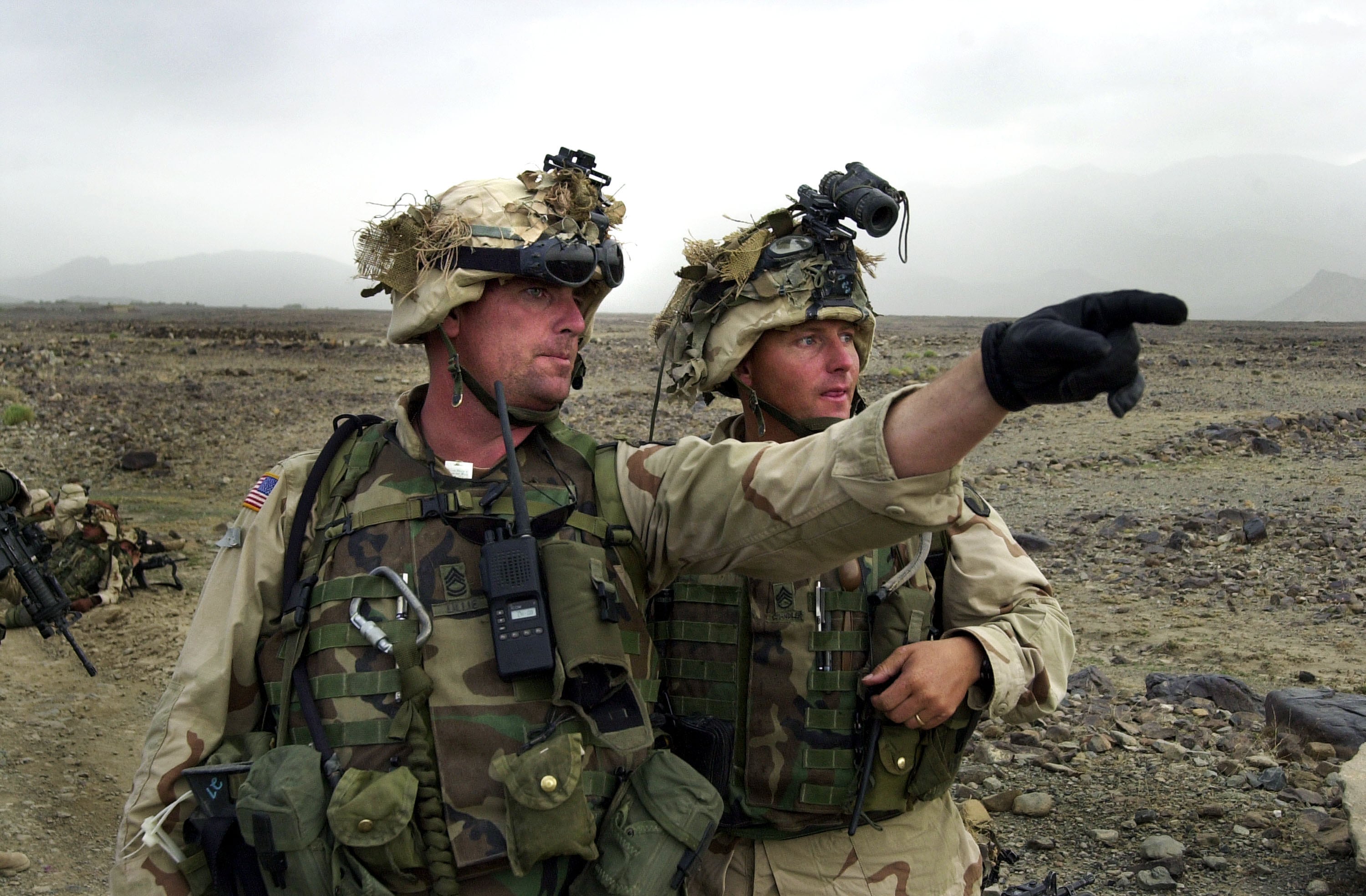
Military historian Erik Chapman said the retirement of the post-9/11 generation is influencing a broader discussion about what future leaders need to know.
As the military shifts from the wars that defined the last two decades to preparing for future conflict, Chapman said the challenge is not preserving Iraq and Afghanistan as case studies. It is determining which lessons remain relevant regardless of the battlefield.
“Every retirement represents more than a billet to be filled,” Chapman said. “It represents years of accumulated judgment, mentorship, and operational experience walking out the door.”
As military leaders redesign training, doctrine and force priorities for future conflict, Chapman said, “We can’t wait for the next conflict to rediscover what previous generations learned through hard experience.”
He continued, “The next generation doesn’t need to fight the last war, but they do need to understand the hard-earned lessons that war produced.”
Ensign Christopher Miller, a recent Naval Academy graduate, is part of the generation that will inherit those lessons and apply them to conflicts that may bear little resemblance to those fought after 2001.
“My generation may never fight the same wars our mentors fought,” Miller said.
The responsibilities that come with leadership, however, remain unchanged.
“We’ll face the same responsibility of making difficult decisions under pressure,” Miller said. “The technology will be different. The burden of leadership won’t be.”
Read the full article here
