



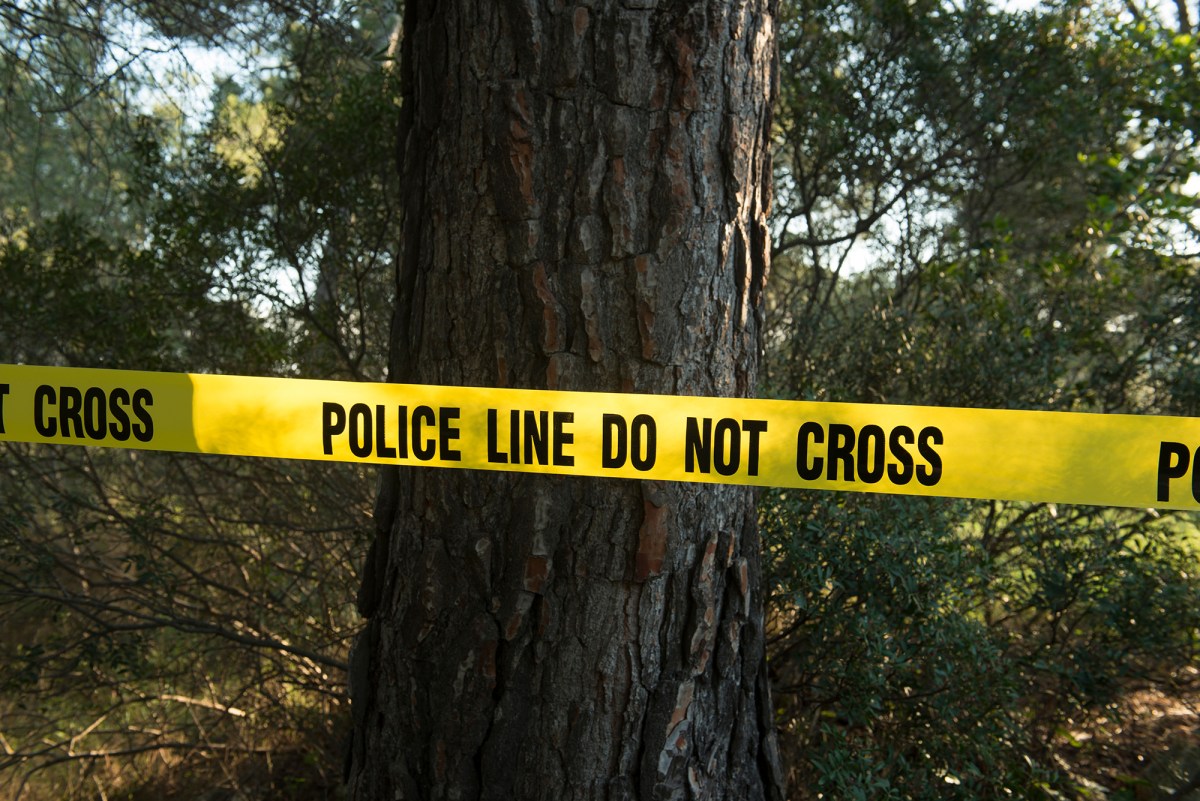

Early this spring my buddy stumbled across human remains on my family’s hunting property. The discovery itself was surprising — shocking, even — but it was also just the beginning of a months-long investigation. Every year shed and mushroom hunters across the country come across human remains like this. Short local news pieces on the discovery might pop up, but often there’s little follow up about the discovery. In this episode of the Outdoor Life Podcast, I talked to editor-in-chief Alex Robinson about how law enforcement in a rural county in Missouri responded to a report of human remains, and where the investigation whent from there.
Listen to The Outdoor Life Podcast on Spotify, Apple Podcasts, or wherever you get your podcasts. Love it? Like it? Want to help? Leave a five-star review where you listen to get The Outdoor Life Podcast in front of more people. Prefer to read the written story instead of a transcript? Check out my written piece, Human Remains Were Found on My Deer Hunting Property.
Full Transcript
Intro: This spring, our executive editor, Natalie Krebs, and her family got quite a surprise. A human skeleton had been found on their deer hunting property. Some of Natalie’s friends had been shed hunting on the property when they discovered a skull, a spine, and some other bones. This triggered an investigation that in some ways is still underway. I’m editor-in-chief Alex Robinson, and today on the podcast I’m talking to Natalie about what exactly happens when human remains are found in the woods.
Alex: Okay, Natalie, I think to kick this story off, the best thing for you to do is describe your deer hunting property in Missouri. Like what’s it like? Give us the lay of the land.
Natalie: Yeah. So this farm is in central Missouri. It’s at the end of like a long, lonely gravel road, and it sits up kind of on a hill with some bluffs around it. It’s old cattle pasture. There’re fields that are farmed, there’s timber and there’s pasture that slowly, they’re returning to wildlife habitat. There are deer and turkeys on the property. We dove hunt there. And it’s kind of back in the middle of nowhere.
Alex: Okay. So, yeah, I imagine like Missouri hill country, deep creek bottoms and rolling hills.
Natalie: Yeah, exactly. That place is really fun to turkey hunt, but it is also a pain
Alex: Okay. And now fast forward a little bit to the spring. You had some buddies out there shed hunting. You weren’t with them though, so what’s the deal there?
Natalie: No, I wasn’t with them. I don’t live in the area. But I did get a really interesting phone call catching me up on what happened. So my buddy Hunter, who I hunt with on that place, he does a lot of the habitat work. He plants food plots and he can kind of just come and go as he pleases. He also shed hunts every year. And he was out there with his wife, Cassey, and a couple of their buddies who I know, and they were just walking the property. It’s maybe 180 acres, something like that. So they were going through the fields, going through the timber, and they found some sheds and eventually they ended up deciding to check like the way far back part of the property. They had to go down this big hill, across the creek. They were in a side-by-side and just went to the far back part of the property along the creek that runs around the property.
Natalie: And while they were out there, Cassey, she’s riding in the side-by-side and she saw what looked like a white rock — like this really weird white rock in the creek. And she didn’t say anything, but she’s like, Huh, like, that looks really cool. And they went and they checked a back field. And on the way back, the creek was high enough that Hunter kicked everybody out of the back of the Ranger and made them walk so he could drive through the creek without swamping. And they get to the other side of the creek and he parks, and they’re waiting for everybody to catch up. And Cassey sees this rock again and she’s like, Man — she’s got a thing for rocks, she really likes rocks — and she sees this rock and she’s like, I’m gonna go check this out. I’m taking this home with me. And so she goes over there and her buddies behind her who are walking, they see it too. It catches their eye. It’s super noticeable, and they all kind of get there at the same time.
Alex: So is it like in the water or is it kind of on the bank of the creek?
Natalie: So it’s not in the water. It’s above the water. It’s kind of like where the dirt, just above where the dirt meets the rocks. This is a creek that is like, it curves really sharply. And if you’re down there, you see tons of exposed roots. There’s old rubber tires on the bank. A lot of stuff gets washed down this creek. There’s all kinds of timber that shows where it’s flooded. And so there’s some really steep, steep areas at the bank. And this is kind of in that spot where dead leaves collect, there’s dirt, and then you start to get into the creek rock. So they’re all standing around looking at this rock and somebody’s like, “Man, that just does not look right.” And then they notice that there are bones scattered around this white rock, and somebody says, “Oh my gosh, that’s a human skull.” And they all back up.
Alex: And then when someone said that, then they all like realized. It clicked for everybody at the same time?
Natalie: For the most part. Cassey said that it took her a minute to see it. She kinda looked at it and was like, “Nuh uh, no it’s not.” Because she really was thinking — she told me that she thought it looked like it was gonna be a coyote skull or maybe like part of a cow skull or something. They spend a lot of time out in the woods. They shed hunt a lot. It’s cattle country. She just was like, “No, it’s not.” So she goes over there and at this point, it’s just kind of a round curved white orb and she picks up a stick and she doesn’t touch it, but she pokes the stick in the dirt underneath and kind of pries it loose enough that the white bone rolls. And at this point, the facial features, which had been in the mud, come free and it tips towards the sky and it is unmistakable. Eye sockets, nose socket, no lower jaw, but there is a human skeleton now, like pointed toward the sky.
Alex: It’s not, it’s not a cow.
Natalie: Yeah. Not a cow. And they all step back again, this time way farther. And they’re all just standing around staring at each other, and back to the human’s skull lying at their feet.
Alex: Okay. So what do they do next?
Natalie: They kind of just talked about it for a minute. That was their question. They were like, “Well, what do we do?” You know, I talked to Hunter about this and talked to Cassey, like, what was the mood? Like, how are you guys feeling? And they said that nobody was really scared. Like, they were human bones, but they were clean. There was no flesh on them. There were no obvious signs of damage to them. So they weren’t like freaked out that somebody was nearby in the woods or anything like that.
Alex: It wasn’t like a gruesome body with like clothes on and like bloodstained sweatshirts or something.
Natalie: Yeah. Not like a horror movie scene or anything like that. So it was odd and they were shocked by it and kind of just trying to figure out what to do. So they did, they talked about it for a minute. Like, what should we do? Should we call 911? Like, where do we go from here? And they didn’t touch anything else. They were concerned about contaminating the site, so nobody touched anything with their hands. They didn’t touch any of the bones directly. They moved some leaves off of the bones to see what else was there.
Alex: So basically they were just taking stuff that they’ve seen out of movies and cop shows?
Natalie: Yeah, I mean what else do you do? Hunter was a little bit behind everybody because he was back in the side-by-side on a work call. Somebody had called him about a dump truck. And so Cassey called him over and was like, “Hunter, you need to get over here.” And he did not believe her initially. And then he got over there and was like, sure enough. And he told me, “I had a chew in, and all of a sudden I stopped spitting on the ground.” He was like, “I went back to the Ranger and got a can, I did not want my DNA anywhere near that.”
Alex: Which is because they’re like, oh, we found a crime scene. Obviously this is the killer.
Natalie: Yeah. [Or just to contaminate the scene.] So anyway, that was a thing that they thought about. And another thing I asked was, “Well, did you guys take any photos of it?” Like, everybody’s got cell phones. This is a thing that I would expect a group — they’re in their mid to late twenties, anybody that generation — to photograph—
Alex: Everything.
Natalie: Yeah. And they didn’t. They all kind of agreed almost without really talking about it, “We’re not gonna do that. That feels — it feels wrong. Like it feels disrespectful.” Cassey told me, “I was like, that was a human. And we just agreed not to do that.” So before he called 911, Hunter called his dad, who also helps manage this property and hunt this property. And I asked him about this later, I was like, “Hunter, did you call your dad to see if he had killed somebody?” And he goes, “That is exactly what I did.”
Alex: Initial takeaway is just like, Hunter is a very trustworthy guy. Oh yeah. He’s like, but before I call the cops, I’m gonna make sure that I’m not, like, snitching on the family murder.
Natalie: Yeah. Hunter is a guy you want in your corner. Like he’s gonna do his civic duty, but he’s also—you can trust him.
Alex: He’s not gonna snitch.
Natalie: He’s got your back.
Alex: Okay. So everyone agrees to call 911.
Natalie: Yeah. So Hunter calls 911 and I did try to get a hold of that 911 call. [But] it’s sealed in Missouri. But Cassey told me about it. She had a pretty good recollection of it. And so he called 911 and they asked what his emergency was, and Hunter was like, “Well, it’s not exactly an emergency, but we have found human remains.” [The dispatcher] asked a bunch of questions: did they take photos of it, did they touch it? And [when] she asked that, Cassey said she moved it with a stick. And the 911 operator was like, “Do not touch it again.” But what I will add is that if they hadn’t confirmed that they really were human remains, I think that would’ve just made what followed more challenging. And so they followed her instructions. She dispatched some officers, and this was—
Natalie: And this is a big county. Our place is at the end of a long road, like they got over there fast. And so they’d all gotten back in the Ranger, gone up to the house to meet the officers. And they questioned them pretty intensely. They took everybody’s driver’s license information down. I [heard] the dispatch calls where they called everybody in back to dispatch, who ran background checks, made sure they didn’t have warrants out for their arrest. And what Hunter told me was the vibe he got was not that the police officers thought they were killers, it was that they were maybe wasting their time. And I did talk to the detective on the case later, and he told me that they get at least once a year a false report of human remains.
Natalie: Usually shed hunters or mushroom hunters are out there. They find something that looks like a big bone and they’re like, oh man, or a femur or something like that. And they call it in. Most of the time it turns out to be cows because it is cattle country. So I think that they just were like, okay, we’re used to this. You all were shed hunting, we’re not gonna believe you until we see it. So everybody gets back in the Ranger and they drive down there with the two deputies in their vehicle, get back there, they take one look at the remains, and they’re like, yep, we’re calling this in. So they sent Hunter and his buddies back up to the farmhouse and they taped off the scene and then they called in a lot of backup.
Alex: Yeah. So this part’s interesting to me because we, I mean, we see stories like this pretty much every year. Like a shed hunter finds human remains or finds some crazy thing. What happens? How do they go about investigating just random human remains found in the woods?
Natalie: Yeah, it’s a good question. And it varies based on the evidence they can find, based on my discussion with the detective. So they followed protocol. Any time human remains are found in this county, the detective for the Sheriff’s Office comes out, like it automatically triggers a response from him. And the detective I spoke to is Detective Sergeant Will Thomas. And I think it was probably about, not quite two hours to get together this huge response team. [They also came out to the property a second time that week when there was more daylight.] I pulled the security camera footage from the house to just see what was going on. And it’s just like a procession of law enforcement vehicles pulling in the driveway. There’s black pickup truck after black pickup after black pickup.
Alex: Nobody—the Krebs family is not there. You guys aren’t there, right?
Natalie: Yeah. This is all happening. Hunter is having to deal with this on his Saturday night where he just wanted to hang out with some buddies and go shed hunt and drink a couple beers and just have a good weekend. And so what happens is, they’re back in our farmhouse, and this is why Hunter called me. One, he couldn’t get ahold of my dad and law enforcement wanted to talk to the landowner because human remains were just found on this property. And [two] he called me because it was cold out. It was right about sunset when they went down there with both the officers and they got sent back up to the house to just wait.
Natalie: And so it was cold out and Hunter was like, “Hey, do you mind if we go in the house?” I was like, “Yes, Hunter. Go in the house, get warm, hang out, whatever.” So they’re just in the house when this big procession two hours later of law enforcement arrives. [At one point] there was a flatbed trailer with a side-by-side on it. They brought in cadaver dogs. It was a whole lot happening. So the detective gets down there and—
Alex: Like they brought dogs maybe to look for other remains?
Natalie: Yeah, exactly. So the detective got down there and what they did was—and this sounded like standard procedure. There was a collection of bones on the surface, which he said was pretty straightforward. That’s the one that everybody found. And they did a total eight-by-eight [foot] grid around the remains that they taped off. And this was an area they were gonna dig. They wanted to see what else was potentially under the surface, what they might not be able to see. And so they cordoned this off and got a bunch of five-gallon buckets and sifters and a big tarp. And they started to work, just shoveling dirt into buckets and taking ’em over to the sifters and sifting them on a tarp. And they were able to go a foot down before they hit bedrock. While they were working on that, the cadaver dog handlers took dogs in either direction for a mile upstream and downstream along the creek.
Alex: Oh wow. That’s a huge search, actually. Because a mile in that country, that’s a lot.
Natalie: Yeah, it’s a lot. And it’s easier in the [late] winter, but that creek is not easy to walk along. It’s winding. There’re steep bluffs that meet the base of it. There’s tree tangles everywhere. It’s a mess. And the dogs did not find anything else. And I asked the detective how they reacted when they got to the actual remains. And he said by the time the dogs got there, they had removed the bones from the ground, but the dogs went crazy at the site where the bones were. Which, I don’t know enough about cadaver dogs, but that was really interesting to me, that even bones—which at this point, the age of the bones is in question — that they had that strong of a response to something that had been out in the elements for a while. That was really cool to me.
Alex: Yeah, that’s crazy impressive. If you think about the equivalent of what we know about, would be like blood-tracking dogs. You kinda have to get them on the scent within maybe two days of shooting the deer so that they can have that fresh scent and be able to track the deer, whereas these dogs are just sniffing clean white bones and signaling off of that. That’s pretty cool.
Natalie: Yeah. And not even the bones — the soil where the bones were.
Alex: Oh yeah, yeah.
Natalie: And thinking about shed hunting dogs, right? Fresher sheds are better, but casual shed hunting dogs can just totally miss stuff. So they ran the dogs while the detective and other folks from the agency were working. They had help from the Highway Patrol, which keeps a criminal lab unit, they have forensic resources. And they were sifting and the only thing that they found that they hadn’t seen on the surface was one rib bone that was two inches in the dirt. And otherwise that excavation didn’t turn up anything. So they were down there for a while, working, sifting, looking around and eventually it was getting late, it was dark.
Natalie: They kind of wrapped up for the evening. They took all of the bones in the coroner’s van and they ended up leaving, I don’t know, it was maybe 10 or 11, I’d have to check the records. But they were there for a good time. And meanwhile Hunter and Cassey and them are hanging out in this old farmhouse. There’s wifi but they didn’t know what the password was. And so both Cassey and Hunter were like, it was like what they imagined life in the 90s was like, just hanging out with your friends, talking, playing cards, drinking beer. They were waiting to be like, “Okay, what do they need us for?” And as it turns out, law enforcement was like, “Yeah, you guys are good.” And so they didn’t really know any of this had happened while they were waiting in the farmhouse. It was just like, “You kids are good.” And I talked to the detective later and he said that they were never suspects. He said they did exactly what he would hope any responsible citizen would do and call it in, as opposed to seeing something like that and thinking, That’s not my problem, I’m not calling that in. And he says he believes that that happens, that somebody just doesn’t wanna deal with it and there are human remains that are found, but go unreported.
Alex: Yeah, yeah. Interesting. Okay. So they find these human remains, they kind of know there’s really no reason to suspect the people who found them. But they found these remains on the Krebs family property. So, were you guys under — did they do an investigation? Was the Krebs family under investigation? What happens?
Natalie: Yeah, if we were, I don’t know about it.
Natalie: One of the officers asked if there [were any open] missing persons [cases], and 911 dispatch said, No, we don’t currently have any open cases of missing persons. So I think that all of those factors combined to — really, there was no evidence or sort, there was just nothing really to suggest that we should be under investigation, as far as the detective saw it. And I think because this is something that — to your point earlier — this is something that does happen. It’s not all that uncommon for hunters to find human remains. Nothing about it felt suspicious to the detective.
Alex: What were officials able to find out about the remains? Were they able to figure out how old they were or if there were any wounds or anything? Did they tell you stuff like that?
Natalie: Yeah, I asked the detective quite a bit about that and that is one of the big mysteries with this case. So, the short answer is, not a whole lot. It’s complicated by the only remains that they were able to find. There was the skull, but it was missing the mandible — so the jawbone — and there were no teeth in the upper part of the skull. So there go dental records. And there was a spinal column and ribs. There were no extremities, no lower torso, no pelvic bones, nothing like that. So they really did not have many large bones to go off of. They attacked this a couple different ways. One, they called an anthropologist to just give a visual assessment of, here’s how old they think they might be.
Natalie: The anthropologist estimated between five and ten years, which the detective said, that’s great and I really appreciate their expertise. He said in his experience [though] just a visual inspection can often be way off if bones are not taken back to the lab. And that’s for a few reasons. That has to do with any kind of forensic dating where [remains have] been exposed to the elements, possibly submerged in water, exposed to sunlight, half-buried in mud. All of those factors can sort of speed up or preserve the aging of bones in a way that makes it really hard to confidently give an idea about how old they are.
Natalie: So initially, before they even talked to the anthropologist, one of the theories that the detective had was perhaps these bones are so old as to be like a hundred years or more, that maybe these are from an old Native American burial site. There’s a lot of historic archaeological evidence in the area, like it’s historic Osage country.
Natalie: So that was a line of inquiry that he pursued for a little bit. He ended up talking to one of the former property owners who knows the area really well and asked him if he knew of any older burial sites on the property. And — this was news to me — the previous owner said, Yes, in fact I do, but the only one that I know about is in the front yard by the farmhouse. There were never any found down in the area that you’re talking about. So that, combined with the anthropologist’s estimate of five to ten years of age, which is kind of what they pegged the bones at, the detective kind of dismissed that these are really old bones. We think it’s a newer body.
Alex: But no signs of foul play. As they say in the TV shows.
Natalie: Yeah, well that is exactly what the detective said. He said, “At this time, I have no reason to suspect foul play,” and that is based on the bones that they do have. So yeah, as he put it to me, there are no holes in the skull that are not supposed to be there. I think maybe a rib or two was broken, they were off the spinal column, and that they think is just due to being in the creek, in the elements.
Natalie: So the other thing, to finish your question around what they do know about this. Because they only have the rib bones and the spinal column and the skull, they have limited opportunities to extract, or attempt to extract DNA, from the bones. And so — as I understand it — the bigger bone that you have, the better.
Natalie: So if they had a femur bone or something like that, they might have a better chance of it or just more opportunities to try? The county coroner, a neighboring county coroner [or rather medical examiner], has the skull and is in the process of trying to extract DNA from the skull. And that’s not guaranteed. And it’s also a process that can take a really long time. Between nine months to a year is kind of the timeline the detective was given to get any sort of information back. And she told him, I think I can get DNA from the skull. Don’t hold me to that, but I am hopeful. So he really is kind of in a holding pattern on the case and is hoping to get DNA back. And if he gets DNA back, then he can run it through the State Highway Patrol’s lab for any missing persons that are beyond our county.
Natalie: And then if that doesn’t work, what they’re gonna do is send the DNA down to—there’s a lab in Texas that does forensic genealogy. So if you’ve read news stories about cold cases that were cracked because somebody ran their DNA through something like Ancestry.com or 23andMe, that’s the sort of lab that can do that. So he is really hoping that they can get usable DNA.
Natalie: If that doesn’t happen, it’s really kind of open-ended. As I said, there are no missing person cases in the county. The detective’s best theory for what he thinks happened is somebody drove out — possibly from St. Louis, which is a couple hours away — and camped by a creek and just got caught up in a flash flood. That particular creek flooded pretty badly in 2024. So that timeline, or other floods around then, could be consistent with the timeline that everybody’s thinking about.
Natalie: And that has happened in the area before, but the detective was like, normally when that does happen — he mentioned a couple of folks who had been killed in flash floods that way — he was like, Normally we find the body the next day or the day after that. It’s something we know about. So if it was somebody who did come from St. Louis, for example, why would a missing person’s report from St. Louis pop up in our county if, say, that person’s friends or family didn’t know that they were going out, just decided to camp down by the river or something? That could help explain the disconnect.
Alex: Yeah. It’s also fitting too, just the rural officials are just like, “Yeah, city people just come out here.” I’m guessing they’ve probably seen people from St. Louis do stuff that they’re like, “Hmm, that’s not very smart.”
Natalie: Not advisable. Yeah.
Alex: Kind of going back to Hunter and his doing the right thing and calling this in — I guess the reason to do that and the reason to put all these resources into trying to solve this mystery — what is, assuming that it’s not a murder, which it doesn’t seem like this is. It’s not like someone’s gonna be brought to justice. What is the goal, or what is the reason for trying to solve this?
Natalie: Yeah, so the detective really hopes by solving it, he could bring closure to a family who has lost someone or is missing somebody in their family. They don’t know what happened. And even though there’s not gonna be a happy ending here, they are able to at least close the book on a missing person’s case. And also help out not just the family, but law enforcement in another county or another area, who can then close a missing person’s case, and not expend any more resources chasing down leads in that case because they have the answer in our area.
Alex: Got it. Okay. Well, for now it remains an unsolved mystery. I mean, what do you think happened? What was your big takeaway from all of this?
Natalie: You know, I think that it’s noteworthy that the detective and also Hunter and other folks I’ve talked to who know the area well kind of came to the same conclusion. Hunter’s theory — and again, Hunter will be the first to tell you he’s not an expert. He’s like, “I’m not a scientist, I’m not a criminologist.” But he does spend a lot of time on the property. He picks up a ton of shed antlers, deadheads, he’s used to looking at bones that have been in the sun or submerged or whatever. And I kind of asked him about that. And it’s funny, he said he had found a deadhead — like a deer head — ten minutes before that and it looked exactly the same as the human remains.
Natalie: And I asked him how old he thought that deadhead was. He said maybe three or four years, just based on his experience with it. And he felt like [the human remains] had been swept up in that flood from 2024. Both the detective and Hunter mentioned a bridge that was upstream. I think the sheriff more for, it could be an area where people camp or it’s more likely somebody could park or go fishing. I think Hunter also had the theory that if somebody wanted to get rid of a body, the bridge is the sort of place where you push ’em off. And so that was kind of Hunter’s initial theory.
Alex: Yeah. Just going back to the movies, chuck the body off the bridge. Washes downstream to the Krebs’ property.
Natalie: Yep. Very conveniently, right on our property. So I think having spent a decent amount of time in that creek myself too, it just does seem like the kind of place where a bunch of stuff gets washed down, kind of collects trash and litter, and I could see how something would get swept down there. And also, the fact that half of the skeleton — more than half the skeleton — was missing, the detective also mentioned that that is kind of a sign of repeated flooding. That it washes away part of the body that might be in the water and the other half is above the high water mark, and then that gets swept away too. And so that could help explain why no other bones were found.
Read Next: I Found a Human Skull While Rabbit Hunting Near Los Angeles
Natalie: So yeah, to me that’s a pretty straightforward and reasonable answer. It’s just that the creek is — it’s a big creek. It’s powerful. It floods a lot in the area and that to me makes sense. But I expect to hear an update from the detective on whether or not they ever extract DNA and if that’s the case, hopefully there will be a match with a missing person or somebody else in their system there will be an answer.
Alex: Nice. Well, hopefully they are able to solve this and get that DNA and if they do, maybe we’ll have you come back on. Until then, it remains a mystery, I guess.
Natalie: Yes, it does.
Read the full article here
