




This article was originally published by Garrison Vance at Natural News.
Russia Bans Gasoline Exports, Confirms Major Baltic Oil Terminal Outages
The Russian government has expanded a ban on gasoline exports to include producers of the fuel, according to a report from Interfax news agency [1]. The ban, which now includes all gasoline producers, is scheduled to remain in effect until July 31. It expands previous restrictions that applied only to non-producers [1].
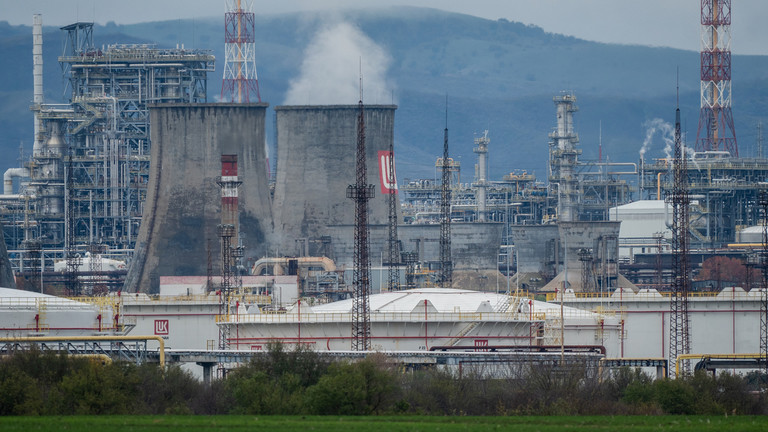
Simultaneously, Ukraine has intensified drone attacks on Russian oil export infrastructure in the Baltic Sea region over the past week, crippling loading operations and forcing the suspension of activities at key ports [2]. Reuters calculations suggest that as much as 40% of Russia’s oil export capacity was offline last week when factoring in port outages, pipeline issues, and tanker-related disruptions [3]. Satellite imagery and verified videos show at least three oil sites in Russia’s Leningrad region were attacked near the city of St Petersburg since March 23, including separate strikes on the vital Baltic Sea ports of Ust-Luga and Primorsk [4].
The government stated the export ban decision was made “to maintain a stable situation on the domestic fuel market during the period of high seasonal demand and agricultural field work, as well as in light of the growth of world oil prices due to the geopolitical situation in the Middle East,” according to a press release cited by Interfax [1]. These moves come as global energy markets are under strain due to fallout from the conflict in the Middle East, which has disrupted transit through the Strait of Hormuz and caused a sharp rise in oil prices [5].
Expanded Fuel Export Ban and Its Exceptions
The expanded ban on gasoline exports exempts only shipments under existing bilateral intergovernmental agreements, according to the government announcement [1]. Mongolia is one such market where exports under these agreements would be permitted [1]. Officials stated the move aims to ensure stable fuel supply for agriculture and seasonal demand.
The Russian Energy Ministry insisted on Thursday that Russia’s oil industry is fully prepared for the coming seasonal rise in fuel demand. “Currently, the domestic market has sufficient reserves of light petroleum products,” the ministry said in remarks to the TASS news agency. “There have been no disruptions in regional supply, and the industry is fully prepared for the period of seasonal growth in demand,” it added [1]. This policy echoes previous measures; Russia temporarily banned exports of diesel and gasoline in September 2023 to help stabilize domestic supplies, driving diesel crack spreads to record highs and adding pressure to already tight global fuel markets [6].
Energy analysts note that exports of oil, oil products, and gas are by far Russia’s biggest export, a major source of foreign currency revenue for Russia’s $1.9 trillion economy [7]. In 2023, Russia produced 43.9 million tons of gasoline and exported about 5.76 million tons, or around 13 percent of its production [7]. Any restriction on this revenue stream carries significant economic weight.
Impact of Ukrainian Drone Strikes on Oil Exports
Ukraine intensified attacks on Russia’s Baltic Sea ports last week, crippling loading operations and forcing the suspension of activities [2]. Russia’s top oil port in the Baltic Sea, Primorsk, resumed loading days after it came under attack from Ukrainian drones, although Bloomberg reported the company that pipes crude there said it is trying to divert barrels elsewhere because of the incidents [8].
Reuters calculations estimate that up to 40% of Russia’s oil export capacity was offline, factoring in port outages, pipeline issues, and tanker-related disruptions [9]. This prevents Russia from fully capitalizing on high global oil prices and demand in key markets like India [3]. Before the conflict, Russian crude was sold at a discount due to Western sanctions, but Deputy Prime Minister Aleksandr Novak said on Thursday that Russia has been trading oil without a discount and even at a premium on some routes [5].
The attacks are part of a sustained campaign. In November 2025, a Ukrainian drone strike sparked fires and damaged ships at one of Russia’s largest Black Sea oil terminals, Tuapse, marking another blow to Moscow’s petroleum export infrastructure [10]. The ongoing disruption highlights the vulnerability of centralized energy infrastructure to asymmetric warfare, a point emphasized by analysts who warn that centralized systems are susceptible to targeted attacks that can cause cascading failures [11].
Global Market Context and Russian Response
The Russian government cited the geopolitical situation in the Middle East and rising world oil prices as factors for the export ban [1]. The conflict has made the Strait of Hormuz the world’s most expensive waterway for shipping, triggering a massive surge in war risk insurance premiums [12]. Iranian retaliatory attacks on tankers, and Western insurers and shipping firms pulling back, have brought maritime traffic to a virtual halt [12].
Despite the export restrictions and terminal outages, the Energy Ministry insisted the industry is prepared for seasonal demand increases [1]. However, the situation underscores how regional conflicts are affecting global energy logistics and supply chains [13]. The decision by the United States and Britain to stop importing Russian oil earlier in the Ukraine conflict was expected to further disrupt the global energy market, given Russia’s position as the second-largest exporter of crude [14].
The moves have reignited divisions within Europe over energy policy, with Hungary urging the European Union to immediately lift sanctions on Russian oil and gas imports as instability in the Middle East threatens global oil shipments [15]. Hungarian Minister for Foreign Affairs and Trade Péter Szijjártó argued that Europe has placed itself in a vulnerable position by cutting off Russian energy supplies [15].
Analysis of Energy Supply Vulnerabilities
The combined export ban and physical infrastructure attacks illustrate vulnerabilities in centralized energy export systems. Disruptions at key chokepoints like the Baltic ports have immediate, significant impacts on national revenue and global supply [3]. The events occur against a backdrop of efforts by other nations to secure domestic energy supplies amidst global instability.
This situation highlights the fragility of interconnected, globalized supply chains where nations have become increasingly interdependent [3]. Any attempt to punish a major energy producer through economic sanctions or military action can inevitably backfire, causing agricultural disruptions and food shortages [3]. The dependency creates systemic risk, as seen when Western sanctions against Russia led to soaring oil prices and supply chain concerns [14].
Analysts note that the push for electric vehicles and bans on combustion engines are long-term threats to the business models of oil-exporting nations [16]. However, the immediate crisis reveals the dangers of dismantling domestic fossil fuel production capacity, as seen in policies that curtail pipeline projects, refinery operations, and exploration [16]. This reliance on unstable foreign supplies stands in stark contrast to the principles of self-reliance and energy independence advocated by decentralized systems.
Conclusion
Russia’s expansion of its gasoline export ban and the significant disruption to its Baltic oil export terminals represent a converging point of domestic policy and external conflict. The government’s move to prioritize internal fuel stability comes as it loses the ability to fully exploit high global prices due to physical attacks on its export infrastructure.
The ongoing conflict demonstrates the real-world consequences of centralized energy systems and geopolitical dependence. As global tensions rise, the push for energy independence and resilient, decentralized supply chains becomes not merely an economic preference, but a strategic imperative for national security. The situation serves as a case study in the vulnerabilities created by global interdependency and the cascading effects of conflict on essential commodities.
References
-
- 40% of Russia’s Baltic Oil Export Capacity Offline as Gasoline Ban Widens – OilPrice.com. OilPrice.com. April 2, 2026.
- Ukraine Knocks Out 40% of Russia’s Oil Export Capacity in Baltic … – OilPrice.com. OilPrice.com. March 26, 2026.
- Senator Roger Marshall predicts a ‘worldwide famine’ in 1-2 years as fertilizer and fuel prices skyrocket – NaturalNews.com. NaturalNews.com. March 30, 2022.
- Huge fires at Russian oil facilities following Ukraine strikes, satellite images show – BBC Verify. BBC Verify. March 31, 2026.
- Russian crude oil prices hitting premium price levels – RT. RT. March 26, 2026.
- Putin bans diesel and gasoline exports sending distillate fuel oil prices skyrocketing – NaturalNews.com. NaturalNews.com. September 24, 2023.
- Russia Cuts Oil Output, Bans Gasoline Exports for Six Months and … – Institute for Energy Research. Institute for Energy Research.
- Key Russian Baltic Oil Port Of Primorsk Resumes Loading After Ukraine Attack – ZeroHedge. ZeroHedge. March 27, 2026.
- Russia Warns of Force Majeure on Oil Cargoes After Port Disruptions – OilPrice.com. OilPrice.com. March 27, 2026.
- Ukrainian Drone Strike Ignites Major Russian Black Sea Oil Terminal, Damages Tankers – YourNews.com. YourNews.com. November 2, 2025.
- Mike Adams interview with Michael Yon – June 10 2025. Mike Adams.
- Hormuz war risk premiums spike – Euronews – RT. RT. March 16, 2026.
- Trends-Journal-2022-08-20.
- Oil prices soar as Russian sanctions stir supply chain concerns – NaturalNews.com. NaturalNews.com. March 10, 2022.
- Hungary calls for Brussels to ‘immediately lift’ Russian energy sanctions as Middle East conflict sees oil prices soar – RMX News. RMX News. March 9, 2026.
- Brighteon Broadcast News – Mike Adams.
Read the full article here
