



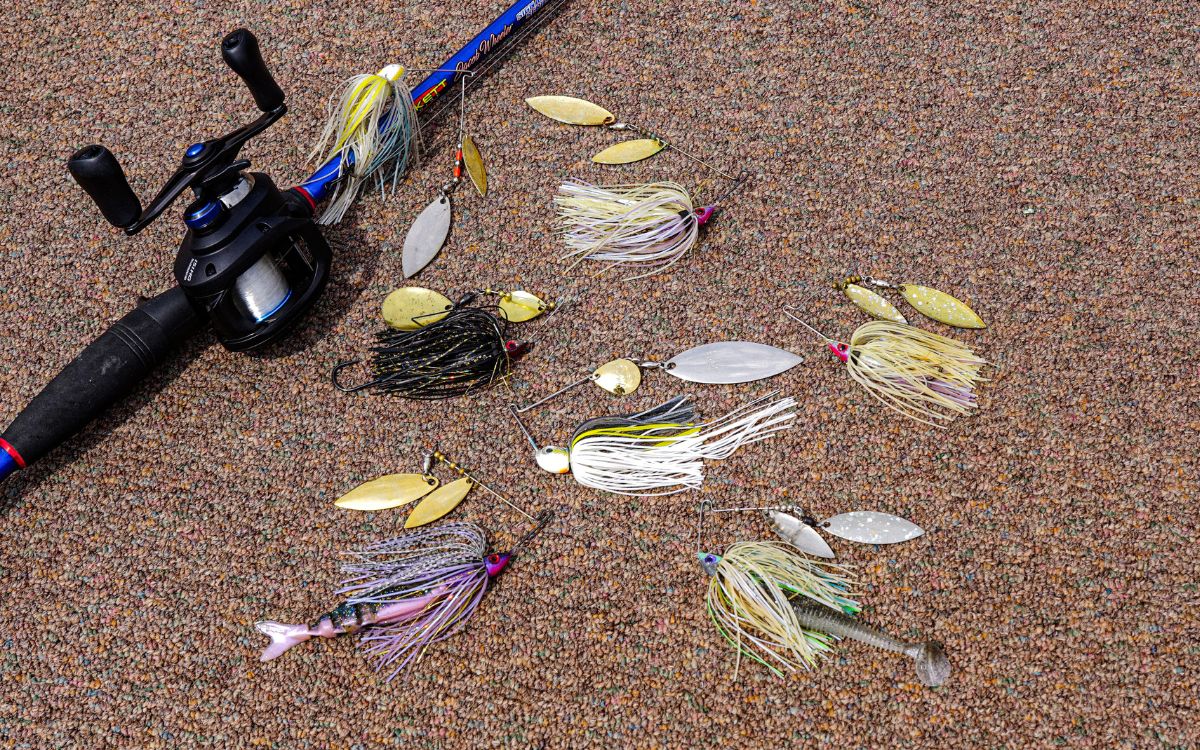

In the modern world of dice baits and minnows designed for forward-facing sonar, there’s a growing list of baits, lures, and techniques that have fallen by the wayside. Sure these lures are still time-honored catching machines with the older generations, but the younger, cutting-edge bass anglers don’t seem to want anything to do with them. The Carolina rig is a good example, but unfortunately, so is the spinnerbait.
When I began bass fishing decades ago, a spinnerbait was one of my go-to options, especially in the spring. From ponds to big lakes, to rivers, this flashy and versatile lure just seemed to produce bites, even on the toughest days. During my time in college, while fishing around the country, I always had a spinnerbait tied on and ready to go. The spinnerbait rarely let me down when fishing shad spawns, for finicky bass around docks and other structure, or for schooling bass high in the water column.
Even today, amidst the new lures and tactics craze, I still find myself reaching for a spinnerbait when the timing is right and the bite gets tough. The spring is one of my favorite times to fish a spinnerbait, as the fish push to the shallows and ambush bait along grass lines and laydowns. These bites are electric, jumping your line and giving you the pulse-pounding action that makes bass fishing so addicting. To help you get in on the old-school fun, here’s everything you need to know about fishing a spinnerbait.
The Spinnerbait
A spinnerbait beautifully represents a baitfish, or multiple baitfish swimming in close proximity. It also gives off vibration, which bass can feel in their lateral line and use to hone in on the easy meal. It works in clear water, stained water, and even murky, muddy water situations.
Its versatility stems from the options you have when selecting and rigging a spinnerbait. From willow blades to Colorado blades, weights, skirt colors, trailer options, and even trailer hooks, there’s a plethora of options to make your spinnerbait selection stand out.
How to Select a Spinnerbait
You might find yourself overwhelmed when standing in your local tackle shop staring at a wall of spinnerbaits. The good news is, with a few pointers to focus on, you can load up on a full spinnerbait arsenal for a variety of conditions.
First, you need to evaluate where you’re going to be fishing a spinnerbait. Clear water versus dirty water will be the biggest factor in determining the right spinnerbait for you.
Selecting a Spinnerbait for Clear Water
In clear water conditions, you’ll want to use silver willow blades to help your spinnerbait look as natural as possible. Your job here is to ‘match the hatch’ to the best of your ability with the skirt material and trailer as well. If you can make your spinnerbait look like a natural, tiny ball of baitfish cruising through the water, you’ll find plenty of bass willing to eat. Whites, subtle grays, and subtle yellows and blues are the best colors to keep things looking natural. When in doubt, a shad color or even pure white is never a bad choice.
Selecting a Spinnerbait for Dirty Water
In dirty water conditions, the game changes a bit. Instead of natural, we’re looking for loud and flashy. Gold Colorado blades are what I typically lean on, along with unnaturally flashy skirt colors. The gold flash, paired with the loud thump of a Colorado blade drives shallow bass in muddy water crazy. With your skirt colors, chartreuse, vibrant purples, and even black and blue will help you stick out in the low visibility water conditions. In these scenarios, I typically opt to fish without a soft plastic trailer, but rather, I’ll run a trailer hook on the back of my spinnerbait. This helps you connect with short strikes from bass that just barely miss the mark.
Selecting the Right Weight for a Spinnerbait
Similar to fishing a chatterbait, the weight of your spinnerbait matters. If you want to run your bait high in the water column at a slower speed, a lighter spinnerbait is your best bet. If you’re fishing a deeper area with structure on the bottom, leaning on a heavier spinnerbait with a slower retrieve is probably the ticket. I’ve found that having spinnerbaits from ¼ ounce up to ¾ ounce covers almost every single one of my needs. Typically, I’ve got a ⅜ ounce or ½ ounce tied on and ready to hit the water at a moments notice.
How to Rig a Spinnerbait
Once you’ve picked out the perfect spinnerbait, it should take you no more than 30 seconds to be ready to fish. You’ll simply need to remove your spinnerbait of choice from its packaging and rig your soft plastic trailer on if you want to go that route. If you don’t want to deal with the soft plastic sliding down throughout the day of fishing, you can use super glue to ensure it stays in place on the jig head. Simply use a Palomar knot to tie your line to the wire of your spinnerbait.
What Makes the Spinnerbait so Effective?
The simplicity and versatility of a spinnerbait is exactly what makes it so effective. It doesn’t require some fancy knot or technical skills to get the bait to run ‘just right’, it’s a plug and play style lure. Pick one that fits the conditions you’re fishing, tie it on, and start casting.
I believe the reason a spinnerbait works so well is because it covers multiple ways of triggering a strike. The flash of the blades taps into the bass’ ability to see their prey, while the thump or whirr of the blades activates their lateral line where they can literally feel the bait moving through the water. Activating multiple senses at once seems to help convince the bass that your spinnerbait is the real deal, a fleeing baitfish that is in the wrong place at the wrong time.
The final piece to the puzzle that makes the spinnerbait so effective is how you choose to fish it. Whether you want to burn it across the top of the water column and ‘wake’ it just under the surface, or slowly reel it back past underwater ambush points like stumps or laydowns, a spinnerbait looks just like a fleeing baitfish. And in the spring, when the bass are flooding to the shallows to spawn, your bait looking like an easy meal is a winning combination.
For more tips on how to fish a spinnerbait, check out this great video from my friend Tyler Anderson.
Fishing THIS Spinnerbait Is Like CHEATING! (Spinnerbait Fishing Tips)
When and How to Throw a Spinnerbait
A spinnerbait is tough to beat in the spring. But, the conditions have to be right. Since this is a power fishing technique, it doesn’t excel in super cold water when the bass are still lethargic. Finding the right water temperature is the key to getting on a hot spinnerbait bite.
Similar to other power fishing techniques, when the water temperatures rise into the 50’s, it’s typically game on. Here in the Northeast, that usually happens in early to mid-April. Once the temperatures are right and the birds are chirping, the bass will flood from the deep water basins up into creek channels and shallow pockets. In those areas, you’ll find the majority of your structure like laydowns, grass lines, boulders, docks, and stump fields.
Those are your targets when fishing a spinnerbait. Simply cast out past the target, bring the spinnerbait in close proximity to the structure, and if there’s a bass using it as an ambush point, it’ll likely reward you with a strike. Typically, a slow and methodical retrieve with small pulses of the reel handle to flare the skirt and create an erratic movement in the bait is the best way to trigger a bite. That’s because bass are ambush predators, so the erratic fleeing motion kicks their prey drive into high gear.
Also keep an eye out for wind blown points or rip-rap banks. In the spring, a heavy wind will push baitfish into the turbulent waters and create a feeding frenzy for the bass. It might not be the most fun to keep your boat positioning steady in the heavy wind, but the feeding frenzy will more than make up for it. To ensure you’re not losing the fish once you hook up, the gear you use is just as important as making the right cast.
The Gear You Need to Fish a Spinnerbait
Picking the Right Rod
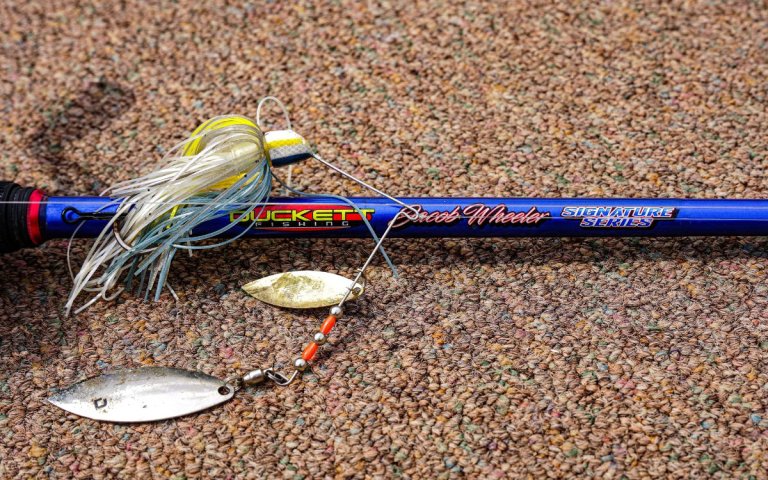
A spinnerbait requires a rod that is both forgiving, but also has a stiff backbone and fast tip. As you fish through structure and cover, you’ll want the spinnerbait to deflect off of cover freely without getting hung up, a lighter rod will help accomplish that goal. For my spinnerbaits, I lean on the Duckett Jacob Wheeler 2.0 casting rod. At 6’8”, I can make accurate casts in and around cover, and the medium rod is forgiving while also providing a strong enough backbone to drive the hook home on a hookset. My favorite thing about this rod is that I can feel the vibration of the spinnerbait as I retrieve it, which helps me key in on more subtle strikes and miss fewer bites.
Duckett Jacob Wheeler 2.0 Casting Rod
See It
Picking the Right Reel
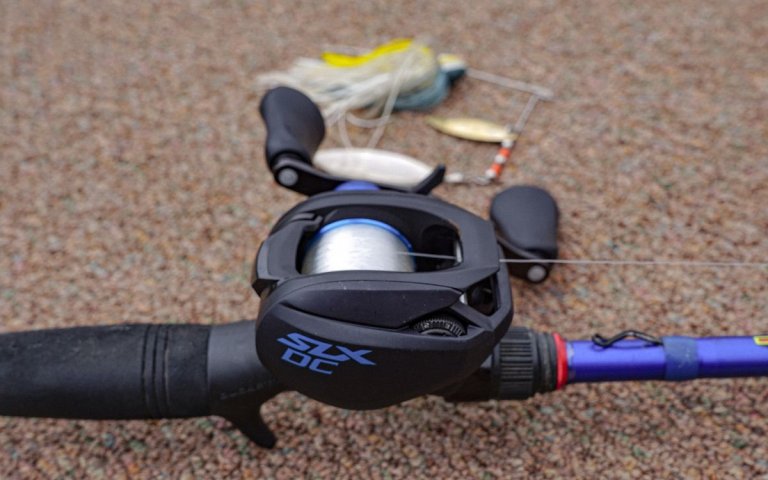
The reel you choose is equally as important as the rod. If you opt for a reel with too high of a gear ratio, it’ll be hard to control the speed of your retrieve. On the same hand, if you go with too low of a gear ratio, you’ll struggle to keep the spinnerbait moving fast enough to trigger a strike. I tend to reach for a 7.2:1 reel with some hefty drag that allows me to horse the bass out of the cover after the hookset. My go-to reel for a spinnerbait is the Shimano SLX 150 DC. It’s the perfect combination of speed and drag power, and it’s helped me catch hundreds of bass on a spinnerbait over the years.
Shimano SLX 150 DC Casting Reel
See It
The Best Spinnerbait
As with most bass lures, there are more options than you can fathom when you walk down the spinnerbait aisle at your local tackle store. And honestly, 99 percent of those options will work if you match up the bait to the water conditions. For my own fishing, I often lean on the War Eagle Nickel Spinnerbait Double Willow, but must admit that I have an arsenal of different brands to pick from. I like the War Eagle spinnerbaits purely because it’s durable and holds up throughout an entire day of catching, unlike some other options on the market.
Spinnerbait Trailers
I don’t always use a spinnerbait trailer. I’d honestly say it’s 50/50 for me. I think the perfect spinnerbait trailer is something small and subtle. You’re not relying on the soft plastic to be the enticing part of the bait, more so, the last piece of the puzzle for a wary bass. The blades and skirt will draw them in, the soft plastic might just present just enough realism to make them commit. With that in mind, a Strike King Rage Tail Menace rigged sideways to swim like a baitfish rather than a craw, or a Keitech FAT Swing Impact 3.3-inch swimbait are my typical choices.
Realistically, almost any soft plastic with a subtle action that seamlessly slides onto your spinnerbait will do the trick though. Experiment and find what works best for you.
Line
When it comes time to spool up your spinnerbait reel, look no further than 12-pound Sunline Super FC Sniper Fluorocarbon Line. The fluorocarbon will be the best option because the sinking line will allow you to keep the spinnerbait lower in the water column rather than just riding the surface, and it’s abrasion resistant to help you cut through the grass or deflect off of underwater structure better than a monofilament would.
Final Thoughts on How to Fish a Spinnerbait
The spinnerbait may be becoming one of those forgotten lures, but that doesn’t mean you have to follow suit. They are still fish catching machines and can be fished in almost any body of water successfully. Whether you want to wake it across the surface or slow roll it around deep cover, a spinnerbait will trigger bites that rock you to your core.
In the world of new baits and techniques, it’s important to remember that the classics can still catch plenty of fish. They didn’t become classics by sucking, and the spinnerbait might suck least of all.
Read the full article here
