



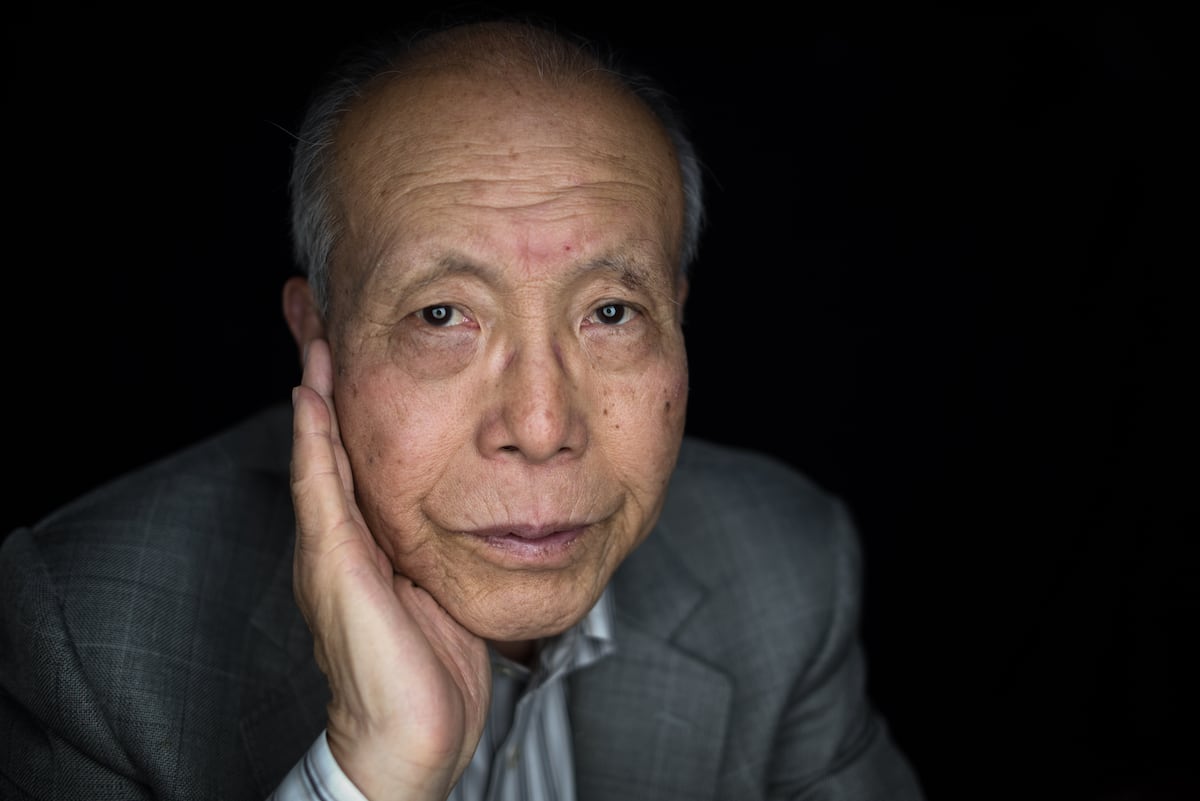

Shigeaki Mori, an atomic bomb survivor who spent decades researching the forgotten American prisoners of war killed in the Hiroshima attack, has died at age 88.
The historian died on March 14 at a Hiroshima hospital, according to Japanese media reports.
Mori was just eight years old when the B-29 carrying the earth shattering “Little Boy” bomb dropped on the city. Less than a mile and a half from the center of the blast, Mori was thrown into a nearby stream that protected him from the firestorm that followed.
“I found myself inside the mushroom cloud,” Mori would later write. “It was so dark that when I held my hands up about 10 centimeters in front of my face, I couldn’t see them.”
In the ensuing days, Mori scavenged for food and water but only found piles of charred bodies instead. When he did find water, it was poisoned with radiation. Unknowingly, Mori drank it anyway.
As a young man, Mori worked at a brokerage house and, later, at a piano manufacturer. “But I’d always wanted to be a historian,” he told The New York Times in 2016.
And so the budding historian began spending his weekends researching the aftermath of the Aug. 6, 1945, bombing. Mori conducted his own interviews with survivors, double-checking official histories with contemporary newspaper reports.
“There were so many mistakes in the histories,” he told the Times.
One interview with a local university professor, however, set Mori on a decades-long quest. The professor had found a list of names in a government archive and, not sure what to do with them, handed them off to Mori.
The list contained the names of 12 American airmen who had been shot down over the area on July 28, 1945. They had been killed alongside the Japanese when their fellow Americans had dropped the bomb. Their deaths had gone unrecognized, with both governments keeping quiet about their presence in the city.
“When I first learned of the American victims, I realized that none of them had been officially recognized as a victim of the atomic bomb. It was shocking to me,” Mori told Stars and Stripes in 2015.
It took him three years before he found anyone connected to the Americans.
Eventually, in the 1970s, declassified American documents backed up his findings. His subsequent book, “A Secret History of U.S. Servicemembers Who Died in Atomic Bomb,” detailed the fate of the airmen.
Mori worked tirelessly to bring the death of the Americans to light — building a memorial for them at his own expense and advocating for their inclusion at the Hiroshima Peace Memorial Museum. The name of the first airman was added to the peace memorial in 2004; the additional 11 were added in 2009.
In 2016, Mori was recognized by former President Barack Obama, who was the first sitting president to visit Hiroshima. The pair’s subsequent embrace at the memorial grounds gained international attention.
“My ultimate hope is to send out a message that war deprives people of everything,” Mori told Stars and Stripes in 2008. “We should never repeat the mistake.”
Claire Barrett is an editor and military history correspondent for Military Times. She is also a World War II researcher with an unparalleled affinity for Sir Winston Churchill and Michigan football.
Read the full article here
