



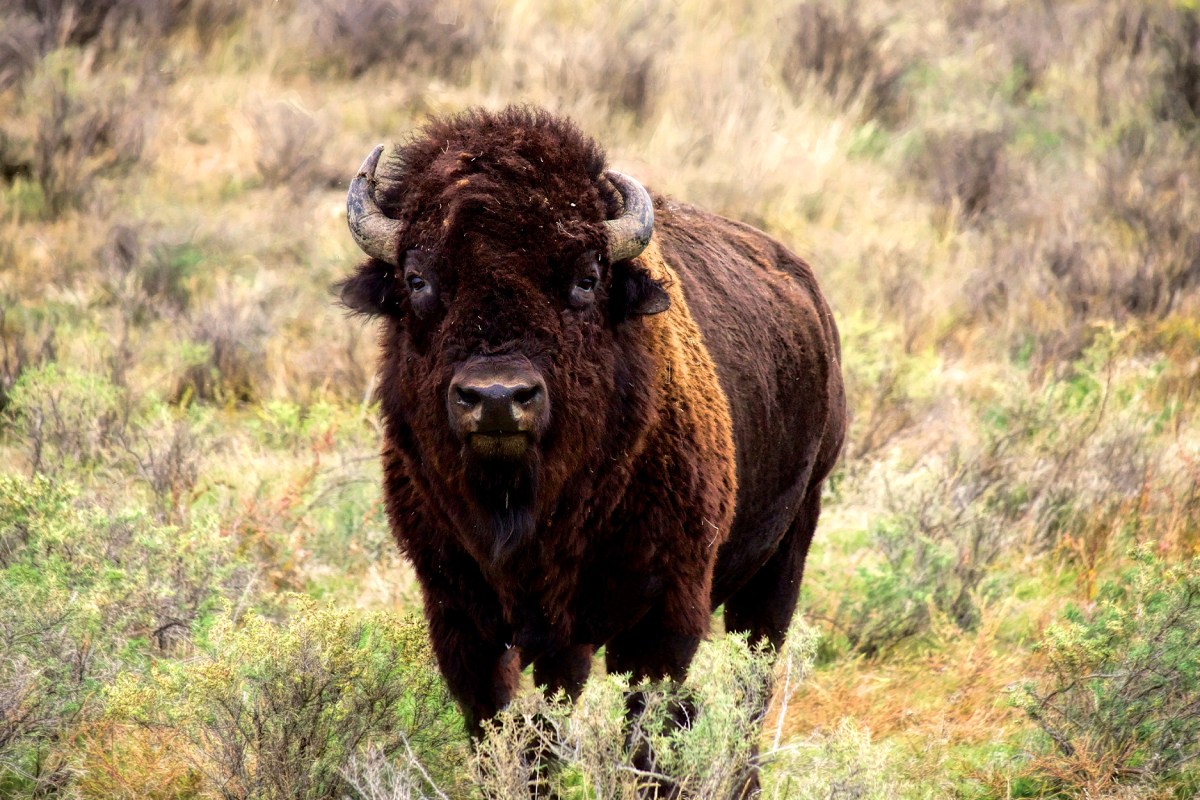

The short-grass prairies of our Northern Great Plains are some of the least protected ecosystems on the planet. They are also the ecological core of America’s modern-day livestock industry, due to the large tracts of BLM land that allow ranchers to manage the range by grazing cattle. You don’t have to go very far back in our nation’s history, however, to recognize what these commercial livestock operations replaced: millions and millions of American bison, the continent’s original native grazers.
As we look toward the future, and what we might want the Northern Plains to look like, some conservationists and ecologists, along with many tribal nations, are viewing bison as a necessary part of the picture. One group in particular, a non-profit called American Prairie, has made strides in that direction by purchasing large tracts of traditional ranch land in Montana and leasing BLM ground to graze bison. This has caused some serious friction in the rural Montana communities where AP operates, and it’s led to ongoing disagreements in town squares and courtrooms.
Another lawsuit is now brewing. This is due to the Interior Department’s recent decision to revoke American Prairie’s bison grazing permits on seven BLM parcels in Phillips County. In its Jan. 16 letter, which prominently features a bison on its seal, the Interior explained that due to the provisions laid out in the Taylor Grazing Act, the BLM can only issue grazing permits for livestock managed for “production-oriented purposes.” It referred to AP’s bison as a “conservation” herd and implied that this was inconsistent with the multiple uses that BLM lands provide.
Read Next: BLM Says American Prairie’s Bison Can No Longer Graze on Public Lands
To better understand this decision and the history behind it, we’re talking on this week’s Outdoor Life podcast with our hunting and conservation editor Andrew McKean. As a journalist with a deep interest in our public lands, and a working rancher who grazes his own cattle on BLM ground in the same part of Montana where AP has been acquiring land, McKean is uniquely positioned at the intersection of all this.
“Nothing’s easy in this whole conversation,” Mckean says. “But 40 or so years ago, people observed, like, holy smokes, we better get busy sort of conserving this [short-grass prairie] biome before it disappears … American Prairie’s origin comes from that kind of energy for conservation, and really preservation: Let’s keep what [we have left] of the unplowed short-grass prairie intact.”
During the course of our winding discussion, we talk about the long-ago cattle drives and the origins of the Taylor Grazing Act, as well as the concerns that today’s cattle ranchers have around free-roaming bison. We talk about the paradox of managing a species that is considered to be both wildlife and livestock, and why the very idea of re-wilding buffalo continues to be so controversial.
“You go into any of my neighbor’s houses, my own house, and we’ve got buffalo skulls on the mantelpiece, we’ve got iconography of buffalo all over the place. Buffalo are on our license plates for God’s sakes,” McKean says. “It’s like we revere the idea of bison, but we just can’t stand the reality of bison.”
Read the full article here
