



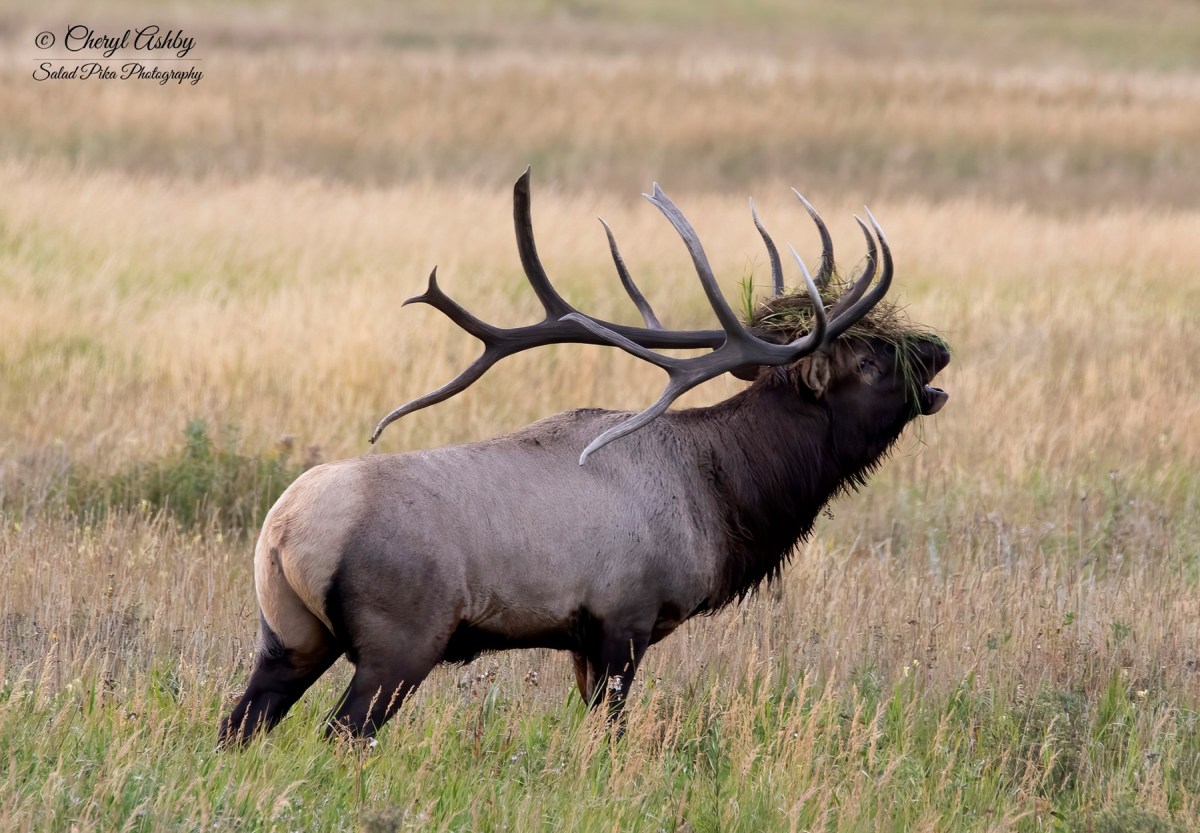

A Rocky Mountain elk that’s become well known in Colorado over the years was harvested by a hunter last fall, according to reporting in Cowboy State Daily and other news outlets. The bull, nicknamed “Split 5,” was at least a decade old, and one of the dominant bulls in a herd that migrates between Rocky Mountain National Park and Estes Park, which serves as the eastern gateway to RMNP.
Although Split 5 was often seen up-close and photographed frequently in the tourist town, he was still a wild, free-ranging elk. And while hunting is strictly prohibited inside the National Park boundaries, there is plenty of huntable public land surrounding the area. According to CSD, a hunter killed the bull legally.
Colorado Parks and Wildlife would neither confirm nor deny this, since the state does not require elk hunters to report their harvests. Sources within CPW tell Outdoor Life that hunters who legally kill large, well-known bulls that leave the safety of the park often keep it to themselves to avoid riling up the anti-hunting community.
“You’d be stupid to release a trophy pic with you and this bull,” wrote one Facebook user, Michael V, in a Colorado Elk Hunters group.
Three months after the alleged hunt, the hunter’s identity remains unknown, and will probably stay that way considering the polarizing response to the elk’s death. Denver7 noted in a headline how the local wildlife community was “mourning the loss” of the iconic animal. This tendency — to anthropomorphize individual wild animals — is not uncommon and is reminiscent of wild critters like Grizzly 399 in the Grand Tetons and mountain lion P-22 in Southern California. There is also the risk of stirring controversy within the hunting community, as some hunters disagree over the ethics or optics of targeting game in more populated or publicly visible areas.
“He was such a special elk,” reads another Facebook post by Colorado Wild Adventures about Split 5. “I will miss him so much.”
Several people who saw Split 5, also known as Atlas, in late fall said he looked haggard from fighting during the rut. Denver7 reports that the estimated 400-class bull was limping and his rack was damaged. Good Bull Guided Tours posted video of Split 5 grazing in town in October. Half of the right antler is missing and a point on the left side is gone. Elk are known to live up to 13 years in the wild, so at more than a decade old, Split 5 was aging out.
“If I had a late season bull tag and saw him, I wouldn’t think twice,” wrote Alasandro Alegre on Good Bull Guided. “Not in a trophy fashion, but in a ‘that looks like an old bull that won’t live to see the spring’ way.”
While hunting is not allowed in Rocky Mountain National Park, the National Park Service does have a culling program in place to keep the elk population at sustainable levels. Unchecked herds led to vegetation loss and wetland depletion inside the park in the late 1990s, and NPS has been managing the elk population since 2008. This includes fencing off select high-browse areas with willow plantings inside those areas, as well as the lethal removal of elk.
Read Next: The Real Story Behind the Casey Brooks Bull, the New World-Record Elk
The herd target size for RMNP is 800 animals overwintering in the park. The population hasn’t surpassed that number since 2011, when the last culling occurred. Statewide, Colorado has the highest elk population in the country, with nearly 300,000 animals.
Read the full article here
